Teaching Grade 4 Pollution Essentials
Air Pollution Dynamics
From Smoke to Smog
You already know that the air we breathe is a mix of different gases, mostly nitrogen and oxygen. But other things get mixed in, too. Think about a campfire. You can see the smoke, which is made of tiny bits of unburnt wood and ash. This is a simple kind of air pollution.
Now, imagine that on a much bigger scale. Instead of campfires, we have cars, trucks, and factories. They don't just release simple smoke. They release a cocktail of invisible gases and tiny specks called pollutants. Two of the most common are carbon monoxide, a gas you can't see or smell, and —microscopic bits of dust, soot, and chemicals.
The main sources of these pollutants are vehicle emissions and industrial processes. When we burn fuels like gasoline in cars or coal in power plants, we release these substances into the atmosphere.
When these pollutants are released, they don't just disappear. Sunlight can cook them together in the atmosphere, creating a brownish, hazy soup called photochemical smog. This isn't just ugly to look at; it contains ground-level ozone, a gas that is great high up in the atmosphere but harmful for us to breathe down here.
Sometimes, pollutants like sulfur dioxide and nitrogen oxides mix with water droplets in clouds. This creates weak acids that fall back to Earth as which can harm forests, lakes, and even buildings.
Impact on Health and Ecosystems
Our bodies have defenses, like tiny hairs in our nose, to filter out dust. But they can't stop the microscopic particles and harmful gases in polluted air. Breathing in these pollutants can irritate our lungs and make it harder to breathe, especially for people with asthma. Over time, it can lead to more serious health problems.
It's not just people who are affected. Air pollution changes the delicate balance of ecosystems.
Acid rain can make lakes too acidic for fish to survive. It can also damage the leaves of trees and remove important nutrients from the soil, weakening entire forests.
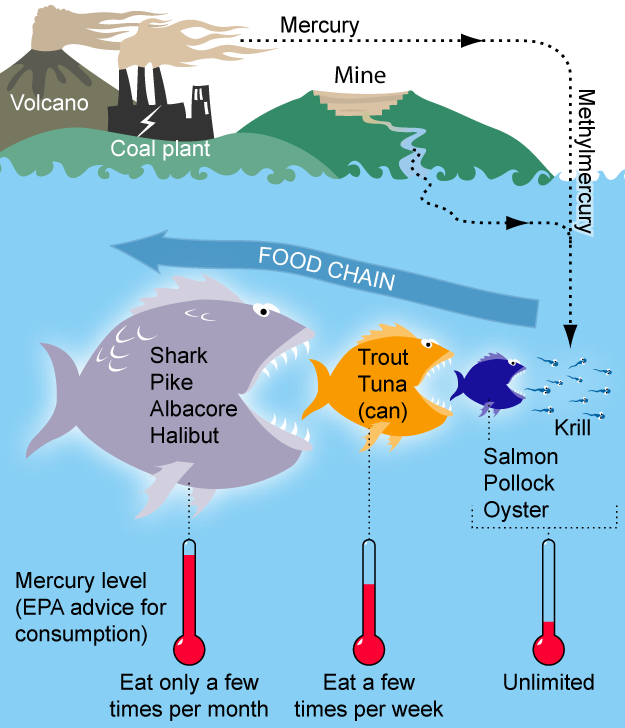
Pollutants can also settle on plants and in water, getting absorbed by small animals. When bigger animals eat them, the pollution gets passed up the food chain, a process called biomagnification. This means that top predators can end up with high levels of harmful chemicals in their bodies.
Let's check what you've learned about how pollution gets into the air and the problems it causes.
What are the microscopic bits of dust, soot, and chemicals that contribute to air pollution called?
When sunlight reacts with pollutants in the atmosphere, it can create a brownish, hazy soup called ______.
Understanding how pollution works is the first step toward finding solutions to keep our air, our bodies, and our ecosystems healthy.