Teaching Golf Fundamentals
Introduction to Golf
The Goal of the Game
At its heart, golf is a simple game. The objective is to hit a small ball with a club from a starting point into a hole. The trick is to do it in the fewest possible swings, or "strokes."
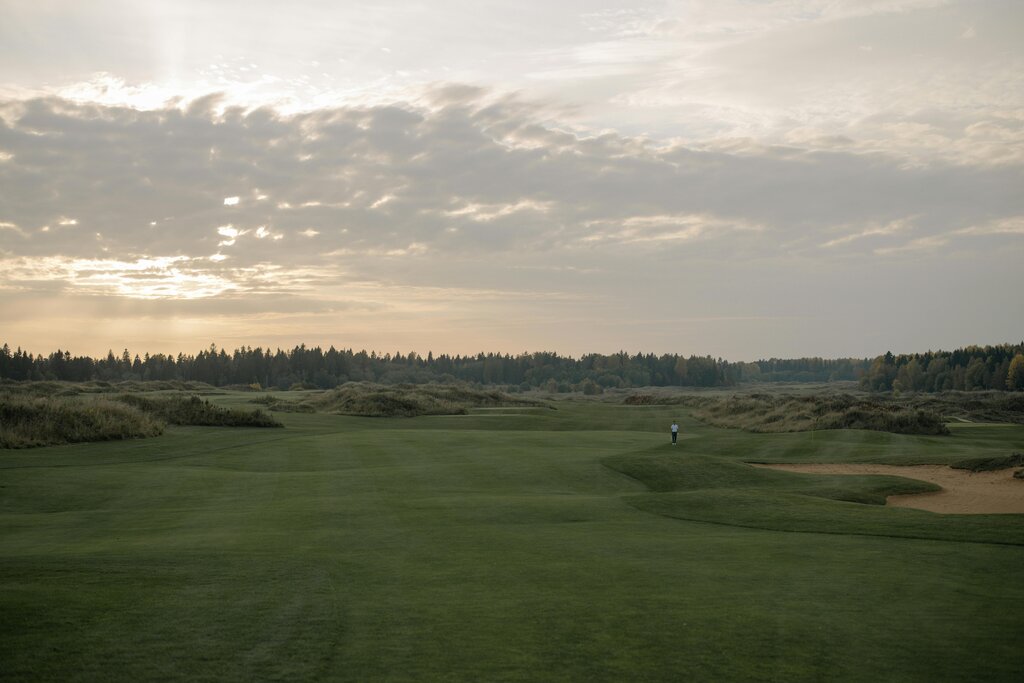
A standard golf course has 18 holes. Playing all 18 is called a "round." Each hole is a different length and has its own unique challenges. The person who completes the entire course with the lowest total number of strokes wins.
A Brief History
Golf as we know it today originated in 15th-century Scotland. It was so popular that King James II of Scotland actually banned it in 1457 because he felt it was distracting young men from practicing archery, which was vital for national defense. The ban didn't last, and the sport's popularity continued to grow.
The first written rules of golf were established in 1744 in Edinburgh, Scotland. The game spread from there, first to the rest of the United Kingdom and then around the world. The oldest golf tournament still in existence, The Open Championship, was first played in 1860.
Playing golf basically requires learning a new language and keeping all the quirky terms straight is not easy.
Speaking the Language
Like any sport, golf has its own vocabulary. Understanding a few key terms will help you follow the game and get started on the course.
Par
noun
The predetermined number of strokes a skilled golfer should require to complete a hole.
Each hole on a golf course has a par rating, usually 3, 4, or 5. This number is the target score for the hole. Your score on a hole is described by how it relates to par. For example, if you finish a par-4 hole in four strokes, you've made par.
Here are the most common scoring terms:
| Term | Score Relative to Par |
|---|---|
| Eagle | Two strokes under par (-2) |
| Birdie | One stroke under par (-1) |
| Par | Even with par (0) |
| Bogey | One stroke over par (+1) |
| Double Bogey | Two strokes over par (+2) |
You'll also need to know the basic parts of a golf hole.
Tee Box: The starting area for each hole. You place your ball on a small peg called a tee to hit your first shot.
Fairway: The short, mowed grass that forms the ideal path between the tee box and the green.
Rough: The areas of longer grass that line the fairway. It's more difficult to hit your ball from the rough.
Green: The area of very short, smooth grass at the end of the hole that contains the hole and the flagstick.
Bunker: A sand-filled pit, also known as a sand trap. Bunkers are considered hazards and are challenging to play from.
Ready to test what you've learned?
What is the primary objective in the game of golf?
If a golfer completes a par-4 hole in 3 strokes, what is their score for that hole called?
With this basic understanding, you're ready to learn about the equipment and etiquette of the game.