TCP/IP Networking Architecture
Layer Interaction Mechanics
How Data Gets Dressed for the Internet
When your computer sends data across a network, it doesn't just blast the raw information out into the void. Instead, it carefully packages it in a process called encapsulation. Think of it like preparing a letter for international shipping. You write the letter (your data), put it in an envelope (a TCP segment), write the local address on that (an IP packet), and then put it in a specific mail carrier's box (an Ethernet frame). Each step adds a layer of instructions.
This process unfolds through the TCP/IP stack. As data moves down from the Application layer to the Link layer, each layer adds its own header, containing control information. The Transport layer adds a TCP or UDP header. The Network layer adds an IP header. Finally, the Link layer adds a frame header. This nesting is crucial for the data to be correctly routed and reassembled at its destination. When the data arrives, the reverse process, decapsulation, occurs. Each layer strips off its corresponding header, reads the instructions, and passes the remaining payload up to the next layer until the original application data is delivered.
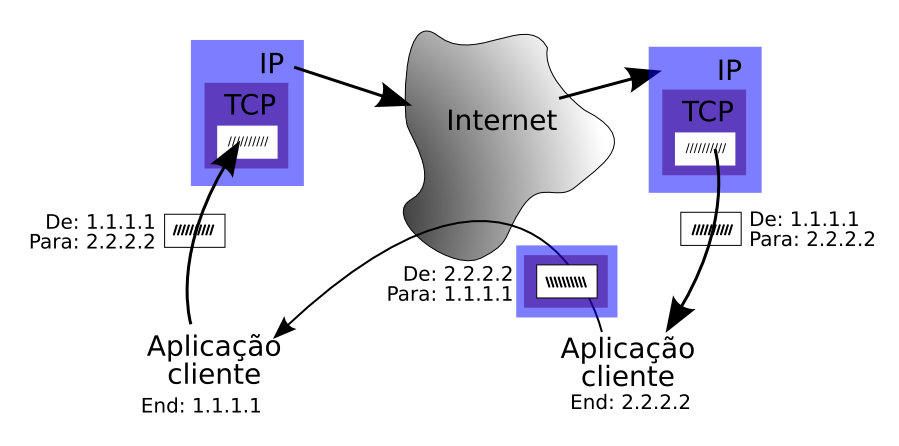
This handoff between layers isn't just a conceptual boundary; it happens through specific software interfaces called Service Access Points (SAPs). An SAP is like a designated doorway between two adjacent layers. When the Network layer has a packet ready, it doesn't just throw it
down to the Link layer. It passes the data through a specific SAP, which ensures the Link layer knows how to handle it. This structured communication prevents chaos and allows different protocols at each layer to be swapped out without breaking the whole system.
Size Constraints and Negotiation
Every network has a size limit for the packets it can handle, known as the Maximum Transmission Unit (MTU). For standard Ethernet, this is typically 1500 bytes. If the Network layer tries to send an IP packet larger than the MTU of the underlying network, the packet must be fragmented into smaller pieces. Fragmentation is inefficient because it adds overhead and requires the receiving end to reassemble the fragments, increasing the chance of errors.
To avoid this, a clever negotiation happens at the Transport layer. During the initial TCP three-way handshake, the two communicating devices exchange their Maximum Segment Size (MSS) values. The MSS defines the largest amount of data that a device can receive in a single TCP segment. It's calculated by subtracting the size of the IP and TCP headers from the MTU.
Both sides will agree to use the smaller of the two advertised MSS values. This proactive step ensures that TCP segments are sized correctly from the start, preventing the IP layer from ever needing to fragment packets. It's a prime example of how layers cooperate to optimize network performance.
The Kernel's Role and Overhead
This whole process of encapsulation and decapsulation is managed deep within the computer's operating system, specifically by the OS kernel . When an application wants to send data, it makes a system call, handing the data to the kernel. The kernel then takes over, managing a series of memory buffers to efficiently move the data down the protocol stack.
Instead of wastefully copying the data at each layer, modern operating systems use clever techniques. Often, the original application data stays in one buffer, and the kernel simply prepends the headers (TCP, IP, Frame) in separate, linked memory locations. This 'zero-copy' or 'copy-on-write' approach dramatically reduces the CPU cycles needed for networking, making high-speed data transfer possible.
All these headers add up. While essential for routing and reliability, they constitute overhead. Every byte used for a header is a byte that can't be used for your actual data. Let's look at the cost of a typical web request.
| Layer | Header Type | Typical Size (Bytes) |
|---|---|---|
| Transport | TCP Header | 20 bytes |
| Network | IPv4 Header | 20 bytes |
| Link | Ethernet Header | 14 bytes |
For a data payload of 1460 bytes, you need at least 54 bytes of headers. That's about 3.7% overhead. This might not seem like much, but for small, frequent packets, like those in online gaming or DNS lookups, the overhead can be significantly higher than the payload itself. This trade-off between control information and payload efficiency is a fundamental challenge in network protocol design.
Ready to test your knowledge? Let's see what you've learned about how these layers work together.
What is the correct sequence of data encapsulation as information moves down the TCP/IP stack?
What is the primary purpose of negotiating the Maximum Segment Size (MSS) during a TCP handshake?