TCP IP Protocol Suite Explained
Introduction to Networking
What is a Network?
At its core, a computer network is just a group of two or more devices connected together. This connection lets them share information and resources, like documents, printers, or an internet connection. Think of it like a conversation. You can talk to one person, or you can be in a room full of people sharing ideas. A network allows computers to do the same thing, but with data.
Computer Network
noun
A collection of interconnected computing devices that can exchange data and share resources with each other.
These devices can be anything from laptops and servers to smartphones and smart TVs. The connections between them can be physical, like an Ethernet cable, or wireless, like Wi-Fi. The goal is always the same: seamless communication.
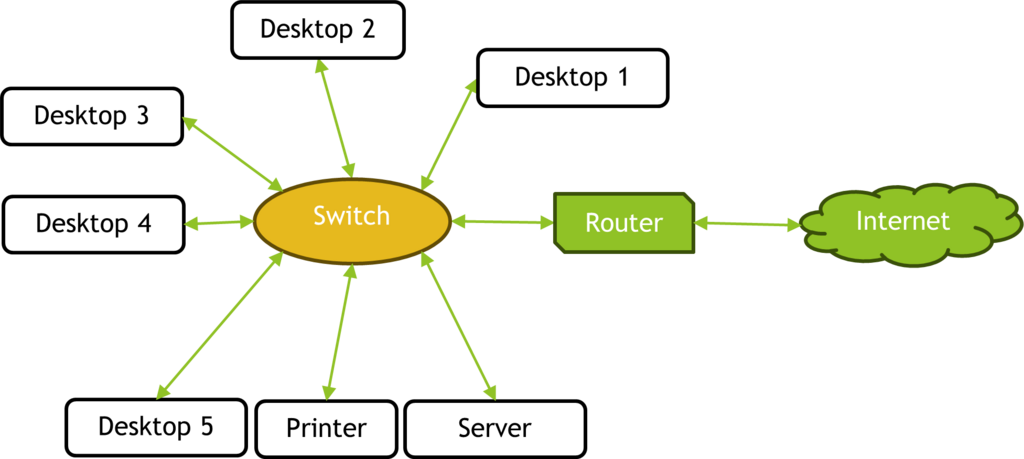
Networks Big and Small
Networks come in different sizes, depending on how far they need to reach. The three main types you'll encounter are LAN, MAN, and WAN.
A Local Area Network (LAN) is the smallest and most common type. It connects devices within a limited area, like a single home, office building, or school. If your computer, printer, and gaming console are all connected to the same Wi-Fi, you have a LAN.
A Metropolitan Area Network (MAN) is a step up in scale. It covers a larger geographic area than a LAN, such as a city or a large university campus. A MAN often works by linking multiple LANs together. For example, a university might have a LAN in its library and another in its science building, with a MAN connecting both.
Finally, a Wide Area Network (WAN) spans a very large geographical area, like a state, a country, or even the entire globe. A WAN connects multiple LANs and MANs. The most famous example of a WAN is the internet itself, which is a massive network of networks.
The Network's Traffic Cops
To make all this communication happen, networks rely on specialized hardware. These devices manage the flow of data, ensuring messages get where they need to go. Think of them as the traffic cops of the digital world.
A hub is the simplest of these devices. It's a central connection point for all devices on a network. When a hub receives data, it broadcasts it to every single device connected to it, whether that device was the intended recipient or not. It's like shouting in a crowded room—inefficient and not very secure. Hubs are rarely used in modern networks.
A switch is a smarter version of a hub. Like a hub, it connects multiple devices on a single network. But instead of broadcasting data to everyone, a switch knows the specific address of each connected device. It sends incoming data only to the device that is supposed to receive it. This makes the network much faster and more efficient.
A router is the most intelligent of the three. Its job is to connect different networks together. Your home Wi-Fi router, for example, connects your personal LAN to your Internet Service Provider's WAN, giving you access to the internet. Routers inspect data to determine its final destination and then forward it along the most efficient path across different networks.
| Device | Function | Best Use Case |
|---|---|---|
| Hub | Connects devices, broadcasts data to all | Obsolete, simple networks |
| Switch | Connects devices, sends data to specific one | Local networks (LANs) |
| Router | Connects different networks, directs traffic | Connecting a LAN to the WAN |
These concepts are the building blocks of all computer networking. Understanding them helps demystify how our digital world stays connected.
What is the primary purpose of a computer network?
A network that connects all the computers in a single home or small office is best described as a: