Tax Optimization Strategies
Understanding Tax Basics
Your Taxable Income
When you think about your income, you probably think of the total amount of money you earn in a year. But the government doesn't tax all of it. The portion that's actually subject to tax is called your taxable income.
Your taxable income is the portion of your income subject to federal tax, and it’s important for several reasons.
Think of it like this: your total earnings for the year are your gross income. From there, you subtract certain amounts called deductions. What's left over is your taxable income. This is the number the IRS uses to figure out how much tax you owe.
Deductions vs. Credits
Both deductions and credits are great because they lower your tax bill. However, they work in very different ways. Understanding this difference is key to managing your taxes effectively.
Deductions reduce the amount of your income that is taxed. Credits reduce the amount of tax you owe.
A deduction is subtracted from your gross income. By lowering your taxable income, it reduces the base upon which your tax is calculated. A tax credit, on the other hand, is a dollar-for-dollar reduction of your actual tax bill. After you've calculated how much tax you owe, a credit is subtracted directly from that amount.
Because of this, a $1,000 tax credit is always more valuable than a $1,000 tax deduction. The credit reduces your tax by the full $1,000. The deduction only reduces your tax by a percentage of that $1,000, which depends on your tax bracket.
Calculating Your Tax Bill
Once you have your taxable income, you can calculate your tax liability. The U.S. uses a progressive tax system, which means people with higher taxable incomes are taxed at higher rates. The system is divided into several income ranges called tax brackets, each with a different tax rate.
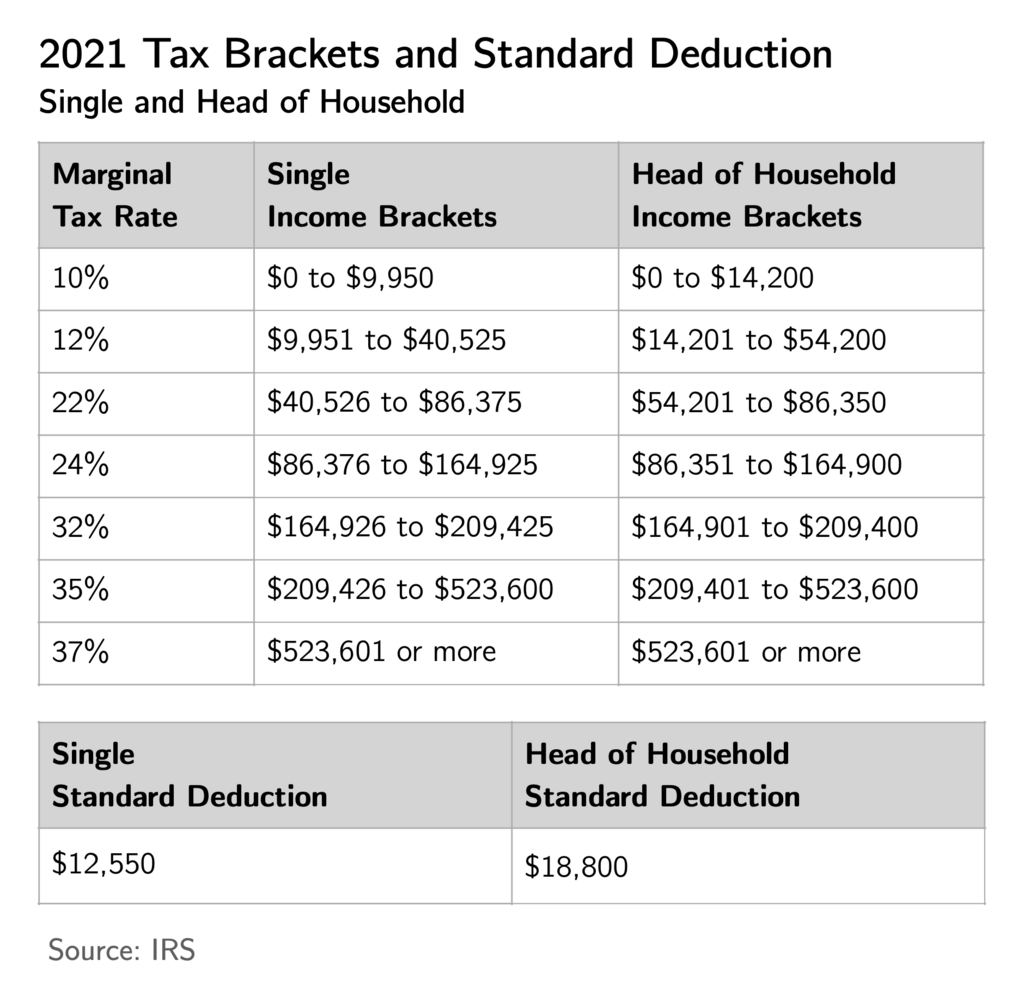
It's a common misconception that if you fall into a certain tax bracket, all of your income is taxed at that rate. That's not how it works. You only pay that rate on the portion of your income that falls within that specific bracket.
For example, let's say the tax brackets for a single filer are:
- 10% on income up to $10,000
- 20% on income over $10,000
If your taxable income is $25,000, you don't pay 20% on the whole amount. Instead, you'd pay:
- 10% on the first $10,000 (which is $1,000)
- 20% on the remaining $15,000 (which is $3,000)
Your total tax liability would be $1,000 + $3,000 = $4,000.
Standard vs. Itemized Deductions
When it comes to deductions, most taxpayers have a choice: take the standard deduction or itemize their deductions. You can pick whichever one results in a lower tax bill.
Standard Deduction
noun
A fixed dollar amount that you can subtract from your income to reduce your tax bill. This amount depends on your filing status (like single or married), your age, and whether you are blind. It's the simpler option, as it doesn't require keeping records of expenses.
Itemized deductions, on the other hand, are a list of eligible expenses that you can total up and subtract from your income. These might include things like mortgage interest, state and local taxes, and charitable donations. To itemize, you have to keep detailed records and receipts for these expenses.
The choice is simple: if the total of your itemized deductions is greater than your standard deduction, you should itemize. If not, the standard deduction is your best bet.
For example, if the standard deduction for your filing status is $13,000, and you calculate that your itemizable expenses only add up to $8,000, you would be better off taking the standard deduction. But if your itemizable expenses were $15,000, you'd save more by itemizing.
These foundational concepts are the building blocks of understanding your taxes. Knowing how taxable income is determined and how deductions and credits work empowers you to make smarter financial decisions.