Tau Protein Phosphorylation in Alzheimer's Disease
Tau Protein Basics
The Neuron's Internal Skeleton
Every cell has an internal framework, called the cytoskeleton, that provides shape and structure. In neurons, this framework is especially important. Neurons have a long, slender projection called an axon, which can be incredibly long—sometimes up to a meter in humans. To maintain this unique shape and function properly, the axon relies on a robust internal support system.
The main components of this system are long, hollow cylinders called microtubules. Think of them as the railroad tracks of the neuron. They provide structural support and also act as highways for transporting essential materials from the cell body to the far reaches of the axon and back.
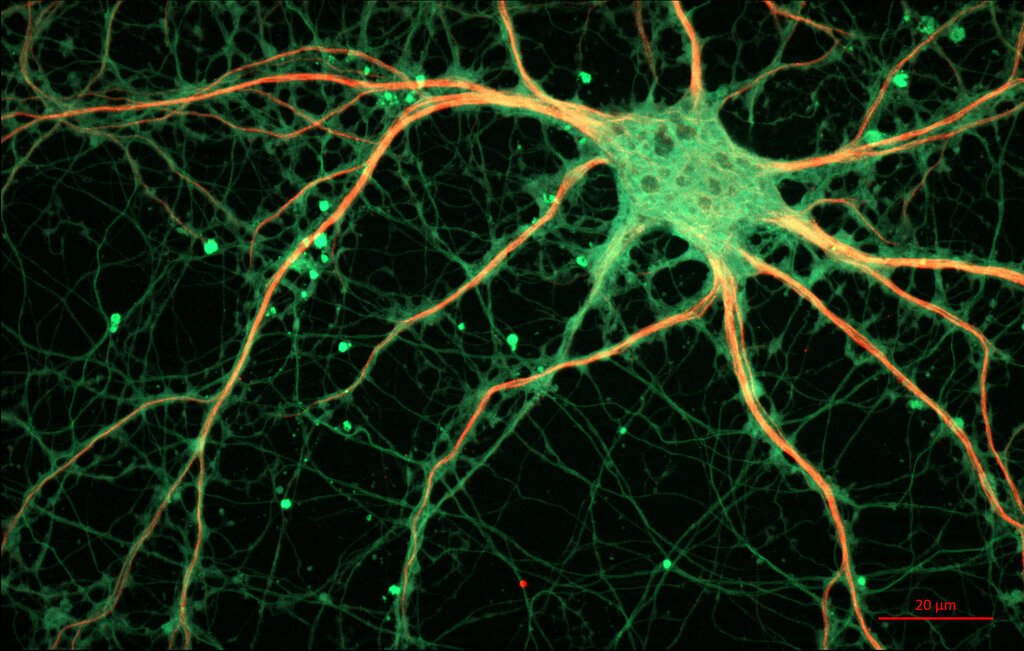
But these tracks aren't very stable on their own. They're made of constantly shifting protein subunits. To keep them straight and strong, they need help. That's where a special protein comes in.
Meet the Tau Protein
Tau
noun
A type of protein that binds to and stabilizes microtubules, primarily found in the neurons of the central nervous system.
The tau protein acts like the railroad ties that hold the microtubule tracks together. By binding directly to the microtubules along the axon, tau proteins keep them organized and parallel. This stabilization is crucial for the neuron's health.
Tau's main job is to stabilize the microtubule network inside axons, ensuring the structural integrity of the neuron.
Tau is part of a family of molecules known as microtubule-associated proteins (MAPs). While other MAPs exist in different parts of the neuron, tau is found almost exclusively in the axon. This specific location highlights its specialized role in axonal structure and function.
Keeping Axonal Transport Moving
A neuron is a bustling city, and the axon is its main highway. Motor proteins act as cargo trucks, moving up and down the microtubule tracks to deliver vital supplies. These supplies include neurotransmitters, lipids, mitochondria for energy, and other components necessary for the neuron to communicate and survive.
This process is called axonal transport, and it depends entirely on the stability of the microtubule highways. By keeping the tracks in good repair, tau ensures that this essential transport system runs smoothly and efficiently. If the tracks become unstable, cellular traffic jams can occur, preventing critical cargo from reaching its destination. This can have serious consequences for the health of the entire neuron.
What is the primary function of the tau protein in a neuron?
In the common analogy of the axon as a railroad system, what do the microtubules represent?
In short, tau is a small protein with a huge responsibility: maintaining the structural integrity and the critical supply lines within the neuron's axon.