Tarot Fundamentals
Introduction to Tarot
The World in Your Hands
Before they were tools for self-reflection, tarot cards were just a game. In 15th-century Italy, nobles played a trick-taking game called tarocchi with lavish, hand-painted decks. It wasn't until the 18th century that these cards began their transformation into the mystical system we know today, when French occultists connected them to ancient Egyptian wisdom and esoteric philosophies.
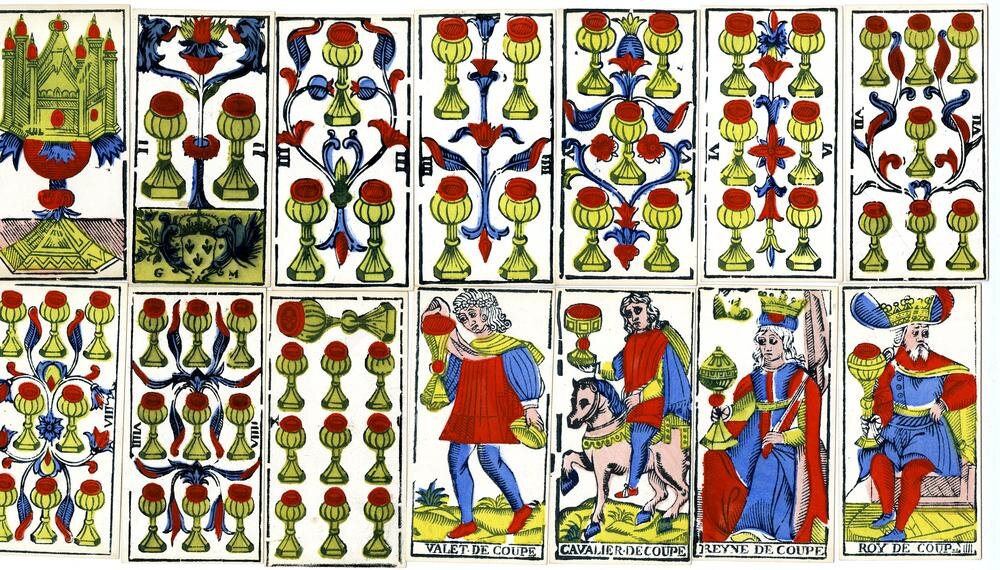
This evolution turned a simple card game into a rich, symbolic language. A standard tarot deck contains 78 cards, each a window into some part of the human experience. The deck is split into two distinct parts: the Major Arcana and the Minor Arcana. Think of them as two different kinds of stories. The Major Arcana tells the epic tales of life, while the Minor Arcana narrates the smaller, everyday chapters.
The Major Arcana
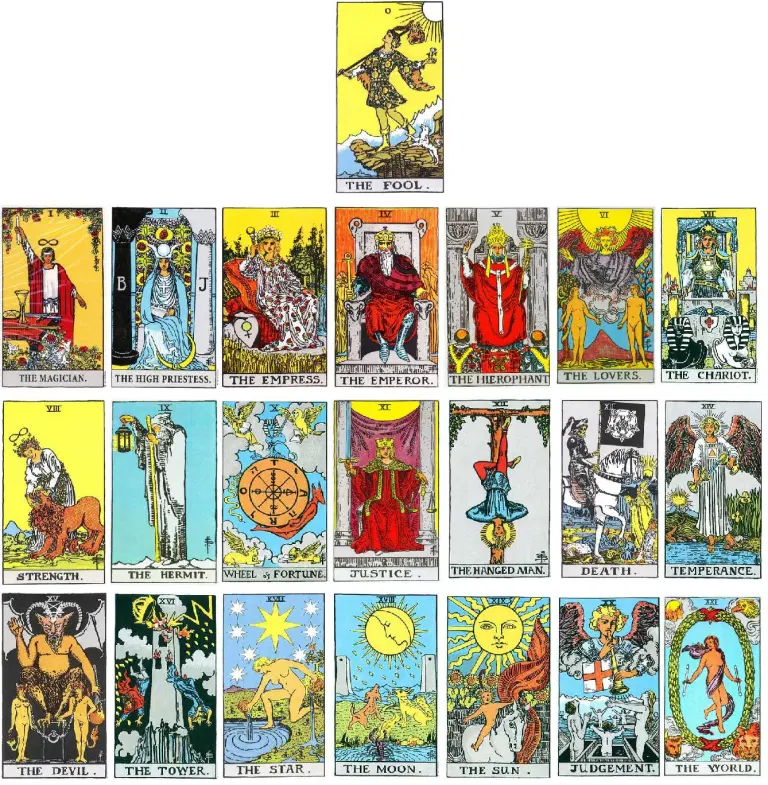
The Major Arcana, or "great secrets," consists of 22 cards that stand apart from the rest. These cards don't belong to any suit. Instead, they represent significant life events, spiritual lessons, and universal archetypes. They are the big milestones and turning points in our lives.
The Major Arcana cards tell the story of the Fool’s journey, representing significant life events and spiritual lessons.
Many readers see these cards as a single narrative called the Fool's Journey. The story begins with card 0, The Fool, who represents innocence and new beginnings. As the Fool travels through the deck, he encounters teachers and experiences challenges represented by the other 21 cards, from The Magician to The World. Each card is a step on a path toward wisdom and completion. When a Major Arcana card appears in a reading, it signals that you're dealing with a powerful, overarching theme.
The Minor Arcana
The remaining 56 cards make up the Minor Arcana, or "lesser secrets." These cards are more grounded, focusing on the day-to-day situations, thoughts, and feelings that fill our lives. If the Major Arcana is the skeleton, the Minor Arcana is the flesh and blood.
The Minor Arcana is structured much like a standard deck of playing cards. It's divided into four suits, each containing 14 cards: ten numbered cards (Ace through 10) and four Court Cards (Page, Knight, Queen, and King). Each suit corresponds to a particular element and a specific area of life.
| Suit | Element | Area of Life |
|---|---|---|
| Wands | Fire | Passion, creativity, action, willpower |
| Cups | Water | Emotions, relationships, intuition, love |
| Swords | Air | Thoughts, challenges, communication, intellect |
| Pentacles | Earth | The material world, finances, work, health |
The numbered cards in each suit typically show the progression of that suit's theme, from the initial spark in the Ace to the culmination in the 10. The Court Cards often represent people in our lives, or different facets of our own personalities. Together, the Minor Arcana cards provide context and detail, describing the 'how' and 'why' behind the big themes of the Major Arcana.
What was the original use of tarot cards in 15th-century Italy?
A standard 78-card tarot deck is divided into which two main sections?