Tactical Cybersecurity and Ethical Hacking
Modern Attack Reconnaissance
Beyond the Perimeter
Modern reconnaissance begins long before you touch a target's network. It's an intelligence operation, focused on gathering information from publicly available sources without raising any alarms. This process, known as (OSINT), forms the bedrock of any sophisticated attack or penetration test. We're talking about a deep dive into company websites, employee social media profiles, job postings that reveal tech stacks, and public code repositories.
Information gathering, or reconnaissance, is the foundation of a successful penetration test.
Imagine finding a developer's public GitHub repository. Within it, you discover old project configuration files. The comments in these files might reveal internal network naming conventions, server roles, or even an accidentally committed API key. This is a classic example of passive reconnaissance yielding high-value intelligence without ever sending a single packet to the target organization's servers.
Focus on the Crown Jewels
For decades, security focused on the 'attack surface'—the sum of all possible entry points an attacker could exploit. This approach is no longer practical. In a world of sprawling cloud infrastructure and countless interconnected services, the attack surface is nearly infinite. Trying to defend everything means you defend nothing well.
The modern approach shifts focus to the protect surface. Instead of asking "What can they attack?", we ask "What can we not afford to lose?" This means identifying the most critical components of the organization and concentrating defensive efforts there.
The protect surface is composed of an organization's DAAS:
- Data: The most valuable information. This includes customer personally identifiable information (PII), intellectual property like source code or trade secrets, and financial records.
- Applications: The software that handles the critical data. Think of the payment processing service, the user authentication system, or the core business logic application.
- Assets: The infrastructure that runs the critical applications. This means the specific servers, containers, and databases that are essential for operations.
- Services: The core business functions that depend on the above. If the e-commerce checkout service goes down, the business stops making money. That's a critical service.
Recon for Modern Architectures
Reconnaissance targets have changed. We're no longer just scanning a simple range of IP addresses for open ports. Today's environments are cloud-native, API-driven, and often 'serverless'. This requires a new set of techniques.
Instead of hunting for a vulnerable server, we might hunt for a misconfigured S3 bucket, an exposed API endpoint with improper authentication, or leaked credentials in a public container image repository. The principles are the same, but the terrain is completely different.
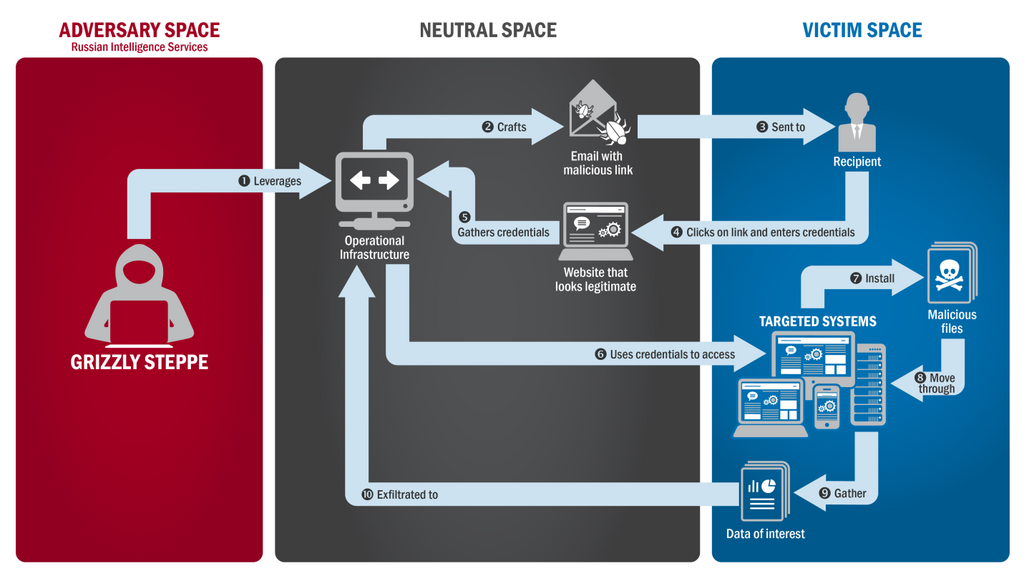
For these environments, reconnaissance often involves:
- Subdomain Enumeration: Using tools to find not just
www.example.com, but also forgotten subdomains likedev-api.internal.example.comthat might have weaker security. - Cloud Asset Discovery: Identifying a target's cloud footprint across providers like AWS, Azure, and GCP. This can reveal storage buckets, databases, and virtual machines that aren't properly secured.
- API Endpoint Analysis: Discovering and probing API endpoints to understand how they work. An attacker will look for endpoints that lack proper rate limiting, authorization checks, or input validation. The goal is to find a way to manipulate the [{
] to extract data or perform unauthorized actions.
Building a Threat Model
All this information gathering isn't just for collecting trivia. It's for building a threat model. A threat model is a structured way of thinking about what can go wrong. It connects the dots between the target's assets, potential attackers, and the vulnerabilities that bridge the two.
Effective reconnaissance allows you to create a detailed map of the protect surface and then overlay potential attack paths. You start thinking like an adversary: "Given that they use this specific version of database software, and I know their admin's name from LinkedIn, what's the most likely way I could gain access?"
Threat modeling turns raw data from reconnaissance into an actionable attack plan.
This intelligence-driven approach is what separates a novice from a professional. A novice runs a port scan and looks for an open door. A professional builds a comprehensive profile of the target, understands what's most valuable to them, and crafts a specific, targeted plan of attack based on deep intelligence. The goal is surgical precision, not a brute-force assault.
Ready to test your intelligence gathering skills? Let's see what you've learned about modern reconnaissance.
What is the primary characteristic of Open Source Intelligence (OSINT) in the context of modern reconnaissance?
The modern security paradigm has shifted from defending the 'attack surface' to focusing on the 'protect surface'. What is the key principle behind this shift?
By mastering these modern reconnaissance techniques, you move from simply scanning for vulnerabilities to conducting true intelligence operations that set the stage for successful and stealthy penetration tests.