Tactical Agentic Coding
Introduction to Autonomous Agents
Beyond Simple Automation
Many software programs follow a strict set of instructions. They do what they're told, and nothing more. But what if a program could act on its own, pursuing a goal without a human constantly guiding its every move? That’s the idea behind an autonomous agent.
An AI agent is an autonomous software entity capable of understanding goals, reasoning through multiple steps, interacting with tools or environments, and adjusting its actions based on outcomes.
Think of it like the difference between a simple calculator and a personal financial advisor. A calculator waits for you to input numbers and an operation. An advisor, on the other hand, understands your goal—like saving for retirement—and takes steps to achieve it, such as suggesting investments and adjusting your budget. The calculator is a tool; the advisor is an agent.
These agents aren't just lines of code running on a server. They can be software that manages your email, a character in a video game, or even a physical robot exploring a remote environment. The key is their ability to operate independently to get things done.
The Core Traits of an Agent
Autonomous agents are defined by a few key characteristics that set them apart from traditional software. These traits allow them to handle complex, unpredictable situations effectively.
Autonomy
noun
The ability to perform tasks and make decisions without direct human control or intervention.
An agent's most crucial feature is its independence. It doesn't need a user to click a button for every single action. You give it a high-level goal, and it figures out the intermediate steps on its own. For example, a travel agent AI could be told to “book a trip to Paris for the first week of June under $2,000,” and it would handle searching for flights, finding hotels, and comparing prices without asking for permission at each stage.
Next is adaptability. The world is always changing, and an effective agent must change with it. It learns from its environment and its own experiences to improve its performance over time. A spam filter is a simple example; every time you mark an email as junk, the agent learns more about what spam looks like and gets better at catching it in the future.
Finally, agents possess sophisticated decision-making capabilities. They don't just follow a rigid, pre-programmed script. When faced with multiple options, an agent can weigh the potential outcomes and choose the action most likely to help it achieve its goal. This process is a continuous loop of sensing the environment, thinking about what to do next, and then acting on that decision.
Agents in the Wild
Autonomous agents aren't just a concept from science fiction; they are already at work in many fields, often behind the scenes. In logistics, agents manage complex supply chains by automatically reordering inventory, optimizing delivery routes, and even predicting future demand based on sales data.
In entertainment, the non-player characters (NPCs) in modern video games are becoming more sophisticated agents. Instead of walking in predictable patterns, they react to the player's actions, coordinate with other NPCs, and create a more immersive and challenging experience.
Even our personal devices use them. A smart home assistant that learns your routines and adjusts the thermostat or lighting without being asked is acting as an autonomous agent. Its goal is to maintain your comfort and save energy, and it learns how to do that by observing your habits.
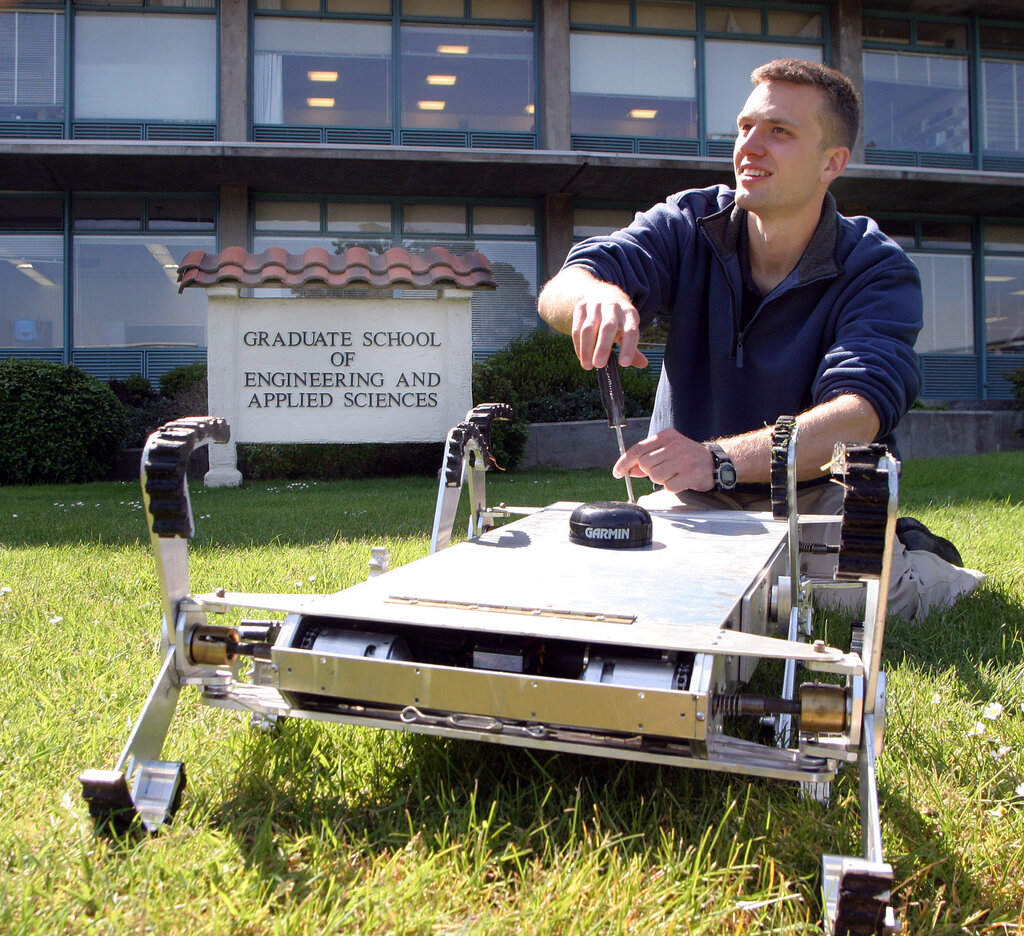
From managing vast industrial systems to simplifying our daily lives, autonomous agents are powerful tools that can handle complexity and adapt to change. Understanding these fundamental principles is the first step toward building intelligent systems that can truly act on their own.
What is the primary characteristic that defines an autonomous agent?
The continuous process of an agent observing its environment, deciding on a course of action, and then performing that action is known as what?