Table Saw Picture Frame Mastery
Introduction to Table Saw Safety
Respect the Machine
A table saw is one of the most useful tools in a workshop, but it's also one of the most dangerous. The spinning blade doesn't distinguish between wood and fingers. Before you even think about turning it on, adopt a mindset of focus and respect. Every cut requires your full attention.
Your first line of defense is personal protective equipment, or PPE. This isn't optional.
- Safety Glasses: Wear them every single time. A wood chip or a broken piece of a saw blade traveling at over 100 miles per hour can cause permanent eye damage.
- Hearing Protection: Table saws are loud enough to cause hearing loss over time. Use earplugs or earmuffs.
- Dust Mask: Sawdust isn't just messy; fine wood dust is harmful to your lungs. A simple N95 mask is a good start.

What you wear matters just as much as your PPE. Avoid loose-fitting clothes, gloves, and any jewelry like rings, necklaces, or bracelets. These can easily get snagged by the blade and pull you in. If you have long hair, tie it back securely.
Finally, look at your workspace. The area around the saw should be clean and clear of clutter. You need stable footing and enough room to move freely without tripping over scraps or tools. Good lighting is also crucial so you can clearly see your hands, the blade, and your cut lines.
Know Your Saw's Defenses
Modern table saws come equipped with safety features designed to prevent common accidents. Don't remove them. They are there for a reason, and understanding how they work is key to using the saw safely.
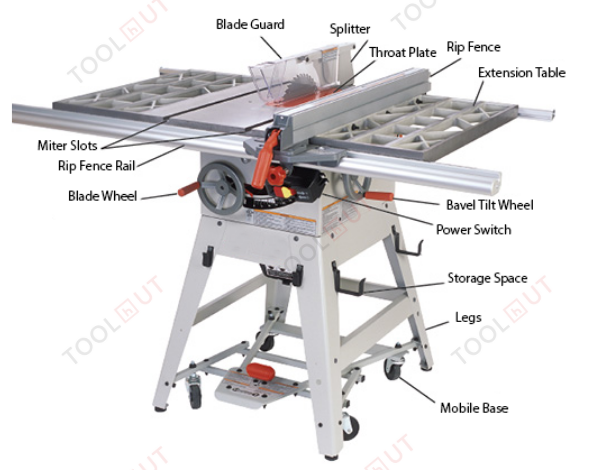
The blade guard is a clear cover that sits over the saw blade. Its job is simple: to create a physical barrier between you and the spinning teeth. It also helps contain sawdust and small wood chips that get thrown up during a cut.
Behind the blade, you'll find a riving knife or a splitter. This is arguably the most important safety device on the saw. It's a thin piece of metal that is slightly thinner than the blade's cut, or kerf. As the wood passes the blade, the riving knife slides into the cut, holding it open. This prevents the wood from pinching the back of the blade, which is a primary cause of a dangerous event called kickback.
Always use the riving knife. It's your best defense against kickback.
Controlling the Cut
Your hands should never get close to the spinning blade. To guide wood safely and maintain control, you need to use accessories designed for the job. The most basic and essential of these is the push stick.
Push Stick
noun
A handheld safety device used to push a workpiece through a saw, keeping the operator's hands away from the blade.
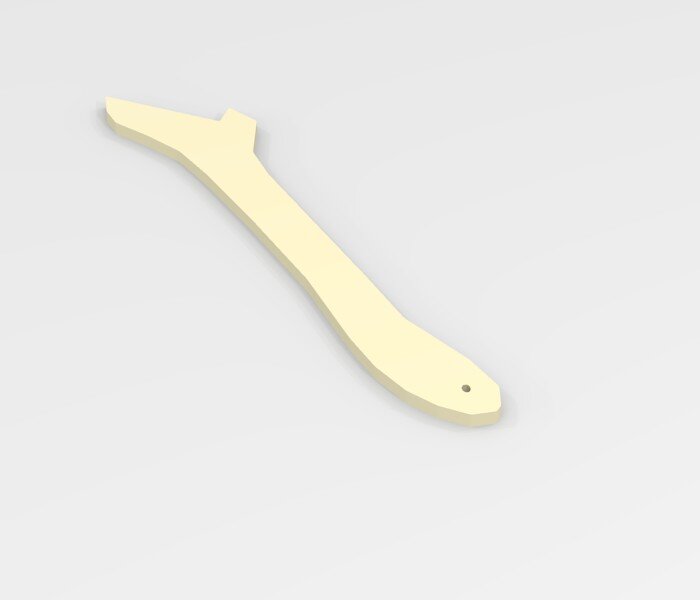
Use a push stick for any cut where your hands would otherwise come within 6 inches of the blade, especially for narrow pieces. It gives you the control you need without the risk.
Another helpful device is a featherboard. This tool has flexible fingers, or "feathers," that press a workpiece firmly against the saw's fence or table. This ensures the wood doesn't drift or chatter during the cut, which improves accuracy and significantly reduces the chance of kickback. You can clamp featherboards to the table before the blade and to the fence.
Use push sticks and featherboards near cutting areas to keep hands safe.
The Danger of Kickback
Kickback is the most violent and dangerous thing a table saw can do. It happens when the wood gets pinched, twisted, or lifted into the rising teeth at the back of the blade. The blade then grabs the wood and launches it back toward the operator at incredible speed.
How to prevent kickback:
- Always use the riving knife. It's designed specifically to stop the wood from pinching the blade.
- Use the rip fence correctly. The fence guides the wood for a straight cut. Never use the miter gauge and the rip fence at the same time for a crosscut, as this can trap the wood and cause it to twist.
- Stand to the side. Never stand directly behind the blade. Stand slightly to the left or right, out of the direct path of a potential kickback.
- Keep pushing forward. Don't stop the wood partway through a cut. Push it smoothly and completely past the blade.
- Support your material. For large sheets of plywood or long boards, make sure they are fully supported on the infeed and outfeed sides of the saw. An unsupported board can sag or tip, causing it to bind on the blade.
After a cut is complete, use a push stick to move the offcut piece away from the blade before reaching for it. Never reach over a spinning blade. Wait for the blade to come to a complete stop before making any adjustments or clearing scraps.
Finally, know where your saw's power switch is. You should be able to turn it off quickly without looking. If anything feels wrong—a strange noise, a burning smell, or the wood binding—turn the saw off immediately. The best way to handle an emergency is to prevent it from happening in the first place.
Which of the following is considered essential Personal Protective Equipment (PPE) for operating a table saw?
What is the primary function of a riving knife on a table saw?