Systems Thinking for Lasting Change
Understanding Resolution Failures
Why Good Intentions Fail
Every January, millions of people set out to improve themselves. They resolve to exercise more, eat better, or learn a new skill. Yet, by February, many of these resolutions have already been forgotten. It's a familiar cycle of hope followed by disappointment.
The problem often isn't a lack of desire. It's that we set ourselves up for failure from the very beginning. Understanding why resolutions fall apart is the first step toward making changes that actually stick.
The problem isn't just lack of motivation but rather poorly designed goals that ignore individual psychology, capacity and context.
The Pitfall of Vague Goals
One of the most common reasons resolutions fail is that they are too vague. A goal like “get in shape” or “be more productive” sounds good, but it doesn't provide a clear path forward. How do you know when you've achieved it? What specific actions do you need to take each day?
Without a clear target, it's easy to lose focus. On a busy Tuesday, it’s much simpler to skip the gym if your goal is just to “be healthier.” There’s no specific, measurable outcome you're failing to meet. This ambiguity allows us to procrastinate and eventually give up without feeling like we've explicitly failed.
A vague goal has no finish line. You can run forever without knowing if you're getting closer.
This lack of clarity also makes it impossible to track progress. Seeing small wins is a powerful motivator. But if your goal is fuzzy, you can't celebrate the milestones along the way. You're left with a giant, intimidating objective that never seems to get any smaller.
The Limits of Willpower
Many people believe that achieving a goal is purely a matter of willpower. They think if they just try hard enough, they can force themselves to stick to a new routine. This approach often backfires.
Willpower is a finite resource. It's like a muscle that gets tired with overuse. Throughout the day, we make countless decisions that deplete our mental energy. Resisting a donut at the office, staying patient in traffic, and finishing a difficult work assignment all draw from the same limited well.
willpower
noun
The ability to control one's own thoughts and the way in which one behaves.
When we rely solely on willpower to achieve a resolution, we're setting up a battle we're likely to lose. After a long, stressful day, our willpower is at its lowest. That's when it's easiest to skip a planned workout or order takeout instead of cooking a healthy meal. The initial burst of motivation from January 1st fades, and the old, easier habits take over.
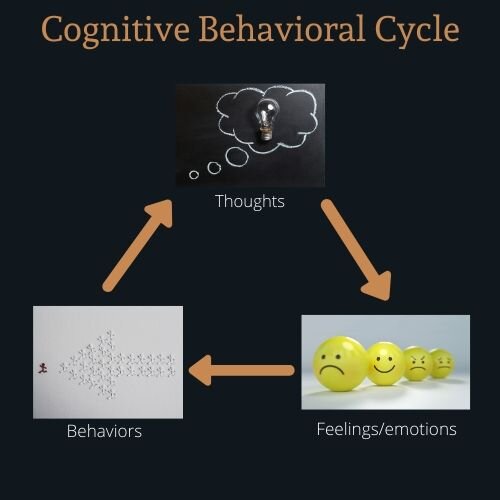
Relying on willpower ignores the power of our environment. If your kitchen is full of junk food, you'll need a lot more willpower to eat healthy than if it's stocked with fruits and vegetables. Successful change often involves shaping your surroundings to make good choices easier and bad choices harder.
Social and Environmental Pressure
We are social creatures, and our environment heavily influences our behavior. This can be a huge obstacle when trying to adopt a new habit. Your friends might want to go out for drinks when you've resolved to drink less. Your family might prefer watching TV when you want to go for an evening walk.
This creates social friction. Going against the grain requires extra effort and can sometimes feel isolating. It's much easier to stick with a new behavior when your social circle supports it, or at least doesn't actively work against it. This is why having an accountability partner or joining a group with similar goals can be so effective.
It's hard to swim upstream when the current of your social life is pulling you in the opposite direction.
Our physical environment plays a role, too. If the nearest gym is a 30-minute drive away, you're less likely to go than if there's one on your way home from work. If your workspace is cluttered and distracting, a goal to be more organized will be a constant uphill battle.
Failing to account for these external forces is a common mistake. We set goals in a vacuum, ignoring the context of our daily lives. When reality hits, these environmental and social barriers can quickly derail our best intentions.
According to the provided text, why is a vague resolution like 'get in shape' more likely to fail?
The text suggests that relying solely on willpower for a new resolution often backfires because willpower is...