Systems Thinking and Logic
Introduction to Systems Thinking
Seeing the Whole Picture
Most of the time, we try to understand things by taking them apart. To see how a clock works, you might open it up and look at the gears. This is called linear, or reductionist, thinking. It looks at problems in a straight line: cause A leads to effect B.
But what about problems like traffic jams, climate change, or the office coffee always running out? Taking them apart doesn't always reveal the full story. That's where systems thinking comes in. It’s a way of seeing the world as a collection of interconnected parts that influence each other. Instead of just looking at the individual gears, you look at how they all work together to tell time.
A system is a set of interconnected elements that is coherently organized in a way that achieves something.
This approach focuses on the relationships between the parts, not just the parts themselves. It’s a shift from looking at a list of ingredients to understanding the recipe. A cake isn't just flour, sugar, and eggs; it's the result of how those ingredients are combined and heated. The relationships are just as important as the components.
One Plus One Can Equal Three
When parts of a system interact, they can produce results that are impossible to predict by looking at the parts in isolation. This is called an emergent property. Think of an ant colony. A single ant has a tiny brain and follows very simple rules. It can't build a complex nest on its own. But when thousands of ants work together, they build intricate underground cities, manage food supplies, and defend their territory. This complex, intelligent behavior of the colony is an emergent property. It arises from the interactions between the ants, not from any single ant.
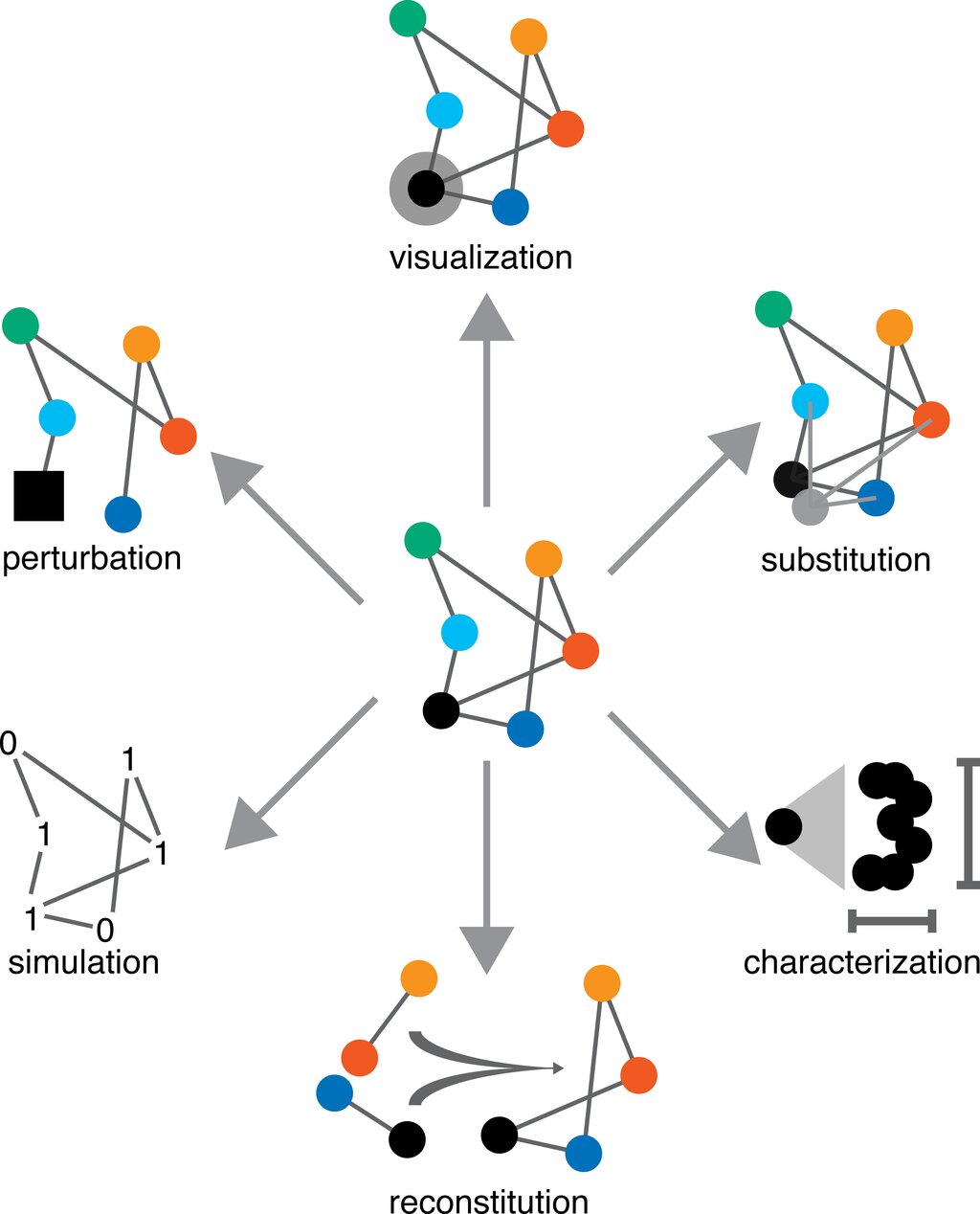
The same is true for a city. A city has buildings, roads, and people. But the "personality" of a city—its culture, its energy, its traffic patterns—is an emergent property. You can't find the culture of Paris by studying a single Parisian or a single brick from the Louvre. It emerges from the countless daily interactions of all its components.
This is a core idea in systems thinking: the whole is often greater, or at least different, than the sum of its parts. The most important behaviors of a system arise from the dynamic interplay of its elements.
The Web of Connections
Because everything in a system is connected, a change in one area can have surprising effects in another. These are the interrelationships and interdependencies that define a system. Imagine a simple ecosystem with wolves, rabbits, and grass. If a disease wipes out most of the wolves, you'd expect the rabbit population to boom. That’s a direct relationship.
But what happens next? The booming rabbit population might eat so much grass that the landscape starts to erode. The erosion could then affect the flow of rivers, which in turn impacts fish populations. Suddenly, a change in the wolf population has affected the fish. This web of connections is why simple solutions often fail to solve complex problems. Without seeing the whole system, you might fix one problem only to create several new ones.
In a system, you can't just change one thing. Every action sends ripples across the entire web.
Thinking this way helps us identify leverage points, places in a system where a small change can lead to a large shift in behavior. It also helps us anticipate unintended consequences. By mapping out the connections, we start to see the hidden patterns that govern how things really work.
Let's check your understanding of these foundational ideas.
Which of the following best describes the main focus of systems thinking?
The complex, intelligent behavior of an ant colony, which arises from the simple actions of thousands of individual ants, is an example of what?
By learning to see the world in terms of systems, relationships, and patterns, you develop a powerful tool for understanding complexity and making more effective decisions.