Systems for Personal Evolution
Neurobiology of Behavioral Change
The Brain’s Remodeling Crew
Changing your behavior isn't just a matter of willpower; it’s a physical renovation project inside your skull. Every time you learn a new skill, break a bad habit, or form a good one, you are actively rewiring your brain. This capacity for change is called neuroplasticity.
At a microscopic level, learning strengthens the connections, or synapses, between neurons. Think of it like creating a path in a dense forest. The first time you walk it, it’s slow and difficult. But the more you use it, the clearer and faster the path becomes. Eventually, it’s an effortless stroll. This process of strengthening is called Long-Term Potentiation (LTP).
This ability of the brain to constantly change and adapt based on what we encounter is driven by a fascinating process called synaptic plasticity, which acts as the foundation for how our brains—and our behaviors—evolve over time.
But the brain is also ruthlessly efficient. It doesn't keep pathways it no longer needs. Through a process called synaptic pruning, unused or weak neural connections are cleared away. This “use it or lose it” principle is why old habits fade when you stop practicing them and why skills get rusty. Pruning makes the remaining, important pathways stronger and more efficient.
Shifting from Thinking to Doing
When you first try something new, like learning to drive, your prefrontal cortex (PFC) is in charge. This is the brain's CEO, responsible for conscious thought, planning, and focus. It’s analyzing every move: check the mirror, signal, turn the wheel. This is goal-directed behavior, and it’s mentally exhausting.
But as you practice, a different brain region begins to take over: the basal ganglia. This network of structures is deep within the brain and acts like an automation engine. Its job is to take routines that the PFC has approved and turn them into stimulus-response patterns, or habits. The more you repeat the action, the more the basal ganglia learns the script. Eventually, you can drive home from work while thinking about dinner, with your basal ganglia handling the turns and stops automatically.
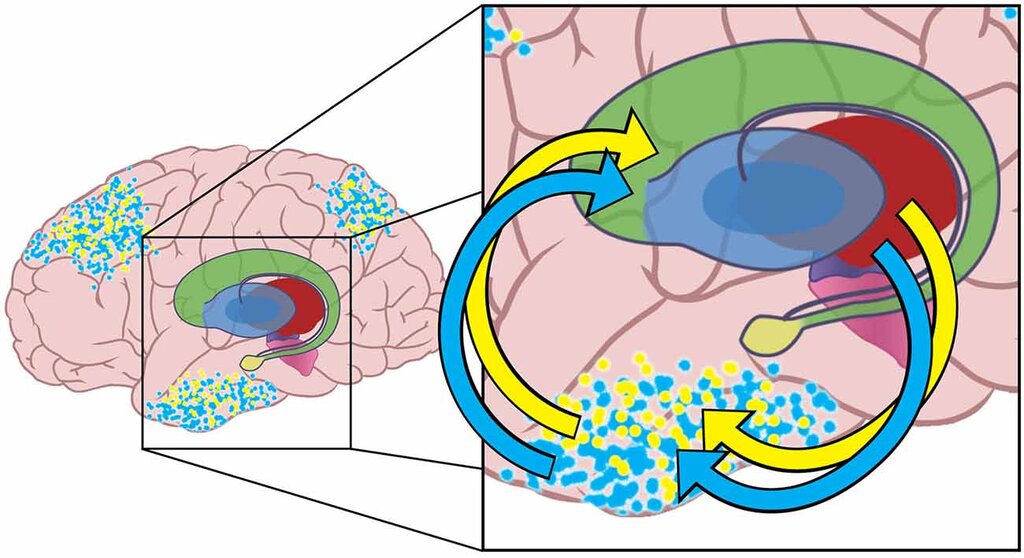
This handoff from the effortful PFC to the efficient basal ganglia is the neurobiological signature of habit formation. It frees up your conscious mind to focus on new challenges, while the basal ganglia runs the old programs. This is why habits are so powerful and, at times, so hard to break. You’re not just fighting a desire; you’re fighting a deeply ingrained, automated neural circuit.
Dopamine's Real Job
Dopamine is often called the “pleasure molecule,” but that’s a bit of a misnomer. Its role in behavior change is more about motivation and learning than just feeling good. It acts as a teaching signal through a mechanism called reward prediction error.
Here’s how it works:
- Positive Prediction Error: If a reward is better than you expected, you get a spike in dopamine. Your brain says, “Wow, pay attention! Whatever you just did, do it again.” This strengthens the neural pathway for that behavior.
- Negative Prediction Error: If a reward is worse than you expected (or doesn't come at all), dopamine levels dip below the baseline. Your brain says, “That wasn't worth it. Don't bother next time.” This weakens the connection.
- No Error: If a reward is exactly what you expected, there’s no change in dopamine firing. The brain already knows this cause-and-effect relationship, so no new learning is needed.
Interestingly, after a habit is formed, the biggest dopamine spike doesn't happen when you get the reward. It happens when you see the cue. The sight of a coffee shop (the cue) triggers a dopamine release in anticipation of the coffee (the reward). This is the neural basis of craving. Your brain is motivating you to complete the habit loop by giving you a little burst of dopamine upfront. This powerful mechanism drives you to seek out the cues that trigger your habits, whether they’re good or bad.
This understanding allows us to design better triggers. To build a new habit, you need to create a strong link between a cue and an unexpectedly positive outcome. That initial dopamine spike from a better-than-expected reward is what tells your basal ganglia, “This is a keeper. Let's start automating it.”
What is the process by which the connections between neurons are strengthened through repeated use, much like forging a path in a forest?
According to the “use it or lose it” principle, what happens to weak or unused neural connections in the brain?