Systems Design and Architecture Essentials
Introduction to Systems Design
The Blueprint for Software
You wouldn't build a house without a blueprint. You'd figure out how many rooms you need, where the plumbing will go, and how to make sure the roof won't collapse. If you just started nailing boards together, you’d end up with a mess that's unstable and impossible to live in.
Systems design is the blueprint for software. It’s the process of planning a system's architecture—its components, modules, and interfaces—to meet specific requirements. It's about making deliberate choices before writing code to ensure the final product is strong, flexible, and useful.
System design is the process of designing the architecture, components, modules, interfaces, and data for a system to satisfy specified requirements.
Good design is the difference between a system that works beautifully for years and one that constantly breaks and is a nightmare to update. It’s about building for the future, not just for today's problems.
The Goals of Good Design
Every well-designed system aims for a few key qualities. Think of these as the pillars that hold up the entire structure. The three most important are robustness, scalability, and maintainability.
Robustness
noun
A system's ability to handle errors, unexpected inputs, and stressful conditions without failing.
A robust system is resilient. If a user enters their age as "abc" instead of a number, the system shouldn't crash. It should handle the error gracefully, maybe by showing a helpful message. It’s designed to anticipate problems and keep running smoothly.
Scalability
noun
A system's ability to handle a growing amount of work by adding resources to the system.
Imagine a small coffee cart that becomes incredibly popular. To serve more people, the owner could hire more baristas (scaling up) or open new carts in different locations (scaling out). Scalable software works the same way. It can handle a surge in users—from ten to ten million—without slowing down or breaking. This is crucial for any application that hopes to grow.
Maintainability
noun
The ease with which a software system can be modified to correct faults, improve performance, or adapt to a changed environment.
Software is never truly finished. There will always be bugs to fix, features to add, and security holes to patch. Maintainability is about making that ongoing work as easy as possible. A maintainable system is well-organized and easy to understand, like a tidy workshop where every tool has its place. This saves immense time and effort over the life of the system.
First, Understand the Problem
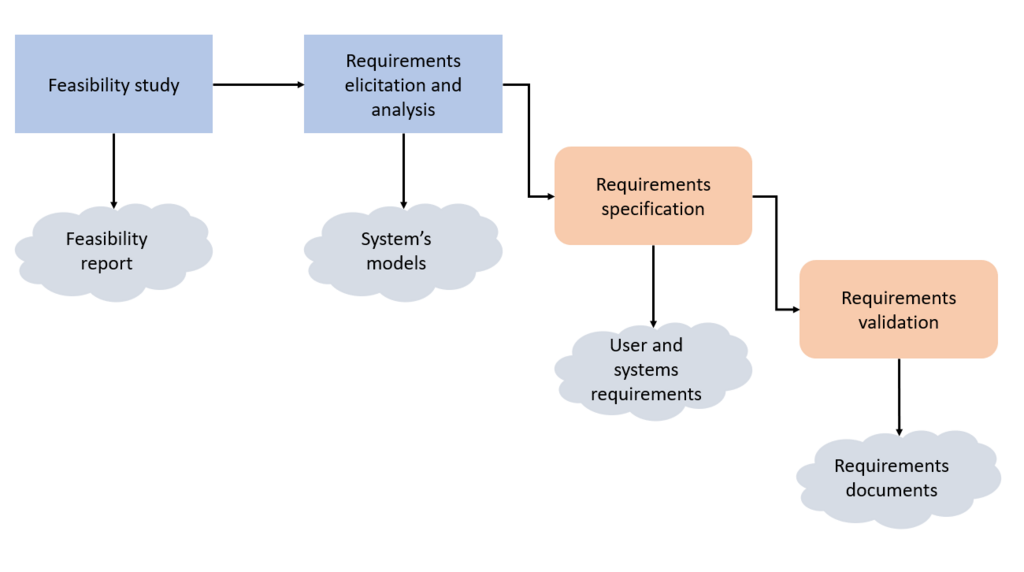
Before you can design a solution, you have to deeply understand the problem. This starts with two key activities: gathering user requirements and defining the system's boundaries.
User requirements define what the system must do from the user's perspective. System boundaries define where the system begins and ends.
Gathering requirements isn't about technology; it's about people. What problem are they trying to solve? If you're building a ride-sharing app, key requirements might be:
- A user must be able to request a ride from their current location.
- A driver must be able to see and accept ride requests.
- The app must calculate the fare and handle payment.
Defining system boundaries means drawing a line around what your system will and will not do. Will your ride-sharing app also handle food delivery? Does it need to integrate with public transit schedules? Deciding this upfront prevents the project from growing uncontrollably complex.
Building with Blocks
Once you know what you're building, you can think about how to structure it. One of the most powerful principles in systems design is modularity.
Modularity is the practice of breaking a large system down into smaller, independent, and interchangeable components called modules.
Instead of building one giant, monolithic program, you create separate modules for each core function. In our ride-sharing app, you might have a module for user authentication, another for processing payments, and a third for calculating routes.
This approach has huge benefits:
- Easier to Understand: It's simpler to reason about a small payment module than the entire application at once.
- Easier to Develop: Different teams can work on different modules simultaneously without stepping on each other's toes.
- Easier to Maintain: If there's a bug in the payment system, you know exactly where to look. You can fix or replace that one module without touching the rest of the application.
By starting with a solid blueprint that prioritizes clear goals and a modular structure, you set the stage for a system that can evolve and succeed over the long term.
What is the primary purpose of systems design in software development?
A popular e-commerce website becomes extremely slow and crashes every year during Black Friday sales. This is a failure of which key system quality?