Systems Biology of the Chronic Stress Response
Neuroendocrine Signaling Dynamics
The Hypothalamic Pulse
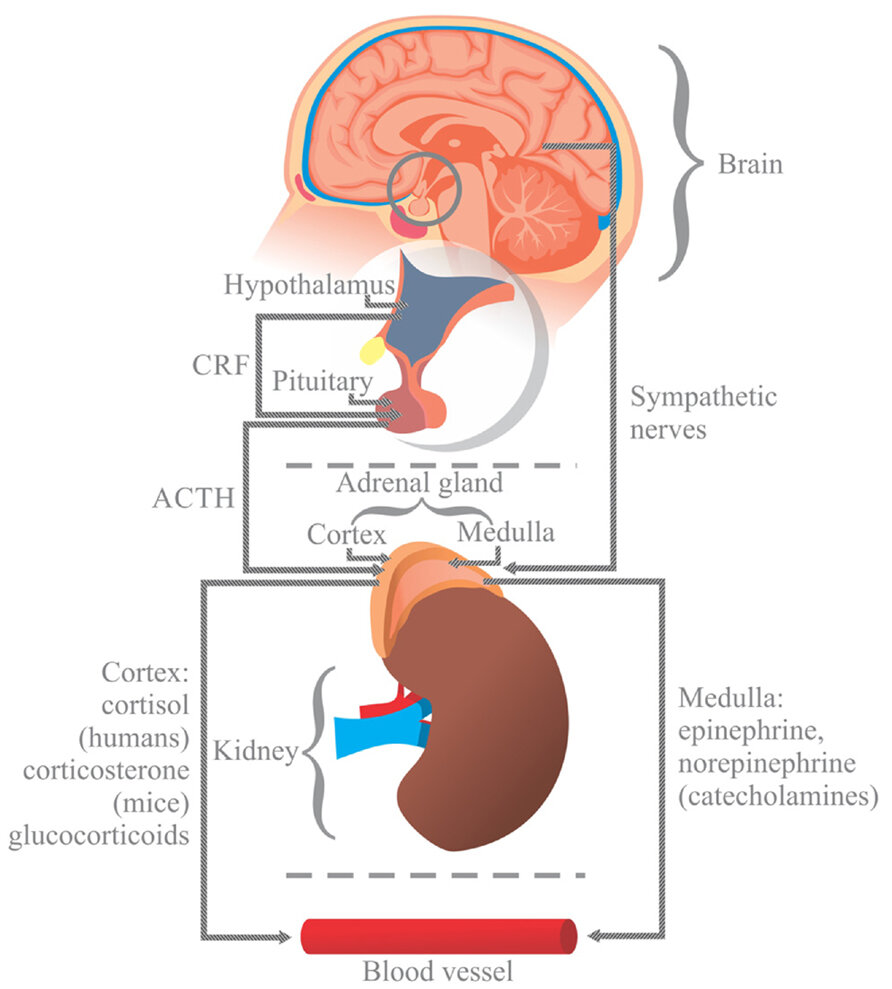
The stress response begins not with a single command, but with a coordinated hormonal pulse from the paraventricular nucleus (PVN) of the hypothalamus. This tiny region sends out two key peptide hormones: Corticotropin-Releasing Hormone (CRH) and Arginine Vasopressin (AVP). They aren't released randomly, but in rhythmic bursts.
CRH is the primary driver of the HPA axis, but AVP acts as a powerful amplifier. When released together, their effect on the pituitary gland is greater than the sum of their parts. This synergistic action allows for a more nuanced and potent stress response than CRH could achieve alone. Think of CRH as the main message and AVP as the exclamation point that ensures it gets attention.
Once released from the PVN, these hormones don't enter the general bloodstream. Instead, they travel through a dedicated micro-circulation network called the hypophyseal portal system. This system is a direct, high-speed conduit of capillaries connecting the hypothalamus to the anterior pituitary. This ensures that a concentrated dose of CRH and AVP reaches its target without being diluted by the body's entire blood volume, allowing for a rapid and efficient signal.
From Precursor to Signal
Upon arriving at the anterior pituitary, CRH and AVP bind to receptors on specialized cells called corticotrophs. This binding triggers the production and cleavage of a large precursor protein known as Proopiomelanocortin (POMC). POMC is like a long ribbon studded with different potential hormones. It's not active on its own; it must be cut up by enzymes to release the functional pieces.
The key enzyme responsible for this process is Prohormone Convertase 1 (PC1). It snips POMC at specific points to liberate several molecules, the most important for the stress response being Adrenocorticotropic Hormone (ACTH).
ACTH is then released from the corticotrophs into the general circulation, where it travels throughout the body to find its target: the adrenal cortex.
Initiating Steroid Synthesis
When ACTH reaches the adrenal glands, which sit atop the kidneys, it binds specifically to the Melanocortin 2 Receptor (MC2R) on the surface of cells in the adrenal cortex. This binding is the final handoff in the hormonal relay, initiating the synthesis of glucocorticoids like cortisol.
The MC2R is a G-protein coupled receptor. Its activation triggers an intracellular signaling cascade that rapidly increases the levels of cyclic AMP (cAMP), a second messenger molecule. This surge in cAMP activates Protein Kinase A (PKA), which in turn phosphorylates numerous target proteins within the cell.
One of the most critical targets of this cascade is the Steroidogenic Acute Regulatory (StAR) protein. The primary role of StAR is to transport cholesterol, the raw material for all steroid hormones, from the outer mitochondrial membrane to the inner mitochondrial membrane. This is the rate-limiting step in steroidogenesis.
Once inside the mitochondria, a series of enzymes converts the cholesterol into pregnenolone, and subsequently into cortisol. The newly synthesized cortisol is then released into the bloodstream to carry out its widespread effects on metabolism, inflammation, and immune function, while also providing negative feedback to the hypothalamus and pituitary to shut down the signal.
What are the two primary peptide hormones released from the paraventricular nucleus (PVN) of the hypothalamus to initiate the HPA axis stress response?
What is the primary function of Arginine Vasopressin (AVP) in the context of the HPA axis?