System Scaling Through Structured Listening
Understanding Feedback Loops
What Are Feedback Loops?
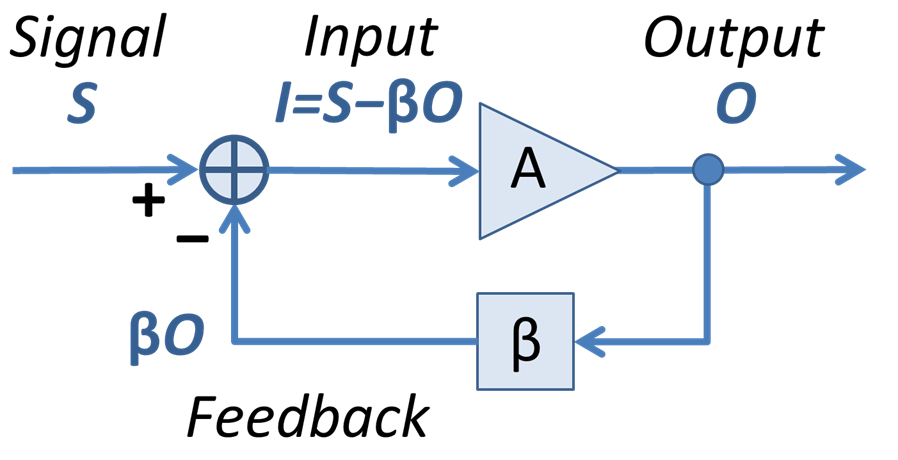
A feedback loop is a process where the output of an action is used as input for future actions. Think of it as a system that learns from itself. Information about the result of a process is continuously routed back to the beginning, influencing the next cycle. This allows a system to self-regulate, adapt, and evolve.
A classic example is a thermostat. It measures the room's temperature (output) and uses that information to decide whether to turn the heat on or off (input for the next action). The goal is to maintain a stable temperature.
In the context of scaling systems, feedback loops are the core mechanism for automated decision-making. They transform raw performance data into actionable responses, allowing systems to adjust to changing loads without human intervention. By monitoring outputs like CPU usage, response time, or error rates, a system can automatically decide whether to add more resources, throttle traffic, or perform other corrective actions.
Two Kinds of Loops
Feedback loops generally fall into two categories: negative and positive. They have opposite effects, and understanding the difference is key to designing stable, scalable systems.
Negative Feedback
noun
A reaction that causes a decrease in function. It occurs in response to a stimulus and works to stabilize a system, keeping it in a state of equilibrium.
Negative feedback loops are balancing or stabilizing. They counteract change. When a system deviates from its desired state, a negative feedback loop pushes it back toward the target. The thermostat is a perfect example of a negative feedback loop. So is the auto-scaling mechanism for a web application. If traffic spikes and server latency increases, the system automatically adds more servers to bring latency back down to an acceptable level. Most control systems are built on negative feedback loops.
Negative qualitative feedback is defined as 'Demotivating, non-rewarding or punishing' (human behavior), while negative quantitative feedback is 'Moving a value closer to its reference value' (system parameter).
Positive Feedback
noun
A reaction that causes an increase in function. It occurs when the product of a reaction leads to an increase in that same reaction, amplifying the original stimulus.
Positive feedback loops are reinforcing or amplifying. They push a system further and further away from its starting point, leading to exponential growth or collapse. Think of a microphone placed too close to a speaker. The microphone picks up the amplified sound, which is then re-amplified, creating a deafening screech. The effect grows on itself.
In technology, a positive feedback loop can be beneficial, like when a popular app gets more users, which attracts more developers, which creates more features, attracting even more users. But it can also be destructive. A small software bug might cause a few errors, which consume memory, which slows the system, causing more processes to time out and generate more errors. This vicious cycle can quickly lead to a system crash.
Identifying Bottlenecks with Feedback
Feedback loops are your system's nervous system. They tell you when something is wrong and where the pain is. By monitoring key metrics, you can identify bottlenecks before they cause catastrophic failures. A bottleneck is a point in the system where the load exceeds capacity, causing everything else to slow down.
Imagine an online store's checkout process. It involves several services: inventory check, payment processing, and shipping calculation. You can create feedback loops for each one:
- Inventory Check: Monitor the average time it takes to query the inventory database. If this time starts to creep up during peak hours, it’s a sign the database is a bottleneck.
- Payment Processing: Track the success and failure rate of transactions with the payment gateway. A sudden spike in failures is immediate feedback that something is wrong with that external service.
- Shipping Calculation: Measure the response time from the shipping API. If it becomes slow, it delays the entire checkout process for every customer.
By analyzing the data from these feedback loops, you can pinpoint the exact component that needs to be scaled or optimized. Perhaps the inventory database needs a more powerful server (vertical scaling) or read replicas to distribute the load (horizontal scaling). Maybe you need a more resilient way to handle payment gateway failures. The feedback loop doesn't just identify the problem; it provides the data needed to make an informed decision on how to fix it.
Ready to test your knowledge?
What is the fundamental purpose of a feedback loop in the context of system architecture?
A web application's auto-scaling mechanism detects high CPU usage and automatically provisions more servers to handle the load, bringing the average CPU usage back down. This is an example of a:
By understanding and implementing effective feedback loops, you can build systems that are not just scalable, but also resilient and self-healing.