System Design Fundamentals
Introduction to System Design
What Is System Design?
Think about building a house. You wouldn't just start nailing boards together. You'd start with a blueprint. That blueprint outlines the foundation, the number of rooms, where the plumbing goes, and how it will all connect. It ensures the house is sturdy, functional, and can handle a family living inside.
System design is the blueprint for software. It's the process of defining the architecture, components, modules, interfaces, and data for a system to satisfy specified requirements. Before writing a single line of code, designers map out how everything will work together. This planning prevents a lot of headaches down the road, ensuring the final product is strong, efficient, and ready for real-world use.
System design is a critical aspect of software engineering that deals with the structural planning and decision-making process behind how different components of a system will interact to meet specific goals.
Good design is the difference between an app that crashes every time it gets popular and one that handles growth seamlessly. It's about thinking ahead to build something that lasts.
The Pillars of Good Design
When we talk about 'good' system design, we're usually measuring it against a few key qualities. These are the pillars that support any robust and successful system.
Scalability
noun
The system's ability to handle a growing amount of work by adding resources.
Imagine a small ice cream shop with one employee. If a line forms, that one person has to work faster, which only helps so much. A scalable shop would be designed to easily add more employees and cash registers during busy hours. In software, this means designing a system that can handle more users or more data by adding more servers or computing power.
Reliability
noun
The ability of a system to perform its required functions under stated conditions for a specified period of time.
A reliable system is one you can count on. It works as expected, even when things go wrong. If one part of the system fails, the rest of it should be able to continue functioning. Think of an airplane's critical systems; they have backups for their backups. This is reliability in action.
Maintainability
noun
The ease with which a system can be modified to correct faults, improve performance, or adapt to a changed environment.
Software is never truly 'done.' It needs updates, bug fixes, and new features. A maintainable system is like a well-organized toolbox. When you need to fix something, you can find the right tool quickly. Poorly designed systems are like a messy garage; finding what you need is a nightmare, and trying to change anything might make the whole structure collapse.
Performance
noun
A measure of how quickly and efficiently a system can complete a task.
Performance is about speed and responsiveness. How long does it take for a web page to load? How quickly can you get search results? A high-performance system delivers a smooth, fast experience to the user. This is often measured in terms of latency (the delay before a transfer of data begins) and throughput (the amount of work done in a given amount of time).
The Design Process
Creating a system blueprint isn't a single action but a structured process. It generally follows a path from understanding the problem to sketching out the solution.
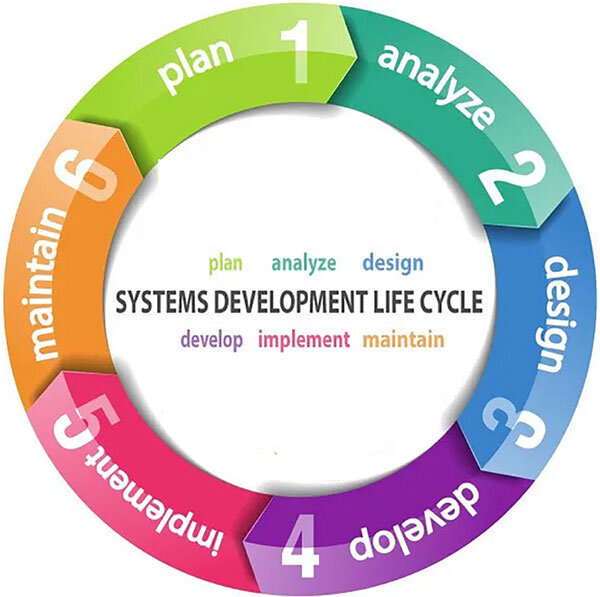
The process begins by figuring out what the system needs to do. This is called requirement analysis. Designers talk to users and stakeholders to understand the business goals. They distinguish between functional requirements (what the system should do, e.g., 'allow users to upload photos') and non-functional requirements (how the system should be, e.g., 'the upload must complete in under 3 seconds').
Next comes system modeling. Here, designers create abstract models of the system. This might involve flowcharts, diagrams, and other visuals to represent how data will move and how different components will interact. It's about visualizing the solution before building it.
Finally, with a clear understanding of the requirements and a model to work from, designers move to architecture design. This is where the high-level structure is chosen. They decide on the technologies to use, how to structure the database, and how to break the system into smaller, manageable services. This is the final blueprint that developers will use to build the software.
This three-step flow—analyze, model, design—ensures that what gets built actually solves the right problem in an effective and sustainable way.
System design is often compared to a blueprint for a house. What does this analogy primarily emphasize?
A photo-sharing app experiences a sudden surge in users. The app slows down to a crawl and frequently crashes because it cannot handle the increased traffic. This indicates a problem with which system design quality?