System Design Fundamentals
System Design Fundamentals
What Is System Design?
System design is the process of defining the architecture, components, modules, interfaces, and data for a system to satisfy specified requirements. Think of it as creating a blueprint for a software application before you write a single line of code.
Just as you wouldn't build a skyscraper without a detailed architectural plan, you shouldn't build a complex software system without a thoughtful design. It’s about making strategic decisions upfront to prevent major headaches later. This process involves considering how different parts of the system will work together to achieve a common goal.
System Design is the process of architecting a system so that all functional and non-functional requirements are met, including APIs, use cases, and integrations.
A good design ensures the final product is efficient, dependable, and can adapt to future needs. It's the foundation upon which a successful application is built.
The Pillars of Good Design
When designing a system, we focus on several key qualities. These are often called non-functional requirements because they describe how the system works, not just what it does. Three of the most important are scalability, reliability, and maintainability.
Scalability
noun
The system's ability to handle a growing amount of work or its potential to be enlarged to accommodate that growth.
Imagine a small coffee stand that serves ten customers an hour. If it suddenly becomes famous and 1,000 customers show up, the single barista can't keep up. A scalable system is like a coffee shop designed to add more baristas and espresso machines as demand grows, without rebuilding the entire shop.
Reliability
noun
The ability of a system to perform its required functions under stated conditions for a specified period of time.
A reliable system is one you can count on. It works correctly and consistently. Think of it like a trusted car that starts every morning, regardless of the weather. In system design, this means anticipating that components will fail and building in safeguards so the entire system doesn't crash.
A key principle of reliability is to design for failure. Assume components will break and plan how the system will handle it gracefully.
Maintainability
noun
The ease with which a software system can be modified to correct faults, improve performance, or adapt to a changed environment.
No software is ever truly "finished." There will always be bugs to fix, features to add, and updates to make. Maintainability is about making that process as painless as possible. A maintainable system is like a well-organized toolbox where every tool is in its place, making it easy to find what you need. A system with poor maintainability is a tangled mess, where changing one thing might unexpectedly break three others.
The Design Life Cycle
System design isn't a single event but a cycle of activities. While there are many models, they generally follow a common path from an idea to a functioning system.
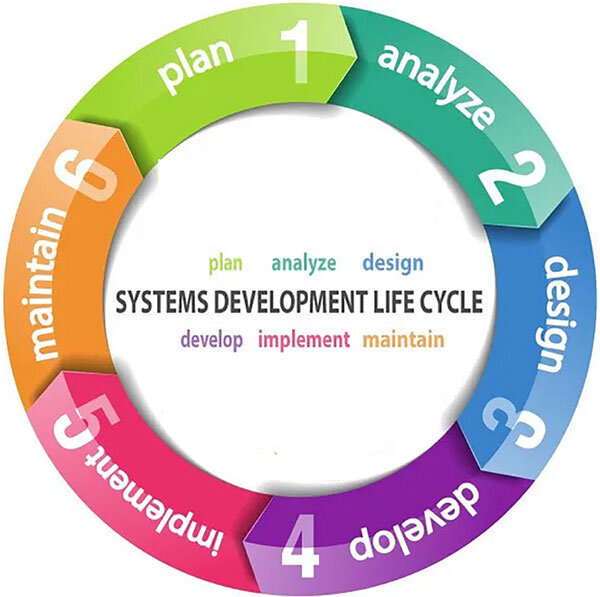
This cycle typically includes a few key stages:
-
Requirements Gathering & Analysis: This is the starting point. Before you can design anything, you need to understand what you're building. What problem is the system solving? Who are the users? What features do they need? What are the performance and security expectations? This step involves talking to stakeholders, asking questions, and clarifying every detail.
-
High-Level Design (Architectural Design): Once you know the requirements, you create the high-level blueprint. You decide on the overall architecture, break the system into major components, and define how they will interact. You're not worried about the nitty-gritty details yet, just the big picture.
-
Low-Level Design (Detailed Design): Here, you zoom in on each component. You define the specific modules, data structures, algorithms, and interfaces. This is the detailed plan that developers will use to actually write the code.
-
Implementation & Testing: With the design complete, developers build the system. As it's built, it's rigorously tested to ensure it meets the requirements and quality attributes defined in the earlier stages.
-
Deployment & Maintenance: The system goes live for users. The cycle continues as you monitor the system, fix bugs, and plan for future updates based on user feedback and changing needs.
Now, let's test what you've learned about these core ideas.
What is the primary purpose of system design in software development?
A social media website adds a new feature. To make the change, developers have to rewrite large, unrelated parts of the codebase, which introduces new bugs. This system is likely lacking in which key quality?
Understanding these fundamentals—what system design is, its key goals, and its typical life cycle—provides the foundation for tackling more complex design challenges.