System Design Fundamentals
Introduction to System Design
What Is System Design?
System design is the process of creating a blueprint for a complex software system. Think of it like an architect designing a skyscraper. Before anyone pours concrete or erects steel beams, the architect creates detailed plans that define the structure, the layout of each floor, the electrical and plumbing systems, and how everything works together. Without this blueprint, the project would be chaotic and likely fail.
In software, system design serves the same purpose. It's where you decide on the architecture, components, and interfaces needed to meet specific requirements. This planning phase is crucial because the choices made here will affect the system for its entire lifespan.
System design is the process of designing the architecture, components, modules, interfaces, and data for a system to satisfy specified requirements.
A well-designed system is easier to build, test, and evolve over time. Poor design, on the other hand, leads to systems that are slow, prone to crashing, and incredibly difficult to update. It's all about planning ahead to prevent major headaches down the road.
The Core Objectives
When designing a system, we're not just trying to make it work. We're aiming for specific qualities that ensure it works well now and in the future. The three most important objectives are scalability, reliability, and maintainability.
Scalability
noun
The ability of a system to handle a growing amount of work by adding resources.
Imagine you launch a small photo-sharing app. In the first month, you have 100 users. By the sixth month, you have 100,000. Can your system handle that massive increase in traffic without slowing down or crashing? If so, it's scalable. Scalability ensures that your system can grow with your user base without a complete overhaul.
Reliability
noun
The probability that a system will perform its intended function without failure for a specified period.
A reliable system is one that users can trust. It stays online and functions correctly, even when parts of it fail. For example, if one server in a data center goes offline, a reliable system automatically redirects traffic to another server so that users don't notice any interruption. This is often called fault tolerance.
Maintainability
noun
The ease with which a software system can be modified to correct faults, improve performance, or adapt to a changed environment.
Software is never truly “done.” There will always be bugs to fix, features to add, and security patches to apply. Maintainability is about how easy it is for developers to make these changes. A maintainable system has clean, organized code and a logical structure, allowing engineers to find and fix problems or add new functionality without breaking everything else.
Requirements and Principles
Before you can design a system, you must understand what it needs to do. This starts with gathering requirements. These are the specific functionalities and characteristics the system must have. Requirements are typically split into two types:
- Functional Requirements: What the system does. For example, “a user must be able to upload a profile picture.”
- Non-Functional Requirements: How the system is. These relate to qualities like performance, security, and the core objectives we just discussed. For instance, “the profile picture must upload in under 3 seconds” is a non-functional requirement.
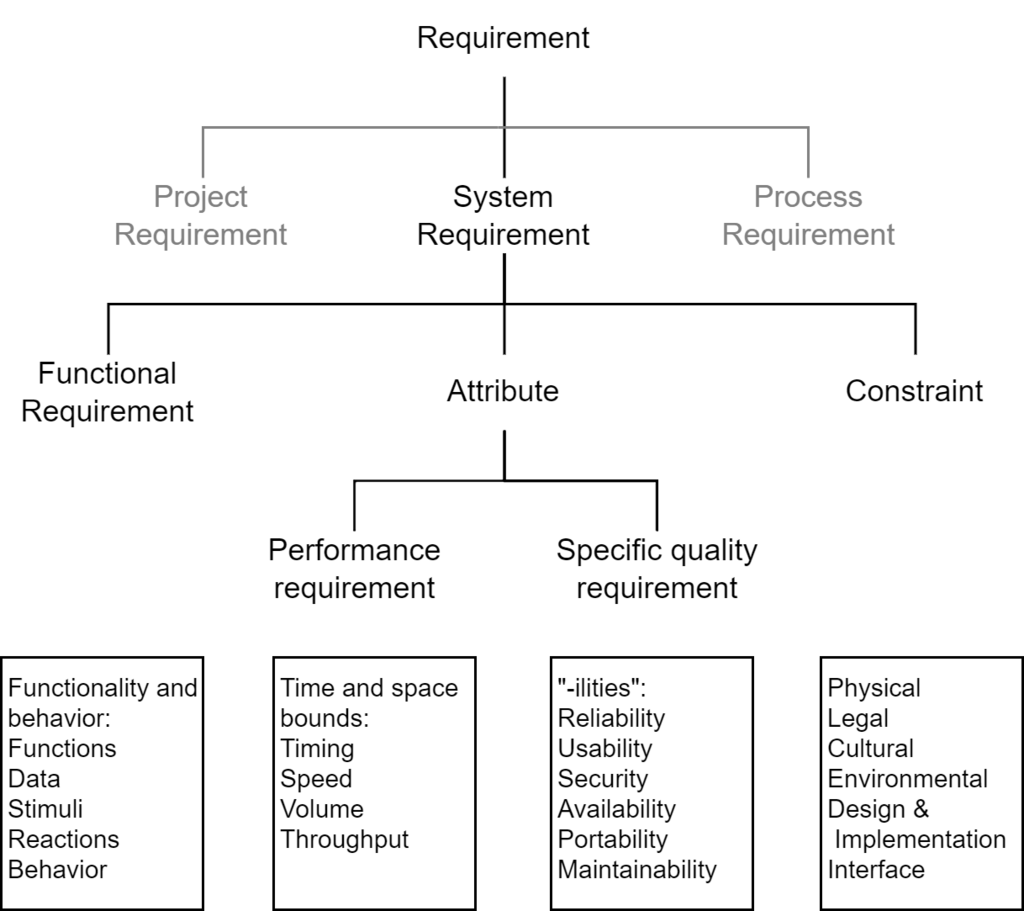
Once requirements are clear, we rely on timeless design principles to guide our decisions. These principles help us build systems that are logical, flexible, and robust.
Separation of Concerns: This principle suggests that a system should be divided into distinct sections, each addressing a separate concern. For example, in a web application, the user interface (what the user sees), the business logic (the rules of the application), and the data storage (the database) should be handled by different parts of the system. This makes it easier to manage and update each part independently.
Modularity: Closely related to separation of concerns, modularity involves breaking a system down into smaller, independent, and interchangeable modules. Each module has a specific job. This is like building with LEGO bricks instead of a solid block of clay. You can easily swap one brick for another or add new ones without affecting the rest of the structure.
Abstraction: Abstraction means hiding complex reality while exposing only the essential parts. When you drive a car, you use a steering wheel, pedals, and a gear stick. You don't need to know the complex mechanics of the engine or transmission to operate it. In system design, abstraction allows us to build components that have simple interfaces, hiding their internal complexity from other components. This makes the system easier to understand and use.
What is the primary purpose of system design in software development?
An online video streaming service successfully handles a massive increase in viewers during a live sports final without crashing. This capability primarily demonstrates the system's:
System design is a deep topic, but it all starts with these foundational concepts. By focusing on clear requirements, core objectives, and proven principles, you can create a solid blueprint for building software that lasts.