Synthesizing Duchamp and Modern Philosophers on Art
Duchamp's Readymades
The Object as Art
What if an artist’s greatest tool wasn't a brush, but an idea? What if art could be found, not just made? Around 1913, French artist Marcel Duchamp began to explore this very question. He started selecting ordinary, mass-produced objects and presenting them as art. He called them “readymades.”
Readymade
noun
A common, prefabricated object presented by an artist as a work of art. The artistic act is the selection and recontextualization of the object, not its creation.
One of the earliest examples was Bottle Rack (1914), a simple galvanized iron rack for drying bottles, which he bought from a department store. He didn't alter it, sculpt it, or paint it. He simply chose it and designated it as art. By doing this, Duchamp wasn't asking people to admire the rack's beautiful design. He was forcing them to question the very nature of art and the role of the artist.
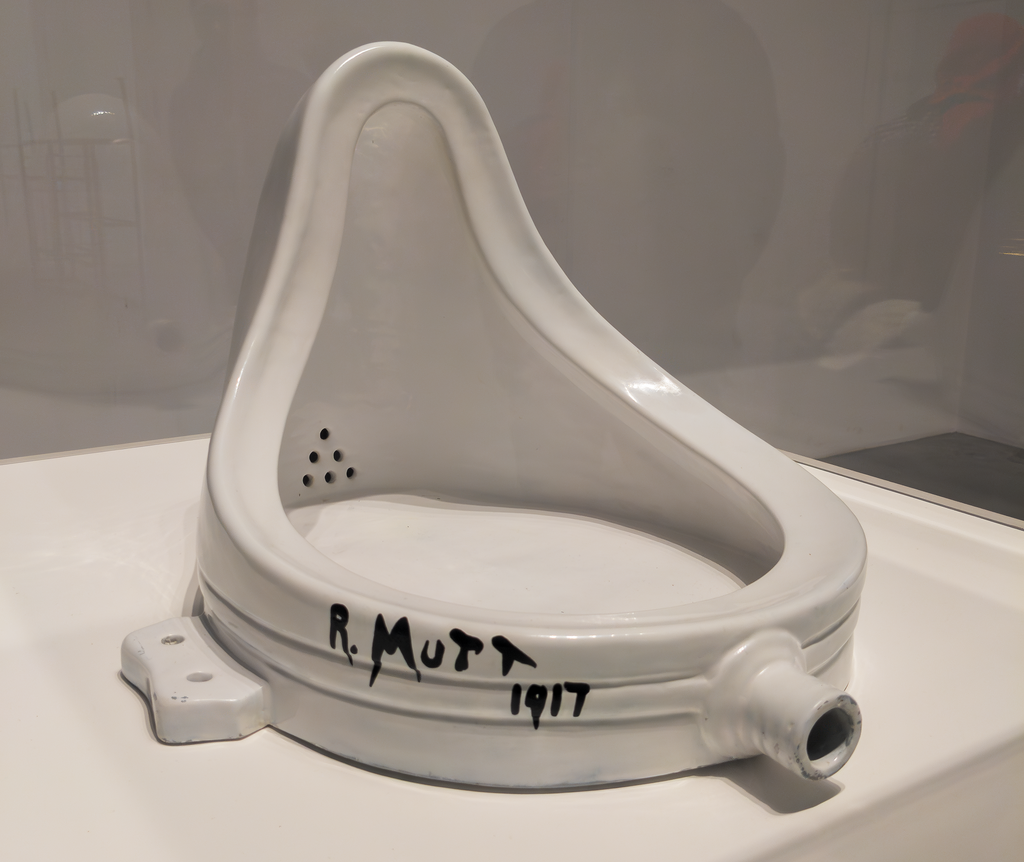
The most notorious readymade arrived in 1917. For an art exhibition that promised to accept any work submitted, Duchamp anonymously sent in a standard porcelain urinal. He turned it on its back, signed it with the pseudonym “R. Mutt,” and titled it Fountain.
The exhibition’s organizers, despite their open-door policy, refused to display it. They argued it wasn't art. The ensuing scandal was exactly the point. Duchamp wanted to provoke a debate. Is art defined by the artist’s skill? Does it have to be beautiful? Or can the artist's idea alone transform an object?
With the readymade, art was no longer about what the artist could make, but about what the artist could think.
Shifting the Focus
Duchamp’s actions fundamentally changed the definition of an artist. Before, an artist was primarily a skilled craftsperson, a master of paint, stone, or clay. The readymade proposed that an artist could be a thinker first, a creator of concepts rather than objects. The value was not in the physical work but in the intellectual shift the object provoked.
This move from the physical to the conceptual is one of the most significant shifts in modern art. It separated the concept of the work from the object itself. The urinal wasn't important; the idea that a urinal could be art was.
The readymades by Marcel Duchamp are exemplary, being manufactured goods that radically challenged the notion of work of art.
Of course, this approach wasn't without its critics. Many felt it was a joke, a cynical gesture that dismissed centuries of artistic tradition and skill. They argued that if anything could be art, then nothing was art. This debate continues today, proving the lasting power of Duchamp's questions.
By placing a bottle rack or a urinal in a gallery, Duchamp forced a new kind of viewing. The audience was no longer just looking at an object's aesthetic qualities. They were forced to engage with the idea behind it. The meaning of the artwork wasn’t on the canvas, but in the mind of the viewer.
What is a 'readymade' in the context of Marcel Duchamp's work?
What was the title of the readymade that was a urinal signed 'R. Mutt'?
This radical idea paved the way for conceptual art, pop art, and countless other movements that prioritize the idea over the object.