Synergistic AI Tool Integration
Introduction to AI Tool Integration
Assembling an AI Team
Think about building a piece of furniture. You wouldn't use just a hammer. You'd need a screwdriver, a wrench, and maybe a drill. Each tool has a specific job, and you use them together to get the final result.
AI tool integration is the same idea. It’s the process of connecting different, specialized AI systems so they can work together on a complex task. Instead of relying on a single, general-purpose AI, you create a team of experts that pass information to each other to achieve a goal.
One AI might be great at understanding human language, while another excels at searching databases, and a third is a master at creating images. Integration lets them combine their strengths.
This teamwork allows us to build much more sophisticated and capable systems. The AI that understands your voice command isn't the same one that pulls up the weather forecast; they're two separate tools working in harmony. This collaborative approach is the key to unlocking the full potential of artificial intelligence.
Stronger Together
Combining AI tools isn't just a neat trick; it provides significant advantages. The most obvious benefit is creating a system that's more powerful than the sum of its parts. An AI that can write code and an AI that can test for bugs can be linked to automate software development in ways neither could alone.
Efficiency gets a huge boost. Imagine a marketing team that wants to create a social media campaign. An integrated system could have one tool analyze current trends, another write post captions, a third generate relevant images, and a fourth schedule the posts. This automates a multi-step workflow, saving time and reducing the chance of human error.
Accuracy can also improve. One AI can act as a fact-checker for another. A system designed to summarize news articles could use a second tool to verify the facts in its own summary before presenting it to the user. This creates a self-correcting loop that builds more reliable and trustworthy AI.
Integration in the Real World
You probably use integrated AI systems every day without realizing it. When you ask your smartphone's assistant to find a nearby coffee shop and give you directions, you're kicking off a chain of integrated tools.
- A Speech Recognition tool converts your spoken words into text.
- A Natural Language Understanding tool figures out what you want (your intent).
- A Search tool queries a map database for coffee shops near your current location.
- A Navigation tool calculates the best route.
- A Text-to-Speech tool reads the directions back to you.
Each step is handled by a specialized AI, all working together seamlessly to fulfill your request.
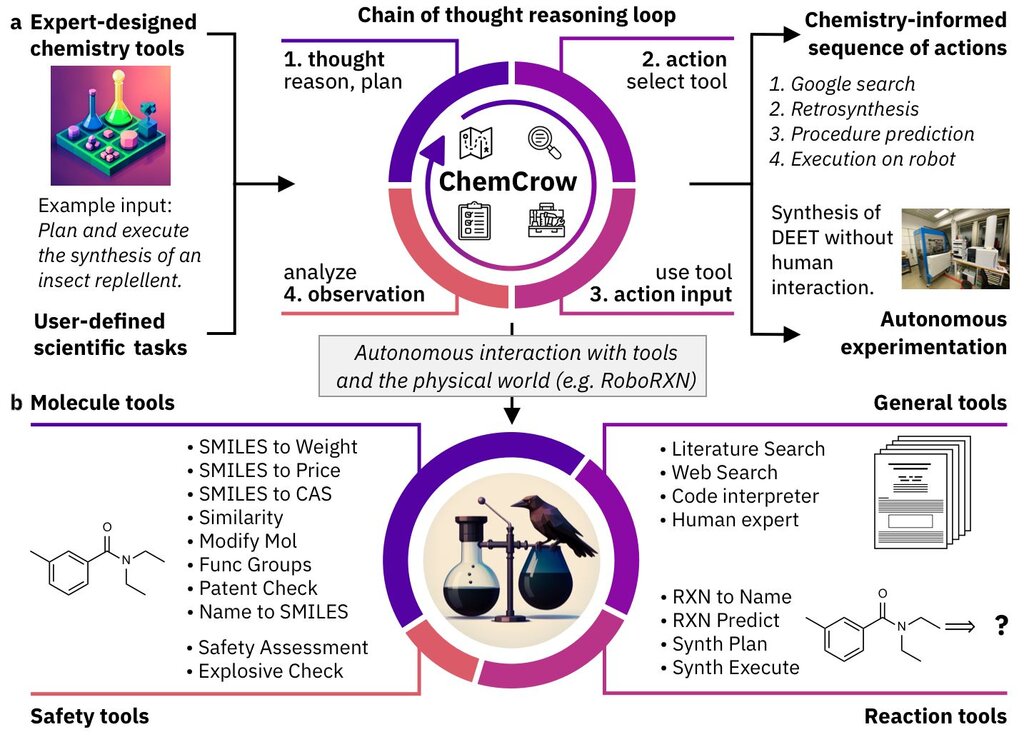
This same principle applies in more complex fields. In medicine, one AI might analyze a patient's medical images (like an X-ray), another might cross-reference the findings with the patient's history in a database, and a third could check the latest medical research for potential diagnoses. By combining these tools, doctors can get a more comprehensive and accurate picture of a patient's health.
From booking a flight online to getting a personalized product recommendation, AI tool integration is the invisible engine powering many of the modern conveniences we rely on.
By integrating with external tools and services, AI agents can access real-time data, perform complex operations, and provide more comprehensive solutions to users.
Now that you understand the what and why of AI tool integration, let's test your knowledge.
What is the core idea behind AI tool integration?
According to the text, which of these is NOT a primary benefit of AI tool integration?
Understanding how different AIs can work as a team is the first step toward building and using more powerful and intelligent systems.