Symbolic Branding for Personal Gains
Conceptual Value Mapping
From Abstract Value to Concrete Identity
You already know that a brand is more than a logo. It's a promise and a feeling. But how do you translate a complex philosophy, like the one behind 'Peybol,' into a clear, visual identity? The process isn't about arbitrary design choices; it's about systematically mapping meaning.
We start by connecting what something is to what it does for a person. This is the core of , a technique to link a product's features (its attributes) to the personal benefits and values a user gains. Instead of starting with 'what looks cool,' we start with 'what matters to our user.'
The goal is to build a philosophical roadmap. Every visual element we create later will have a non-arbitrary foundation in the user's specific goals.
Finding Peybol's Pillars
Let’s apply this to Peybol. We begin by brainstorming the abstract benefits someone gets from using it. These are high-level concepts, the emotional and professional payoffs. Words like 'growth,' 'efficiency,' 'clarity,' and 'connection' might come to mind. These are our starting points.
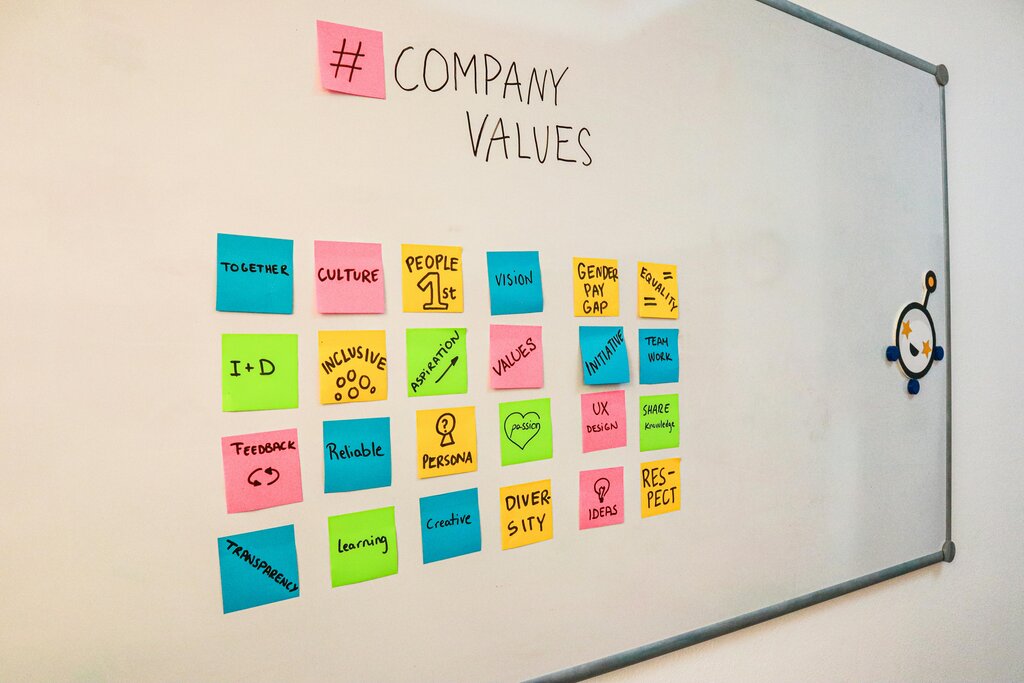
But 'growth' is too vague for a designer. We need to break it down. What does growth look like in a professional context? It could mean acquiring a new skill, getting a promotion, or expanding a professional network. Each of these is a more concrete, actionable concept.
We can organize these ideas into thematic clusters. By grouping related benefits, we distill the sprawling cloud of abstract ideas into a few solid pillars. These pillars form the core of the brand's story. For Peybol, we might identify a few key themes that consistently emerge from our mapping exercise.
This process translates personal gains into clear themes. 'I want to get better at my job' becomes the 'Professional Advancement' pillar. 'I want my work day to be less stressful' becomes the 'Optimized Workflow' pillar. Now, instead of a vague feeling, we have a concrete foundation to build on.
Your Value Proposition
With these pillars defined, we can construct a core value proposition. This is a clear, concise statement that explains the promise Peybol makes to its users. It’s not just a marketing tagline; it’s an internal compass that guides every decision, from product development to visual design.
A strong synthesizes your pillars into a single, powerful idea. It answers the fundamental question from the user's perspective: 'What’s in it for me?' For example, based on our pillars, a value proposition might be: 'Peybol helps you advance your career by streamlining your work and connecting you with meaningful opportunities.'
This statement is now the bedrock of our brand identity. Every icon, color, and font choice we make from this point forward will be evaluated against it. Does this design support the idea of advancement? Does it feel efficient? Does it foster a sense of connection? This ensures the final visual system is not just beautiful, but also deeply meaningful and authentic to the Peybol philosophy.
A brand manifesto—a powerful declaration of purpose, values, and vision—provides the foundation for such connections.
Mapping your values is the critical first step in building a brand that is both authentic and effective. It turns abstract feelings into a concrete strategy.