SWOT Analysis for New Business Ideas
Understanding SWOT Analysis
A Framework for Strategy
When you're considering a new idea or evaluating a business, it helps to look at it from all angles. A SWOT analysis is a simple but powerful tool that helps you do just that. It's a way to organize your thoughts and see the bigger picture.
A SWOT analysis is a framework used to evaluate a company’s competitive position and then to develop a strategic plan to address these areas.
SWOT is an acronym that stands for Strengths, Weaknesses, Opportunities, and Threats. It's typically laid out in a four-quadrant grid, making it easy to visualize the different factors at play.
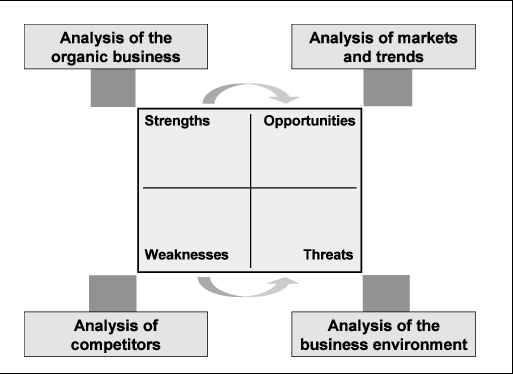
A key part of the SWOT analysis is distinguishing between what's happening inside your organization and what's happening outside. Strengths and Weaknesses are internal factors. These are things you have some control over. Opportunities and Threats are external factors, coming from the wider market or environment.
The Four Components
Let's break down each part of the framework.
Strengths
noun
Internal attributes and resources that support a successful outcome.
Next are Weaknesses. These are the flip side of strengths.
Weaknesses
noun
Internal attributes and resources that work against a successful outcome.
Now we move to the external factors, starting with Opportunities.
Opportunities
noun
External factors that the entity can capitalize on or use to its advantage.
Finally, we have Threats.
Threats
noun
External factors that could jeopardize the entity's success.
Why It Matters
The purpose of a SWOT analysis isn't just to make a list. It's a foundational step in strategic planning. By identifying these four elements, you gain a clear, high-level view of your position.
This clarity helps you make better decisions. You can craft strategies that leverage your strengths, address your weaknesses, seize opportunities, and defend against threats. It turns a complex situation into an organized map, guiding your path forward.
Think of it as a strategic snapshot. It captures where you stand right now, so you can plan for where you want to go.
Now that you understand the what and why of SWOT analysis, you're ready to see how it can be put into practice to evaluate business ideas.