SWOT Analysis for New Business Ideas
Understanding SWOT Analysis
What is SWOT Analysis?
Starting a business or making a big decision can feel like navigating a maze in the dark. A SWOT analysis is like turning on the lights. It's a simple framework that helps you see your situation clearly from four different angles.
SWOT stands for Strengths, Weaknesses, Opportunities, and Threats.
By mapping these four areas, you get a bird's-eye view of your business and the world it operates in. It helps you understand where you stand, what you're up against, and where you can go next. Think of it as a strategic snapshot that guides your decisions.
Internal vs. External Factors
The power of a SWOT analysis comes from how it separates what you can control from what you can't. The first two elements, Strengths and Weaknesses, are internal. They're about your organization itself—the things you have direct influence over.
Strengths are what your business does well. This could be a strong brand reputation, a talented team, unique technology, or efficient processes. These are the advantages you already have.
Weaknesses are areas where you're at a disadvantage. Maybe you have high debt, a lack of certain skills, an inefficient supply chain, or a poor location. These are the internal hurdles you need to address.
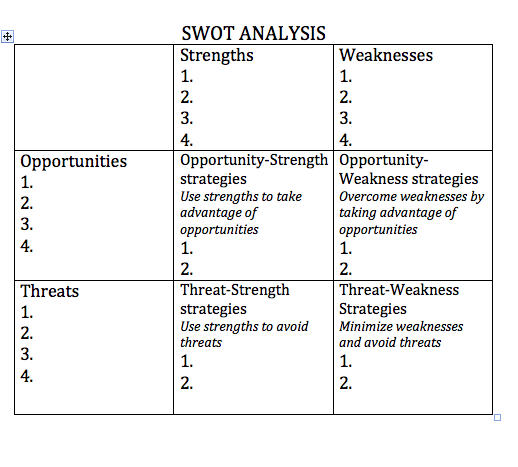
The other two elements, Opportunities and Threats, are external. They come from the world outside your business, and you can't control them. But you can—and should—react to them.
Opportunities are favorable situations in the external environment. This could be an emerging market, new technology you can adopt, a competitor going out of business, or changing customer tastes that favor your product.
Threats are unfavorable situations that could harm your business. These might include new competitors, stricter regulations, a negative economic downturn, or shifts in technology that make your offering obsolete.
The key is to use your strengths to seize opportunities, while improving your weaknesses to defend against threats.
Why It Matters for Strategy
Conducting a SWOT analysis isn't just an academic exercise. It's the foundation of smart strategic planning. Without this clear picture, you’re just guessing. With it, you can make informed decisions.
For example, if a key strength is your innovative product design, and you spot an opportunity in a new, underserved market, your strategy might be to launch a targeted marketing campaign there. Conversely, if you identify a weakness in your online presence and see a threat from a new, digitally-savvy competitor, your strategy must involve boosting your digital marketing efforts immediately.
By laying everything out, you can connect the dots between your internal capabilities and the external landscape. This clarity allows you to build a strategy that plays to your strengths, minimizes your weaknesses, and navigates the world around you effectively.
Ready to test your understanding of these core concepts?
What is the primary purpose of a SWOT analysis?
Which two elements of a SWOT analysis are considered internal factors that an organization can directly influence?