SWOT Analysis for New Business Ideas
Introduction to SWOT Analysis
What is a SWOT Analysis?
Starting a new business or project can feel like navigating a maze. There are so many factors to consider, and it's easy to get lost. A SWOT analysis is like a map for this maze. It's a straightforward tool that helps you see your situation clearly from multiple angles.
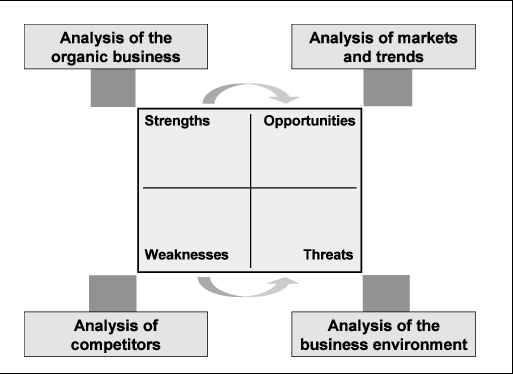
SWOT is an acronym that stands for Strengths, Weaknesses, Opportunities, and Threats. By examining these four areas, you get a snapshot of where you stand right now and what lies ahead. It's a foundational step in strategic planning, helping you make informed decisions instead of just guessing.
A SWOT analysis is a framework used to evaluate a company’s competitive position and then to develop a strategic plan to address these areas.
The main benefit is clarity. It organizes your thoughts and forces you to look at both the good and the bad, inside and out. This balanced view is critical for spotting potential problems early on and for identifying the best paths to success.
The Four Components
The power of a SWOT analysis comes from its four-quadrant structure. These quadrants are divided into two categories: internal factors (things you can control) and external factors (things you can't control).
Internal Factors: Strengths and Weaknesses
These are elements that exist within your business or project. You have some degree of influence over them.
-
Strengths: What does your business do exceptionally well? These are your positive attributes. Maybe you have a highly skilled team, a unique product, a strong brand reputation, or proprietary technology. These are your internal advantages over competitors.
-
Weaknesses: What holds your business back? These are the areas where you are at a disadvantage. It could be a lack of capital, a limited product line, an inefficient process, or a gap in your team's expertise. Being honest about weaknesses is crucial for improvement.
External Factors: Opportunities and Threats
These are factors from the outside world that can impact your business. You can't control them, but you can prepare for and react to them.
-
Opportunities: What external trends or conditions could you take advantage of? This might include a growing market, new technology, a favorable change in regulations, or a competitor's misstep. Opportunities are potential avenues for growth.
-
Threats: What external factors could harm your business? Threats could be anything from new competitors and changing customer tastes to an economic downturn or supply chain disruptions. Identifying threats allows you to build a defense.
How the Pieces Connect
A SWOT analysis isn't just about making four separate lists. The real strategic thinking happens when you start connecting the dots between the quadrants. This is where you move from simple observation to actionable strategy.
Think about how these elements interact. You can ask questions like:
- How can we use our Strengths to capitalize on our Opportunities?
- How can we use our Strengths to minimize our vulnerability to Threats?
- What do we need to do about our Weaknesses to pursue our Opportunities?
- How will our Weaknesses make us more susceptible to Threats?
Answering these questions transforms the analysis from a simple grid into a dynamic plan. It helps you prioritize actions and focus your resources where they will have the greatest impact.
By understanding these relationships, you create a solid foundation for your business strategy. You're no longer just reacting to events; you're proactively shaping your future based on a comprehensive understanding of your position in the market.
In a SWOT analysis, which two quadrants focus on factors that are internal to the business and largely within its control?
A company identifies that its highly skilled engineering team is a major asset. In a SWOT analysis, this would be classified as a(n) ____.
That's the basic framework. By assessing these four key areas, you gain a clear, strategic view of any business venture.