SWOT Analysis for Business Ideas
Introduction to SWOT Analysis
A Simple Framework for Big Decisions
Before starting a new business or launching a project, it’s wise to look at the landscape. A SWOT analysis is a simple tool for doing just that. It's a framework for organizing your thoughts and looking at a situation from four different angles: Strengths, Weaknesses, Opportunities, and Threats.
Think of it as a strategic snapshot. It helps you see where you stand right now, so you can decide where to go next.
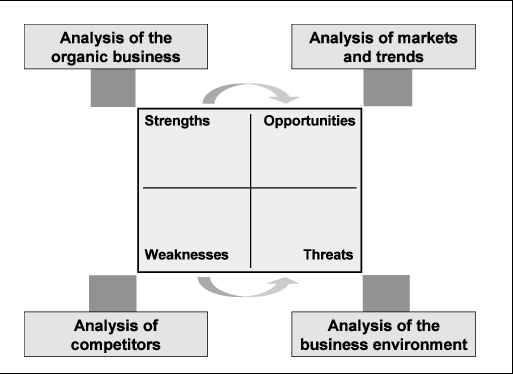
The four categories are split into two groups. Strengths and weaknesses look at internal factors, things that are within your company's control. Opportunities and threats look at external factors, things happening in the wider world that could affect you.
Looking Inward
The first step is to assess what's happening inside your own organization. This is where you have the most influence.
Strength
noun
A characteristic of a business or project that gives it an advantage over others.
Strengths are the things your company does well. This could be a strong brand reputation, a talented team, proprietary technology, or efficient processes. These are the assets you can build upon.
Weakness
noun
A characteristic of a business or project that places it at a disadvantage relative to others.
Weaknesses are the areas where you need to improve. This might include things like a lack of capital, a high employee turnover rate, or gaps in your product line. Identifying weaknesses isn't about placing blame; it's about being honest so you can find solutions.
Looking Outward
Next, you need to scan the horizon for factors outside your control. You can’t change these things, but you can prepare for them.
Opportunity
noun
An element in the external environment that could be exploited to the organization's advantage.
Opportunities are favorable external conditions you can use to your advantage. This could be a new market opening up, a shift in consumer trends that favors your product, or a competitor struggling. The goal is to spot these openings and be ready to act on them.
Threat
noun
An element in the external environment that could cause trouble for the business or project.
Threats are external factors that could harm your business. Examples include new government regulations, a negative press story, a downturn in the economy, or a disruptive new technology entering your market. By identifying threats early, you can develop plans to mitigate their impact.
Why Bother?
So, why go through this exercise? A SWOT analysis isn't just about making lists. It’s about gaining clarity. It forces you to step back and see the bigger picture.
By laying everything out, you can start to see connections. How can you use your strengths to seize an opportunity? How can you shore up a weakness to defend against a threat? This kind of strategic thinking is invaluable, especially when you’re charting a new course.
The main benefit is focus. It helps you zero in on what really matters, turning a complex situation into a clear set of priorities.
For a new business idea, this process is fundamental. It helps you validate your concept by systematically checking its internal potential against the external reality. You might discover an untapped opportunity that makes your idea even stronger, or a hidden threat that requires you to rethink your approach. It’s a simple but powerful way to make smarter, more informed decisions from the very beginning.
In a SWOT analysis, which two components are considered internal factors, meaning they are largely within a company's control?
A company discovers that a new government regulation will significantly increase its production costs. Under which category of a SWOT analysis would this be classified?