SWOT Analysis for AKS Migration
Introduction to SWOT Analysis
What Is a SWOT Analysis?
When you're facing a big decision, it's easy to get stuck. Whether you're launching a new product, changing careers, or planning a major project, you need a clear view of the landscape. That's where a SWOT analysis comes in. It's a simple framework for organizing your thoughts and mapping out a strategy.
SWOT is an acronym that stands for Strengths, Weaknesses, Opportunities, and Threats.
Think of it as a structured brainstorming session. By looking at these four areas, you get a balanced picture of where you stand. You can see what you're doing well, where you need to improve, how you can grow, and what risks you need to watch out for. It’s a tool for turning scattered information into a clear plan of action.
Breaking Down the Four Parts
The power of SWOT analysis comes from its structure, which divides factors into two categories: internal and external.
Internal Factors (Strengths and Weaknesses) These are things that are within your control. They are qualities and resources that exist inside your organization or project right now.
-
Strengths are the positive attributes that give you an advantage. What do you do better than anyone else? What unique resources can you draw on? A strong brand reputation, a talented team, or proprietary technology would all be considered strengths.
-
Weaknesses are the negative factors that put you at a disadvantage. What could you improve? Where do you have fewer resources than others? Things like a high level of debt, an outdated supply chain, or a lack of skilled staff fall into this category.
It's important to be honest when assessing your weaknesses. A clear-eyed view is essential for making good decisions.
External Factors (Opportunities and Threats) These are things happening outside your organization that could impact your success. You can't control them, but you can prepare for them.
-
Opportunities are external factors you can use to your advantage. Are there underserved markets you could enter? Could new technology help you innovate? A favorable government policy or a decline in the number of competitors are examples of opportunities.
-
Threats are external factors that could harm your project or business. What obstacles do you face? What are your competitors doing? A looming economic recession, changing customer tastes, or new regulations could all be threats.
| HELPFUL to achieving the objective | HARMFUL to achieving the objective | |
|---|---|---|
| INTERNAL | Strengths | Weaknesses |
| EXTERNAL | Opportunities | Threats |
Putting It All Together
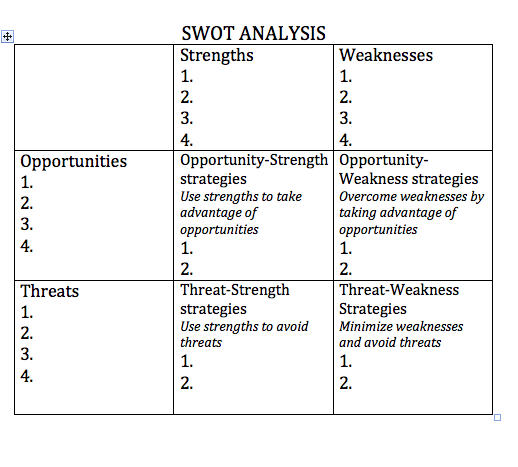
So, what's the point of listing all this out? A SWOT analysis isn't just about making four lists. The real value comes from the connections you make between the quadrants. It helps you build a strategy that plays to your strengths, minimizes your weaknesses, seizes opportunities, and guards against threats.
For example, you can ask questions like:
- How can we use our strengths to take advantage of our opportunities?
- How can we improve our weaknesses to mitigate potential threats?
- What weaknesses might prevent us from pursuing key opportunities?
By thinking through these combinations, you move from simple observation to strategic planning. You're not just looking at the present; you're charting a course for the future. This makes the SWOT analysis a foundational tool for any major decision.
Let's check your understanding of these core concepts.
What is the primary purpose of a SWOT analysis?
In a SWOT analysis, Strengths and Weaknesses are considered which type of factors?
Now that you understand the what and why of SWOT analysis, you have a solid framework for evaluating complex situations and making informed decisions.