Swimming Pool Technical Operations
Pool Water Chemistry
The Science of a Safe Swim
A sparkling clean pool looks inviting, but what you can't see is just as important as what you can. The invisible world of pool water chemistry is what makes swimming safe and enjoyable. It's a careful balancing act, ensuring the water is clean for swimmers without being harsh on their skin and eyes.

Let's dive into the core principles that every pool operator must master, starting with the foundation of water balance: pH.
The Importance of pH
You might remember pH from a science class. It's a scale from 0 to 14 that measures how acidic or alkaline (basic) a substance is. A pH of 7 is neutral. Anything below 7 is acidic, and anything above 7 is alkaline. The pH of human tears is about 7.4, which is a key number to remember.
For a swimming pool, the ideal pH is slightly alkaline, between 7.2 and 7.8. Why this specific range? There are two big reasons.
First, swimmer comfort. Water that is too acidic (low pH) will sting your eyes and dry out your skin. Water that is too alkaline (high pH) can also cause skin irritation and make the water cloudy.
Second, disinfectant effectiveness. This is the crucial part. The main chemical used to kill germs in a pool, chlorine, works best within that ideal pH range. If the pH is too high, the chlorine becomes slow and sluggish, unable to do its job properly. If it's too low, the chlorine gets used up too quickly.
Keeping the pH in the right range ensures your sanitizer works efficiently and swimmers are comfortable.
The Sanitizers
Pools are full of people, and people introduce all sorts of things into the water: sweat, oils, sunscreen, and, unfortunately, germs. A sanitizer is a chemical that kills or inactivates these harmful microorganisms, like bacteria and viruses.
Chlorine
noun
A chemical element used as a powerful disinfectant to sanitize water by killing harmful microorganisms.
The most common sanitizer is chlorine. When you add chlorine to water, it forms a weak acid called hypochlorous acid. This is the active ingredient that destroys pathogens. The amount of this active, germ-killing chlorine in the water is called Free Available Chlorine, or FAC.
Free chlorine is the single most important factor in public pool water management.
Another sanitizer you might encounter is bromine. It works similarly to chlorine but is more stable in warmer water and at a wider range of pH levels. This makes it a popular choice for hot tubs and spas. However, it is generally more expensive than chlorine and not as common in large public pools.
Factors That Change the Balance
A pool's chemistry is not static. It's a dynamic environment that is constantly changing, influenced by everything that enters it. Two of the biggest factors are the number of swimmers and the water temperature.

Think about a crowded pool on a hot summer day. This is what's known as a high "bather load." Each person brings contaminants into the water. The chlorine in the pool gets to work neutralizing these contaminants, which uses up the Free Available Chlorine. The more people, the faster the chlorine is depleted.
Temperature plays a big role, too. Warmer water is a better environment for algae and bacteria to grow, which increases the demand for sanitizer. High temperatures also cause chlorine to dissipate more quickly. A pool's chemistry will need much more attention during a heatwave than on a cool, overcast day.
Test, Record, Adjust
You can't manage what you don't measure. Maintaining a safe pool isn't about guesswork; it's about systematic testing and careful record-keeping. Public pool operators must test the water multiple times a day. This usually involves taking a water sample and using a test kit to measure key levels, primarily FAC and pH.
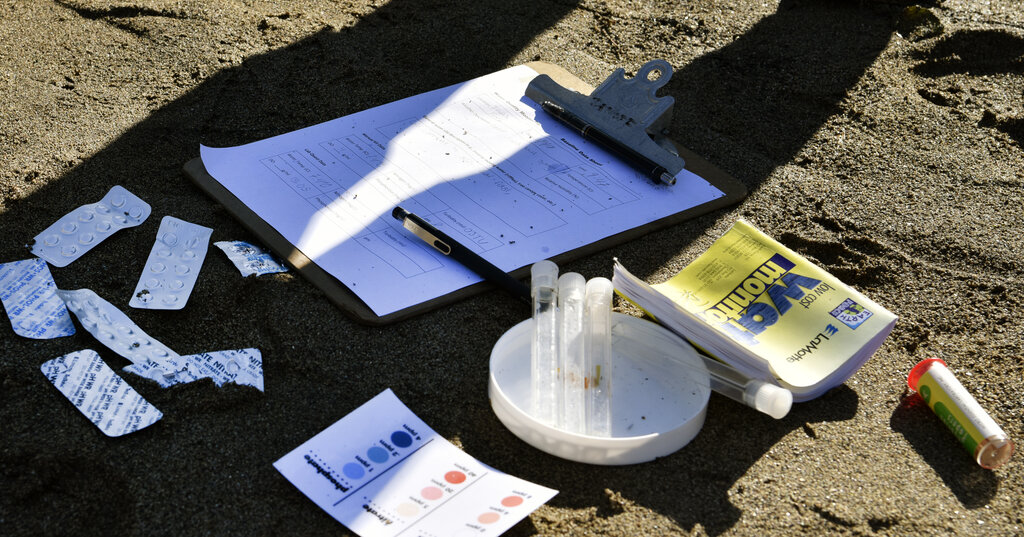
These readings are logged meticulously. This logbook becomes a vital history of the pool, showing trends and helping operators anticipate when adjustments are needed. If the pH is creeping up, they can add an acid to bring it back down. If the FAC is dropping, they know it's time to add more chlorine.
This constant cycle of testing, recording, and adjusting is the backbone of professional pool management. It ensures that no matter how many people are enjoying the water, it remains clean, safe, and perfectly balanced.
Now, let's test your knowledge on these fundamental concepts of pool water chemistry.
What is the ideal pH range for a swimming pool to ensure both swimmer comfort and sanitizer effectiveness?
If a pool's pH level measures 8.0, what is the most likely consequence for the chlorine sanitizer?
Mastering these basics is the first step toward ensuring every swim is a safe one.