Swedish for Healthcare Situations
Booking and Administration
Your First Stop for Care
When you need medical care in Sweden, your first decision is where to turn. For almost all non-emergency situations, your destination is the local health centre, or Vårdcentral It's your primary contact point for seeing a doctor, nurse, or physiotherapist for illnesses and injuries that aren't life-threatening.
Vårdcentral
noun
A local, state-run primary healthcare centre. It's the main hub for non-emergency medical advice and treatment.
Think of the Vårdcentral as your family doctor's office. You go there for check-ups, chronic condition management, vaccinations, and non-urgent problems like persistent coughs or skin rashes. You typically register with one specific Vårdcentral in your area.
On the other hand, for sudden, serious, or life-threatening conditions, you go to an Akutmottagning (Accident & Emergency department). This is the hospital's emergency room, for things like severe chest pain, major accidents, or difficulty breathing.
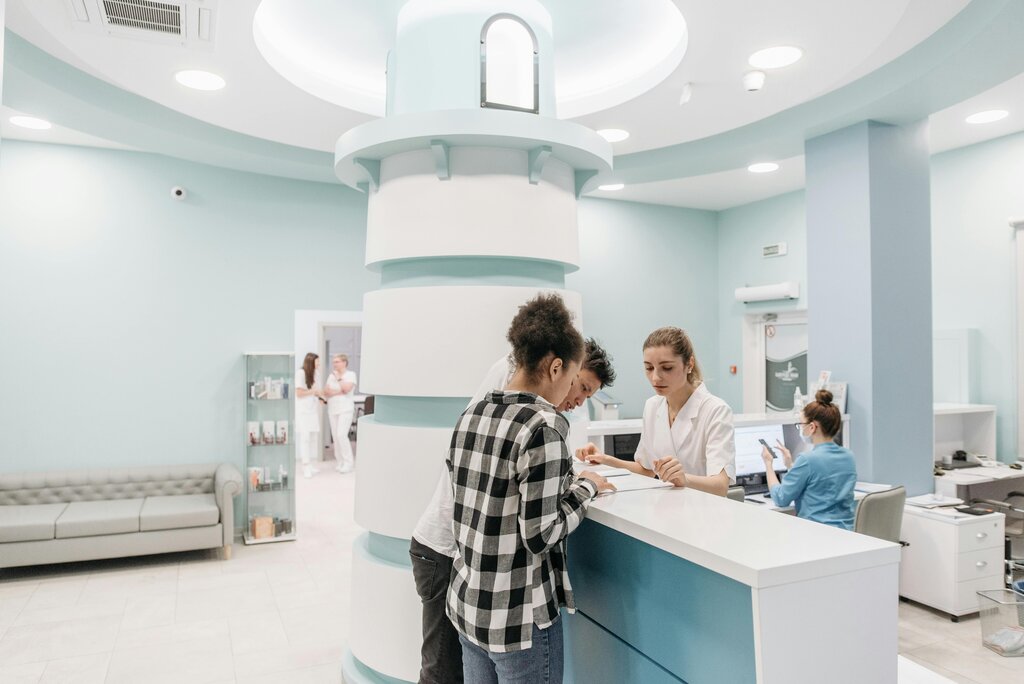
Rule of thumb: If it's serious and sudden, think 'Akutmottagning'. For everything else, start with your 'Vårdcentral'.
The Gateway: 1177 Vårdguiden
Sweden has a unified system for healthcare advice and administration called 1177 Vårdguiden. You can access it by dialling 1177 on your phone to speak with a nurse, or by visiting the website 1177.se. This service is your key to navigating the system.
The nurses on the 1177 phone line provide medical advice and can guide you on whether you need to see a doctor at a Vårdcentral, go to an Akutmottagning, or if self-care at home is sufficient. The website is a vast resource of medical information and, crucially, the portal for managing your healthcare online.
To access your personal medical information, book appointments, or read your journal online, you'll need a Swedish (e-identification), most commonly BankID. This is your digital signature, used for everything from banking to healthcare, proving your identity securely online. When you log into 1177.se, you'll be prompted to use your BankID.
Making the Appointment
Once you know you need to see a doctor, you'll need to make an appointment. You can often do this by calling your Vårdcentral directly or through the 1177 website. The key verbs are boka, omboka, and avboka.
| Swedish Verb | English Meaning | Example Sentence |
|---|---|---|
att boka en tid | to book an appointment | Jag vill boka en tid hos en läkare. (I want to book an appointment with a doctor.) |
att omboka en tid | to rebook an appointment | Kan jag omboka min tid till nästa vecka? (Can I rebook my appointment to next week?) |
att avboka en tid | to cancel an appointment | Jag måste tyvärr avboka min tid på fredag. (I unfortunately have to cancel my appointment on Friday.) |
When scheduling, you'll use specific time prepositions, or Tidsprepositioner. These are essential for understanding when your appointment is.
- på is used for specific days of the week.
Vi ses på måndag.(See you on Monday.) - om is used to indicate a future time interval from now.
Din tid är om en vecka.(Your appointment is in one week.) - i is used to state the duration of something, or within a timeframe. The healthcare guarantee often uses this.
Du ska få en tid i maj.(You will get an appointment in May.)
When you interact with the system, you must identify yourself. This is done with your personnummer (personal identity number) or, if you are an asylum seeker, your LMA-kort. Be prepared to provide this number when you call or log in.
Your Rights and Costs
The Swedish healthcare system operates on the principle of equal access, which is protected by the Vårdgaranti (Healthcare Guarantee). This guarantee sets maximum waiting times. For instance, you should be able to get in contact with a Vårdcentral the same day you seek help. An initial medical assessment by a licensed professional, like a doctor or nurse, should be provided inom tre dagar (within three days).
If your Vårdcentral doctor determines you need to see a specialist, they will issue a remiss (referral). The Vårdgaranti also dictates that you should not have to wait more than 90 days for a first visit to a specialist after a referral is issued.

While healthcare is heavily subsidised, it's not entirely free. You will pay a patientavgift (patient fee) for most visits. This fee is a relatively small, standardized amount that varies slightly by region. The costs are capped by a high-cost protection scheme (högkostnadsskydd), meaning you won't pay more than a certain total amount for healthcare within a 12-month period. Once you reach that limit, care becomes free for the remainder of that period.
Now, let's test your understanding of these essential administrative concepts.
You have developed a skin rash that is not an emergency but has been bothering you for a few days. According to the Swedish system, where is the most appropriate place to seek an initial consultation?
To book medical appointments online or access your personal medical journal on 1177.se, you need a Swedish e-identification ('E-legitimation').
Understanding these terms and processes is the first step toward confidently managing your health in Sweden.