Sutayta al-Mahamli and the Mathematics of Inheritance
Abbasid Mathematical Context
Baghdad’s Mathematical Pulse
In the 10th century, Baghdad wasn't just a city; it was the intellectual heartbeat of the world. Scholars from across the Abbasid Caliphate converged there, creating a vibrant ecosystem of discovery. This was the world that followed Muhammad ibn Musa al-Khwarizmi, whose work had transformed mathematics from a purely theoretical exercise into a powerful, practical tool. His groundbreaking text, , had laid the foundation for algebra, providing systematic methods for solving equations that were essential for the empire's administration.
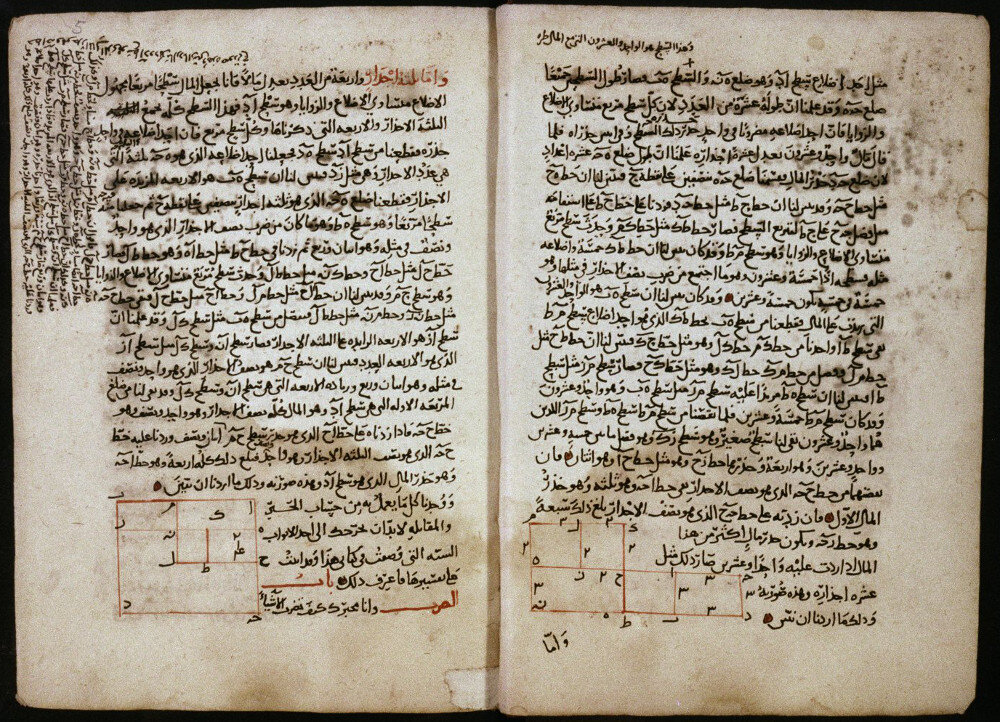
Arithmetic, or hisab, and algebra, al-jabr, were not locked away in ivory towers. They were the gears that turned the machinery of society. Merchants used them to calculate profits, engineers to design canals, and state officials to levy taxes. More importantly, Islamic law, or Shari'ah, presented complex problems, particularly in matters of inheritance, that required precise mathematical solutions. Math wasn't just a subject; it was a necessary skill for a well-ordered life.
A Scholar in the Making
Into this dynamic environment was born Amat al-Wahid Sutayta al-Mahamli. Her path was unusual. She belonged to the al-Mahamli family, a dynasty of respected judges and legal scholars. Her father, Abu Abdallah al-Hussein, was a prominent judge who ensured his daughter received a first-class education. But unlike many of her peers, Sutayta's training was not limited to a single discipline.
She delved deeply into Hadith (the traditions and sayings of the Prophet Muhammad) and Fiqh (Islamic jurisprudence), the standard curriculum for a jurist. But she also mastered mathematics. This unique combination of legal and numerical expertise allowed her to see connections others missed. She was trained to be a —an expert jurist qualified to issue legal rulings, or fatwas. Her mathematical prowess gave her rulings a level of precision and clarity that was rare.
Sutayta’s education took place long after the formal establishment of Baghdad’s famous House of Wisdom (Bayt al-Hikma), but its spirit of inquiry and synthesis lived on. The institution had created a culture where Greek, Indian, and Persian knowledge was translated, studied, and expanded upon. Sutayta inherited this legacy. She didn't just solve abstract equations; she applied them to the intricate, real-world problems presented in legal disputes, bridging the gap between theoretical mathematics and the practical demands of justice.
Now let's test your understanding of the intellectual environment in 10th-century Baghdad.
What was the primary role of mathematics in the society of 10th-century Baghdad as described in the text?
What made Amat al-Wahid Sutayta al-Mahamli's qualifications as a mufti (legal expert) so exceptional?
By blending legal tradition with mathematical innovation, Sutayta al-Mahamli embodied the practical intellectualism of her time.