Surviving Nuclear War
Introduction to Nuclear Warfare
The Dawn of the Atomic Age
The story of nuclear weapons begins in the midst of World War II. Scientists, many of whom had fled fascism in Europe, learned that splitting the atom could release an astonishing amount of energy. Fearing that Nazi Germany might develop such a weapon first, the United States launched the Manhattan Project in 1942. It was a top-secret, massive undertaking with a single goal: build an atomic bomb.
Thousands of scientists, engineers, and technicians worked in hidden cities like Los Alamos, New Mexico, and Oak Ridge, Tennessee. They raced against time to solve immense scientific and engineering challenges. Their work culminated in the Trinity test on July 16, 1945, when the first atomic bomb was detonated in the New Mexico desert, unleashing a power never before seen on Earth. Just weeks later, atomic bombs were used on the Japanese cities of Hiroshima and Nagasaki, effectively ending the war and ushering in the nuclear age.
The end of the war did not end nuclear development. The Soviet Union, once an ally, became a rival. They successfully tested their own atomic bomb in 1949, kicking off a tense and terrifying arms race that would define the Cold War for decades.
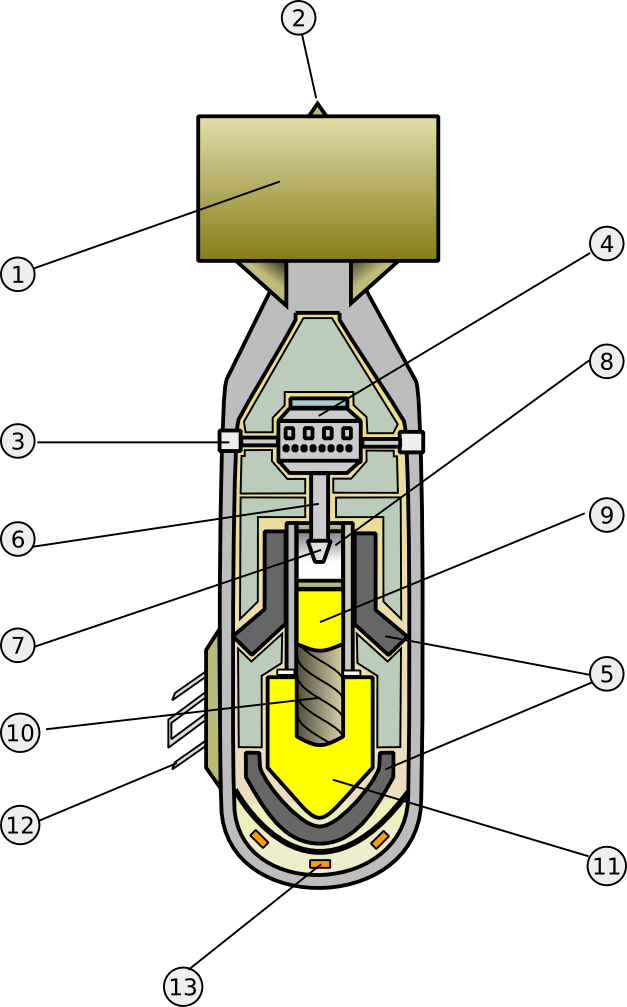
How a Nuclear Bomb Works
At the heart of a nuclear weapon is a process that converts a tiny amount of mass into a massive amount of energy, as described by Einstein's famous equation, . This is achieved in one of two ways: fission or fusion.
Fission is the splitting of a large, unstable atomic nucleus, like that of uranium-235 or plutonium-239, into smaller nuclei. To start this process, you need to hit the nucleus with a neutron. When the nucleus splits, it releases a tremendous amount of energy, along with two or three additional neutrons.
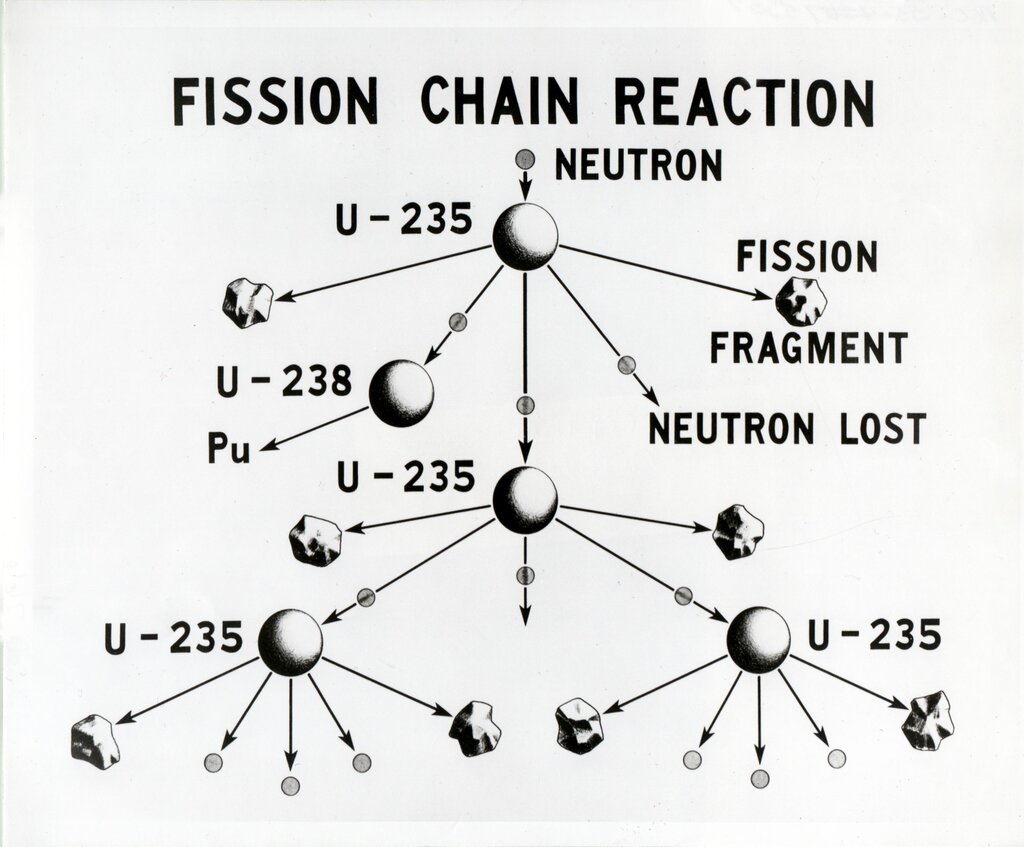
Those newly released neutrons can then fly off and strike other nearby uranium nuclei, causing them to split as well. This creates a self-sustaining chain reaction that escalates almost instantaneously, releasing an explosive amount of energy. Getting this to work requires a 'critical mass' of nuclear material packed together tightly enough for the reaction to take off.
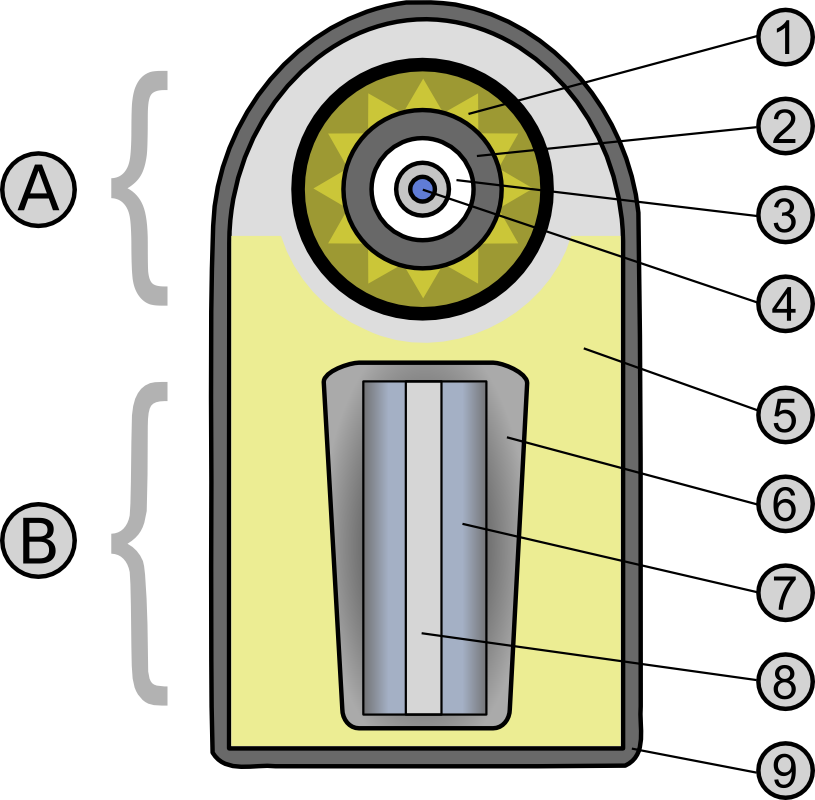
Fusion is the opposite process. It involves forcing the nuclei of small atoms, like isotopes of hydrogen, to combine or 'fuse' together. This is the same process that powers the sun. Fusion releases even more energy than fission, but it requires incredibly high temperatures and pressures to get started.
This is why modern thermonuclear weapons, also known as hydrogen bombs, use a two-stage design. A fission bomb (the primary) is detonated first to create the extreme conditions needed to trigger a much larger fusion reaction (the secondary).
The Strategy of Annihilation
The existence of nuclear weapons fundamentally changed military strategy. The sheer destructive power meant that a full-scale war between nuclear-armed states was no longer winnable in any traditional sense. This led to the development of new strategic doctrines, the most important of which is deterrence.
Deterrence is the idea that the best way to avoid a nuclear attack is to have a credible ability to retaliate with overwhelming force. The goal isn't to fight a nuclear war, but to convince any potential adversary that launching an attack would be suicide.
The purpose of a nuclear arsenal is not to be used, but to prevent its use by others.
This concept evolved into a doctrine known as Mutually Assured Destruction, or MAD. It describes a situation where two or more opposing sides have enough nuclear weapons to completely annihilate each other. In a MAD world, if one side launches a first strike, the other side will still have enough weapons to launch a devastating retaliatory strike.
There is no winner in such a scenario, only total, mutual destruction. For decades during the Cold War, this grim logic created a tense but stable standoff between the United States and the Soviet Union. The fear of annihilation, paradoxically, kept the peace between the superpowers.
Now that you understand the history, mechanics, and strategy behind nuclear weapons, let's test your knowledge.
What was the primary motivation for the United States to initiate the Manhattan Project in 1942?
Which process describes how modern thermonuclear weapons (hydrogen bombs) work?
Understanding these core concepts is the first step in grasping the profound impact these weapons have had on global politics and the ongoing importance of non-proliferation and disarmament efforts.