Surfing Mastery Accelerated
Wave Dynamics
Where Waves Come From
Most of the waves you surf begin hundreds or even thousands of miles away. They are born from wind blowing across the surface of the ocean. Think of it like blowing across a cup of hot coffee. The gentle puff creates tiny ripples. Now imagine a storm system in the middle of the Pacific, with powerful winds blowing for days over a vast expanse of water.
This sustained energy transfer creates waves. Three main factors determine how big and powerful these waves will become:
- Wind Speed: The faster the wind, the more energy it transfers to the water.
- Wind Duration: The longer the wind blows, the more the waves can build.
- Fetch: This is the distance over which the wind blows across the water. A larger fetch means more room for waves to grow.
Once formed, this energy organizes into groups of waves called swells. Swells are incredibly efficient at traveling long distances across the ocean with very little loss of energy. The waves you ride in California might have started in a storm near Japan.
The Journey to Shore
Out in the deep ocean, a wave is just energy moving through the water. The water particles themselves mostly just move in a circular or orbital motion, returning to roughly their original position. It's the wave form that travels, not the water itself.
Everything changes when this energy approaches the coast. As the water becomes shallower, the wave starts to "feel" the bottom. This interaction with the seabed creates friction and slows the lower part of the wave down. The top of the wave, however, is still moving at its original speed.
This difference in speed is what forces the wave to stand up. The top outraces the bottom, causing the wave's face to become steeper and steeper until it becomes unstable and breaks.
How a Wave Breaks
The way a wave breaks is determined almost entirely by the slope of the seafloor. This is what creates the different types of waves surfers look for.
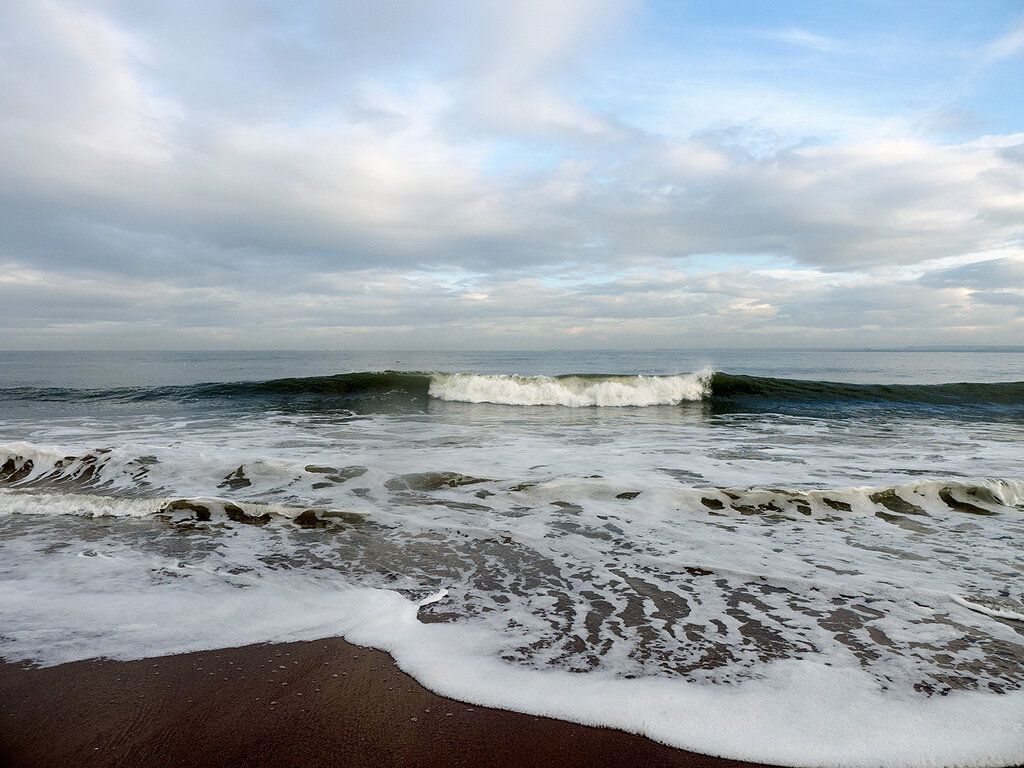
Spilling Waves These form over gently sloping bottoms, like a sandy beach. The energy is released gradually, causing the wave to crumble from the top down in a line of white water. Spillers are slower and less powerful, making them perfect for learning.
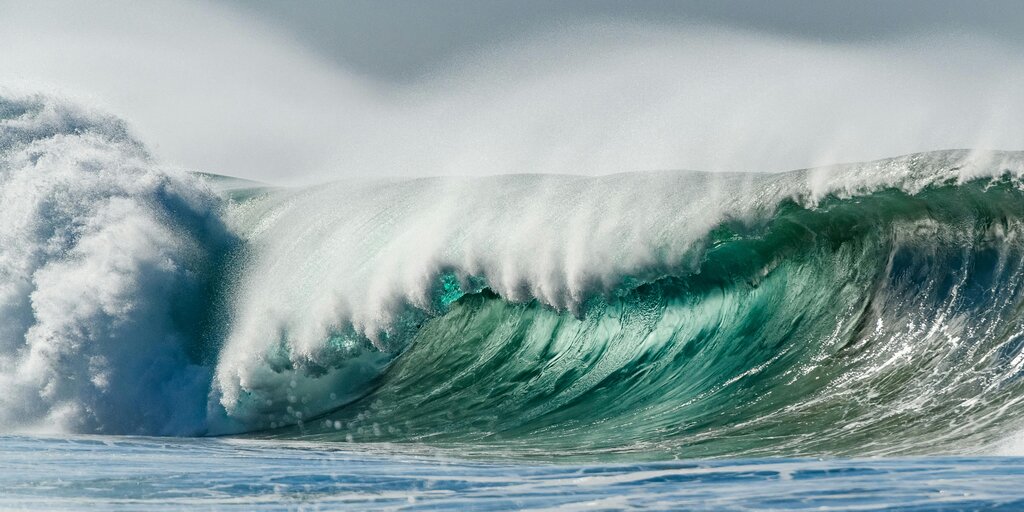
Plunging Waves This is the classic, picture-perfect wave. It forms when the swell hits a steeply sloped bottom, like a reef or a sandbar. The wave rises up quickly and the crest curls over, throwing itself forward and creating a hollow tube or "barrel." Plunging waves are fast, powerful, and the goal for most experienced surfers.
Surging Waves These occur on very steep coastlines, like cliffs or rock ledges. The wave doesn't have time to break properly. Instead, the energy surges up the face of the shore. These waves are un-surfable and dangerous, creating a strong backwash.
| Wave Type | Seabed Slope | Break Characteristics | Best For... |
|---|---|---|---|
| Spilling | Gentle | Slow, crumbling foam | Beginners |
| Plunging | Steep | Fast, hollow barrel | Experienced surfers |
| Surging | Very Steep | No real break, surges | Avoiding |
The Role of Wind
While distant storms create the swell, the local wind at the beach has a huge impact on the quality of the waves you actually ride. The wind's direction relative to the waves is critical.
Offshore Wind This is wind that blows from the land out to the sea. It blows against the face of the breaking wave, slowing the crest down and causing it to stand up taller and break more cleanly. Offshore winds groom the waves, creating smooth faces and often helping to form those perfect plunging barrels. This is the ideal condition.
Onshore Wind This wind blows from the sea towards the land, hitting the back of the wave. It pushes the crest over too quickly, causing the wave to break messily and lose its shape. Onshore winds create choppy, disorganized, and generally poor-quality surf.
Cross-shore Wind Wind blowing parallel to the coastline can create chop on the surface, making for a bumpy ride. Depending on the exact angle, it can have effects similar to either an onshore or offshore wind, but it generally makes conditions more challenging.
Understanding these elements—how a wave is born, how it travels, what makes it break, and how local winds affect it—is the first step to reading the ocean. It allows you to predict what the waves will do and position yourself for the best possible ride.
Which three factors are most critical in determining the size and power of waves generated by a distant storm system?
In the deep ocean, far from shore, how do individual water particles move as a wave's energy passes through?