Surfing for Beginners
Ocean Safety
Reading the Water
Before you even paddle out, the most important skill is learning to watch the ocean. Spend at least 15 minutes on the beach observing the waves, where they break, and how the water is moving. This isn't just about finding the best spot; it's about understanding the unique conditions of the day.
The area where waves break is called the surf zone. It's a dynamic environment where water is constantly moving toward the shore with the waves and back out to sea. This outward flow of water can create strong, narrow channels called rip currents.
A rip current is like a fast-moving river within the ocean, pulling water away from the shore.
They are the number one hazard for beachgoers. You can spot a rip current by looking for a few telltale signs:
| Sign | Description |
|---|---|
| A channel of choppy water | While the waves break in lines of white foam on either side, the rip is often a calmer-looking, darker channel of water. |
| Debris moving out to sea | Look for seaweed, foam, or discolored water flowing steadily away from the shore. |
| A gap in the wave pattern | Waves might be breaking consistently, but there's a gap where the water is flatter. This is often where the rip is. |
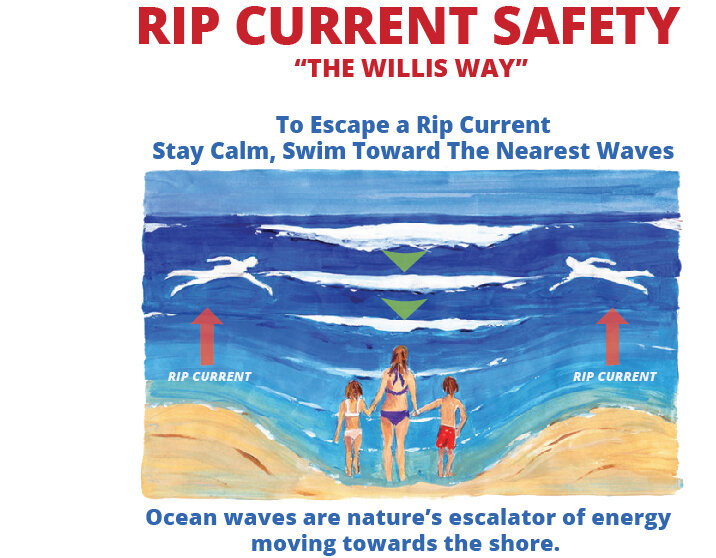
Caught in a Rip?
The most important thing to do if you're caught in a rip current is to stay calm. Fighting against it is a waste of precious energy. The current won't pull you under; it will only pull you out. Your goal is to get out of the channel.
Don't fight the current. Swim parallel to the shore until you are out of the rip, then swim back to land at an angle, away from the current.
If you can't swim out of it, just float or tread water. Once the rip has carried you out past the breaking waves, its pull will weaken. From there, you can signal for help by waving your arms and yelling, or begin swimming back to shore, aiming for an area where you see waves breaking.
The Rules of the Road
Surfing has its own set of rules to keep everyone safe and make sure everyone gets a chance to ride waves. It's called surf etiquette. Ignoring these rules is not just bad manners; it's dangerous for you and everyone around you.
| Rule | Explanation |
|---|---|
| Right of Way | The surfer closest to the peak (the part of the wave that breaks first) has the right of way. |
| Don't Drop In | This means don't catch a wave that someone else is already riding. Look both ways before you commit. |
| Don't Ditch Your Board | Always maintain control of your surfboard. A loose board can seriously injure another person. |
| Communicate | A simple shout or gesture can prevent collisions. Let others know your intentions. |
When you paddle out, try to go through a channel where waves aren't breaking. If you have to paddle through the surf zone, stay out of the way of surfers riding waves. If someone is riding a wave towards you, paddle behind them, not in front of them.
Respect Your Environment
The ocean is a wild place, and we're just visitors. Being a good surfer means being a good steward of the environment. Always follow the principle of "leave no trace." Pack out everything you bring to the beach, and maybe even pick up a few extra pieces of trash you see on your way out.
Be mindful of marine life. You might see dolphins, seals, or turtles. Give them space and observe from a distance. Also, be aware of the local ecosystem. Avoid walking on fragile dunes, which are important for preventing coastal erosion. Protecting the beach and the ocean ensures we'll all be able to enjoy it for years to come.
Now that you understand the basics of staying safe and respectful in the water, let's test your knowledge.
If you are caught in a rip current, what is the recommended course of action?
According to surf etiquette, if you are paddling out and a surfer is riding a wave toward you, what should you do?