Surface Mount Technology Explained
Introduction to SMT
A Revolution on the Surface
Most modern electronics, from your phone to your laptop, are packed with tiny components. The method used to place these components onto a circuit board is called Surface Mount Technology, or SMT. Instead of inserting component leads through holes in the board, SMT involves mounting them directly onto the surface.
This might seem like a small change, but it completely transformed how electronics are made. To understand its impact, we need to look at what came before.
Life Before SMT
For decades, the standard was Through-Hole Technology (THT). In this method, every component had long metal legs, or leads. These leads were threaded through holes drilled into the Printed Circuit Board (PCB) and then soldered to copper pads on the other side. It was a reliable but labor-intensive process.
Imagine trying to build a smartphone using this method. The boards would need to be huge to accommodate all the drilled holes and bulky components. The process was also much slower and harder to automate.
As electronics became more complex, the limitations of THT became clear. A new approach was needed to make devices smaller, cheaper, and faster to produce.
The SMT Advantage
Surface Mount Technology was the answer. By placing components, now called Surface-Mount Devices (SMDs), directly onto the board's surface, several key advantages emerged.
The biggest advantage is density. Without the need for drilled holes, and with much smaller components, engineers could fit much more functionality into the same amount of space. This is the primary reason our electronics have shrunk so dramatically over the years.
Automation was another huge leap forward. SMT is perfectly suited for robotic assembly. Machines called pick-and-place robots can rapidly and accurately place thousands of components per hour, a task that would be impossible for a human. This increased manufacturing speed, improved reliability, and significantly lowered costs.
Finally, placing components closer together with shorter connection paths can improve the electrical performance of a circuit, especially at very high speeds and frequencies.
Meet the Components
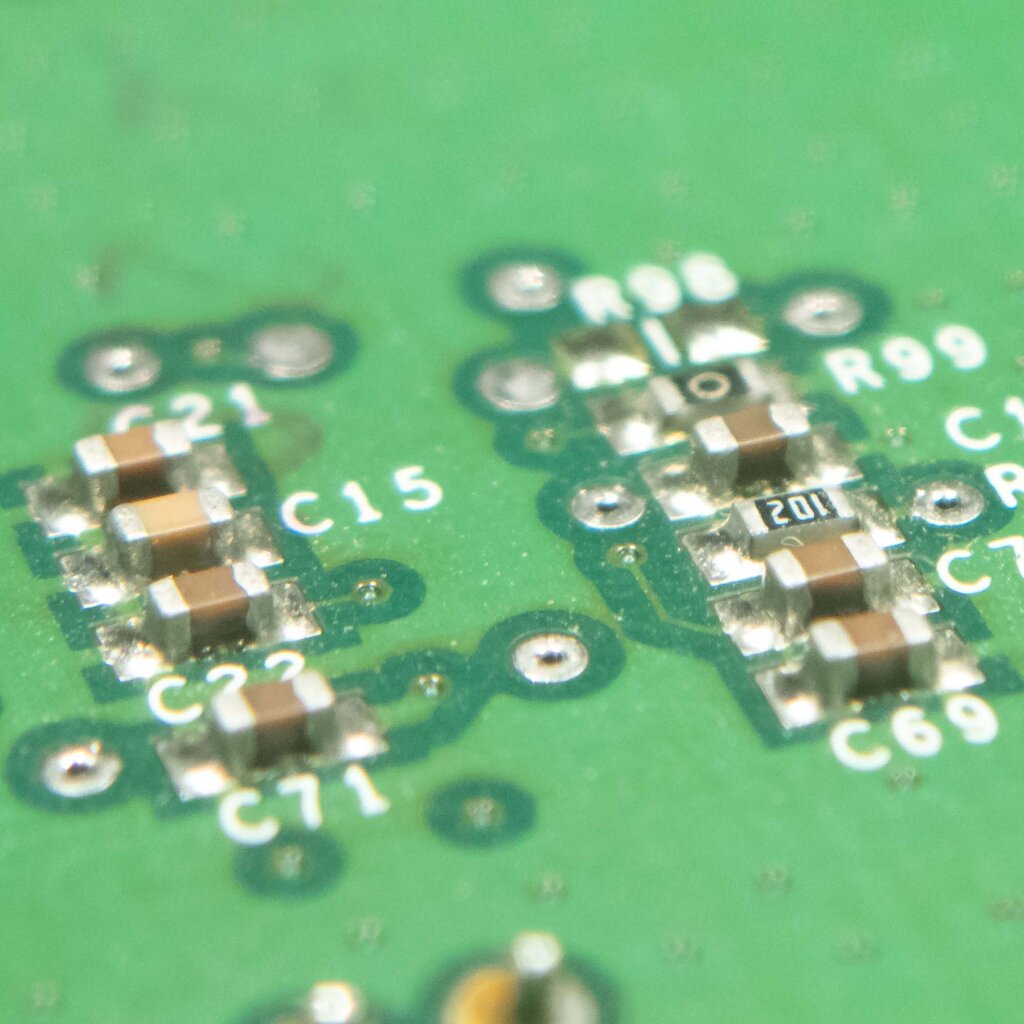
The components designed for SMT are known as Surface-Mount Devices (SMDs). Unlike their through-hole ancestors, SMDs don't have long leads. Instead, they have small metal tabs or pads that make direct contact with the surface of the PCB.
These come in a vast array of standardized sizes, some barely larger than a grain of sand. This category includes everything from simple resistors and capacitors to complex multi-pin integrated circuits (ICs).
| Feature | Through-Hole Component | Surface-Mount Device |
|---|---|---|
| Size | Large and bulky | Very small and compact |
| Leads | Long wire leads | Small tabs or pads |
| Placement | Inserted through holes | Placed on the surface |
| Automation | Difficult to automate | Ideal for robotic assembly |
SMT isn't just a manufacturing technique; it's a foundational technology that enables the design of almost every piece of modern electronics. Without it, the sleek, powerful gadgets we rely on every day simply wouldn't exist.
Let's check your understanding of these foundational concepts.
What is the primary difference between Surface Mount Technology (SMT) and Through-Hole Technology (THT)?
Which of the following is a major advantage of SMT that led to faster and cheaper manufacturing?
Next, we'll look at the specific machines and processes that bring these circuit boards to life.