Supply Chain Essentials
Introduction to Supply Chain Management
What Is Supply Chain Management?
Think about the smartphone in your pocket or the coffee you drank this morning. Getting that product to you involved a long chain of activities. Raw materials were sourced, parts were manufactured, everything was assembled, and the final product was shipped to a store or your doorstep. The coordination of this entire journey is called supply chain management (SCM).
Supply Chain Management spans all movement and storage of raw materials, work-in-process inventory, and finished goods from point of origin to point of consumption.
Essentially, SCM is the management of the flow of goods, data, and finances related to a product or service, from acquiring raw materials to delivering the product to its final destination. It’s not just about moving things; it's about integrating supply and demand management within and across companies. The goal is to create a seamless, efficient network that delivers value to the customer.
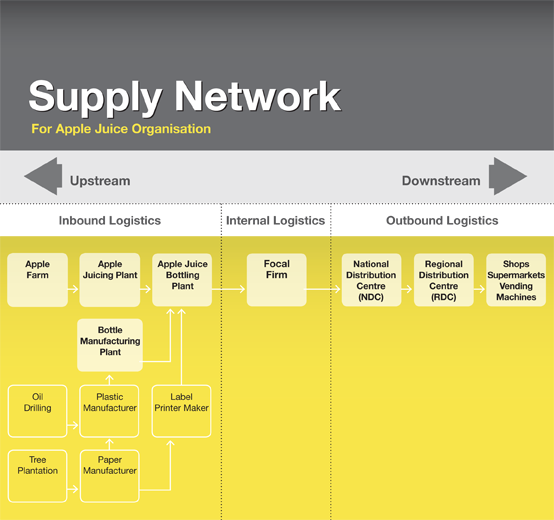
From Logistics to Strategy
The idea of managing a supply chain isn't new, but how we think about it has changed dramatically. For a long time, businesses focused on logistics. This meant concentrating on individual tasks like transportation, warehousing, and inventory management. Each was handled as a separate cost center, often with little coordination between them.
In the 1980s and 90s, a shift began. Companies realized that optimizing one part of the process, like shipping, could create problems elsewhere, like in manufacturing or inventory. They started to see the bigger picture.
Instead of just managing separate logistics functions, they began to integrate them. This new approach, supply chain management, treated the entire flow of goods as one interconnected system. SCM became a strategic function, essential for a company's overall success, rather than just a set of operational tasks.
Logistics vs. Supply Chain Management
People often use the terms "logistics" and "supply chain management" interchangeably, but they aren’t the same. Logistics is a crucial component of supply chain management, but it's not the whole story.
Logistics Management: The part of supply chain management that plans, implements, and controls the efficient, effective forward and reverse flow and storage of goods, services, and related information between the point of origin and the point of consumption to meet customer requirements.
Think of SCM as the entire orchestra, responsible for the overall performance. Logistics is the violin section, a vital part that has to play its role perfectly, but it’s still just one part of the symphony. SCM involves activities like strategic sourcing, production planning, and demand forecasting, coordinating all partners in the chain, including suppliers, intermediaries, and customers.
| Feature | Logistics | Supply Chain Management |
|---|---|---|
| Scope | A part of the supply chain | The entire network, from source to consumer |
| Focus | Movement and storage of goods | Integration and coordination of all activities |
| Objective | Meeting customer needs at minimum cost | Gaining a competitive advantage |
| Orientation | Primarily internal to the organization | Spans across multiple organizations |
Why Bother with SCM?
Effective supply chain management is more than just good business practice; it's a competitive necessity. When done well, it provides significant benefits.
The primary objectives are to enhance operational efficiency, reduce costs, and improve customer satisfaction.
By streamlining processes, a company can cut waste and lower the costs of production and distribution. This efficiency often translates into lower prices or higher quality for customers. Better coordination also leads to improved delivery times and fewer stockouts, which directly impacts customer happiness.
Ultimately, a well-managed supply chain helps a business run smoother, save money, and keep its customers satisfied. It transforms a series of disconnected steps into a powerful, integrated system that delivers value from start to finish.