Supabase Postgres Database Management
Introduction to Supabase and PostgreSQL
What Is Supabase?
Building a modern application is a lot like constructing a house. You need more than just the visible walls and furniture. You need a solid foundation, plumbing, and electrical wiring to make it functional. In the world of software, this behind-the-scenes infrastructure is called the backend.
Traditionally, developers had to build this backend from scratch, which is time-consuming. This is where Supabase comes in. It's an open-source platform that provides all the essential backend components, ready to use. Think of it as a toolkit for building your application's foundation quickly and efficiently.
Supabase is often called a "Backend as a Service" (BaaS). It bundles common backend needs into a single, cohesive product.
Here are the core features it offers:
- Database: At its heart, Supabase provides a powerful, ready-to-use PostgreSQL database. This is where all your application's data lives.
- Authentication: It handles everything related to users, like signing up, logging in, and password resets.
- File Storage: Need a place to store user-uploaded images, videos, or documents? Supabase has a built-in solution for that.
- Real-time Subscriptions: This allows your application to update instantly when data changes. For example, in a chat app, messages can appear for all users in real-time without needing to refresh the page.
- Serverless Functions: These are small pieces of code that can run on demand without you having to manage a server. They're perfect for tasks like sending a welcome email when a new user signs up.
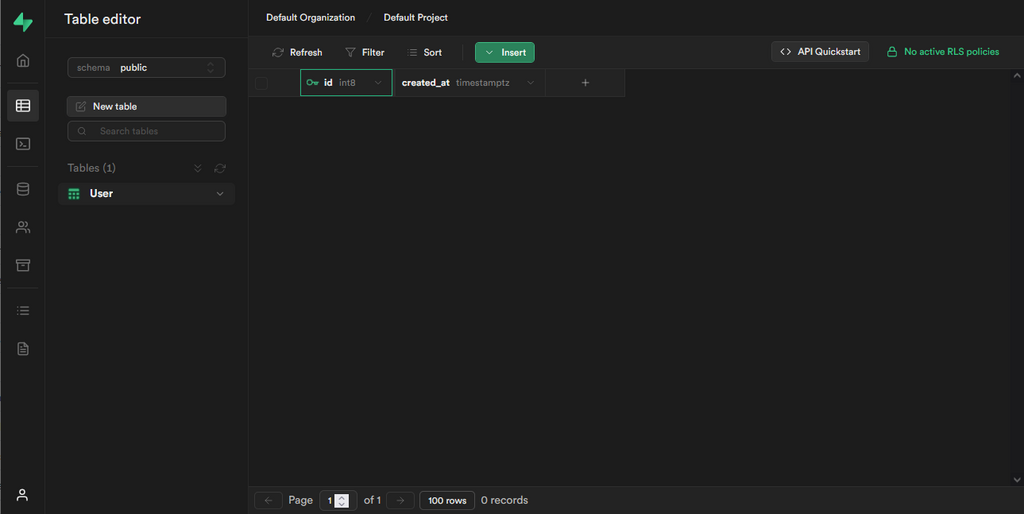
The PostgreSQL Foundation
The database Supabase provides isn't just any database; it's PostgreSQL, one of the most trusted and advanced open-source relational databases in the world. Developers often call it "Postgres" for short.
Relational Database
noun
A type of database that stores and provides access to data points that are related to one another.
Think of a relational database as a collection of interconnected spreadsheets. Each spreadsheet is a "table," and each row is a record. For instance, you might have one table for users and another for products. You can create a relationship between them so you know which user bought which product.
PostgreSQL is chosen for serious projects because it's known for:
- Reliability: It has a strong reputation for protecting data integrity.
- Extensibility: It's incredibly flexible. You can add new data types, functions, and even connect it to other programming languages.
- Scalability: It can handle vast amounts of data and a high volume of requests, allowing an application to grow from a small project to a large enterprise system.
A Powerful Combination
Supabase doesn't replace PostgreSQL; it makes it easier to use. It takes a standard, powerful PostgreSQL database and builds a suite of tools around it. You get the full power of Postgres without having to manage the complex setup and maintenance yourself.
This integration is the key benefit. You interact with a simple dashboard and easy-to-use libraries in your code, while Supabase handles the hard work of managing the database, authentication, and other services. This allows you to focus on building the features that make your app unique, rather than reinventing the wheel on backend infrastructure.
By seamlessly bridging Postgres and S3 with integrated analytics and vector storage, Supabase intensifies competition with Firebase, PlanetScale, and specialized vector database providers.
Essentially, Supabase offers a developer-friendly entry point to a professional-grade database. It's a great way to start a project quickly while ensuring you have a solid, scalable foundation that won't limit you as your application grows.
Time to check your understanding of these foundational tools.
Using the analogy of building a house, what role does Supabase serve in software development?
Which of the following is NOT a core feature offered by the Supabase platform?
You now have a solid grasp of what Supabase is, what PostgreSQL does, and how they work together to provide a complete backend solution for modern applications.