Sui to Yuan Dynasties Historical Overview
Introduction to Imperial China
Reunification and Golden Ages
After the fall of the Han Dynasty in 220 CE, China experienced centuries of division and conflict. This period, often called the Six Dynasties, was a time of fragmentation. But it was also a time when new ideas, like Buddhism, took root. Eventually, the desire for a unified state re-emerged, paving the way for a series of powerful and influential dynasties that would shape China for centuries to come.
The Sui: Short but Crucial
The Sui Dynasty (581–618 CE) was brief, lasting for only two emperors. Yet its impact was enormous. The Sui accomplished what many thought impossible: they reunified China after nearly 400 years of division. Their most famous achievement was constructing the Grand Canal, a massive waterway linking the Yellow River in the north with the Yangtze River in the south. This engineering marvel made it possible to transport grain, troops, and goods across the vast empire, tying the economic centers of the south to the political centers of the north.
The Sui rulers centralized the government and standardized the currency. However, their ambitious projects and costly military campaigns exhausted the state's resources and its people. Widespread revolts toppled the dynasty, but the foundation they laid was essential for the golden age that followed.
The Tang: A Cosmopolitan Empire
The Tang Dynasty (618–907 CE) built upon the Sui's foundation to create one of the most brilliant eras in Chinese history. Often regarded as a cultural high point, the Tang was a time of confidence, openness, and expansion. Its capital, Chang'an, was the largest city in the world, a bustling metropolis where merchants, diplomats, and monks from across Asia and beyond gathered.
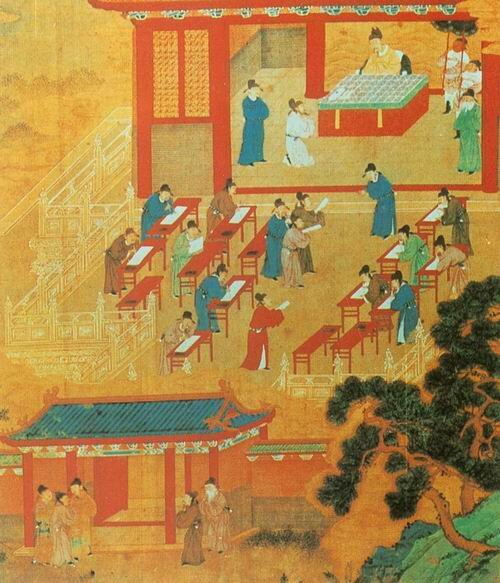
This was an age of great artistic and literary achievement. Tang poetry, especially the works of Li Bai and Du Fu, became a benchmark for all future generations. Art flourished, with advancements in sculpture, painting, and ceramics. The government was run by a sophisticated bureaucracy of scholar-officials selected through a rigorous civil service examination system.
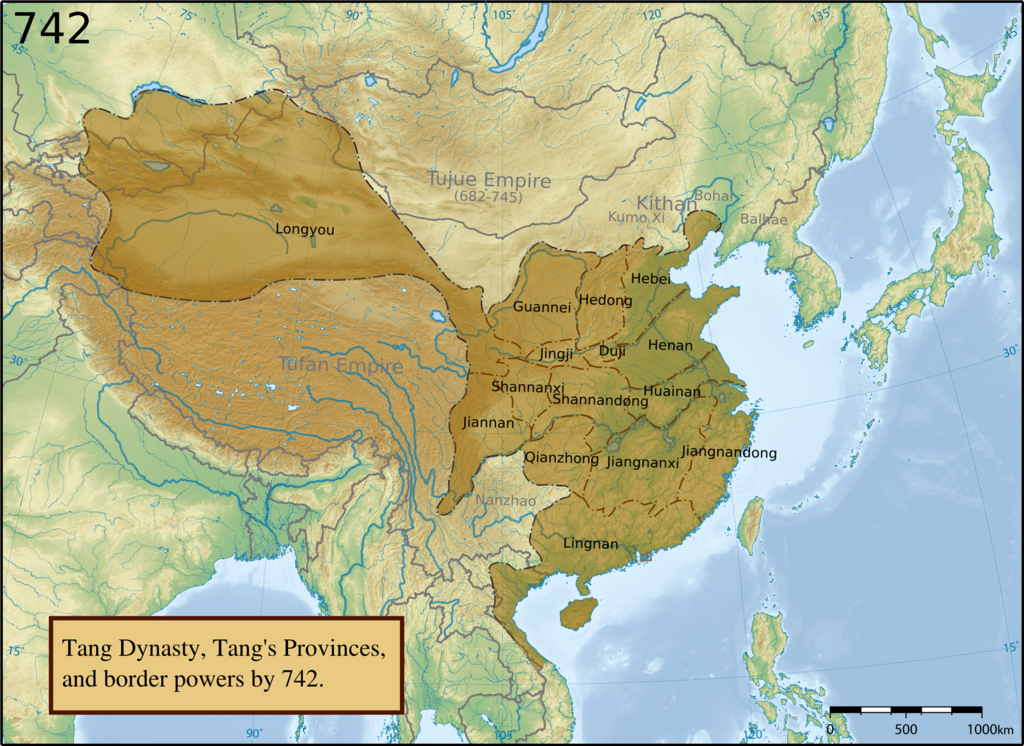
The Tang's influence spread throughout East Asia, with Japan, Korea, and Vietnam adopting many aspects of its culture, writing system, and government structure. For a time, its armies pushed Chinese control deep into Central Asia, securing the lucrative Silk Road trade routes.
The Song: An Economic Revolution
Following the collapse of the Tang, China again faced a period of disunity. The Song Dynasty (960–1279 CE) eventually reunified most of the country. While the Song was often militarily weaker than the Tang and surrounded by powerful rival states, it presided over an astonishing period of economic and technological growth.
During the Song, China's population swelled to over 100 million people. Its cities were vibrant centers of commerce, and a new merchant class emerged. This era saw the invention of movable type printing, which made books widely available and spurred a surge in literacy. Other key innovations included the perfection of gunpowder as a military weapon, the development of the magnetic compass for navigation, and the first use of paper money on a large scale.
Despite its prosperity, the Song Dynasty faced constant military threats from northern peoples like the Khitans and the Jurchens. In 1127, the Jurchens conquered the northern half of China, forcing the Song court to flee south. The Southern Song continued to thrive for another 150 years, but the challenge from the north would ultimately lead to its downfall.
The Yuan: The Mongol Empire
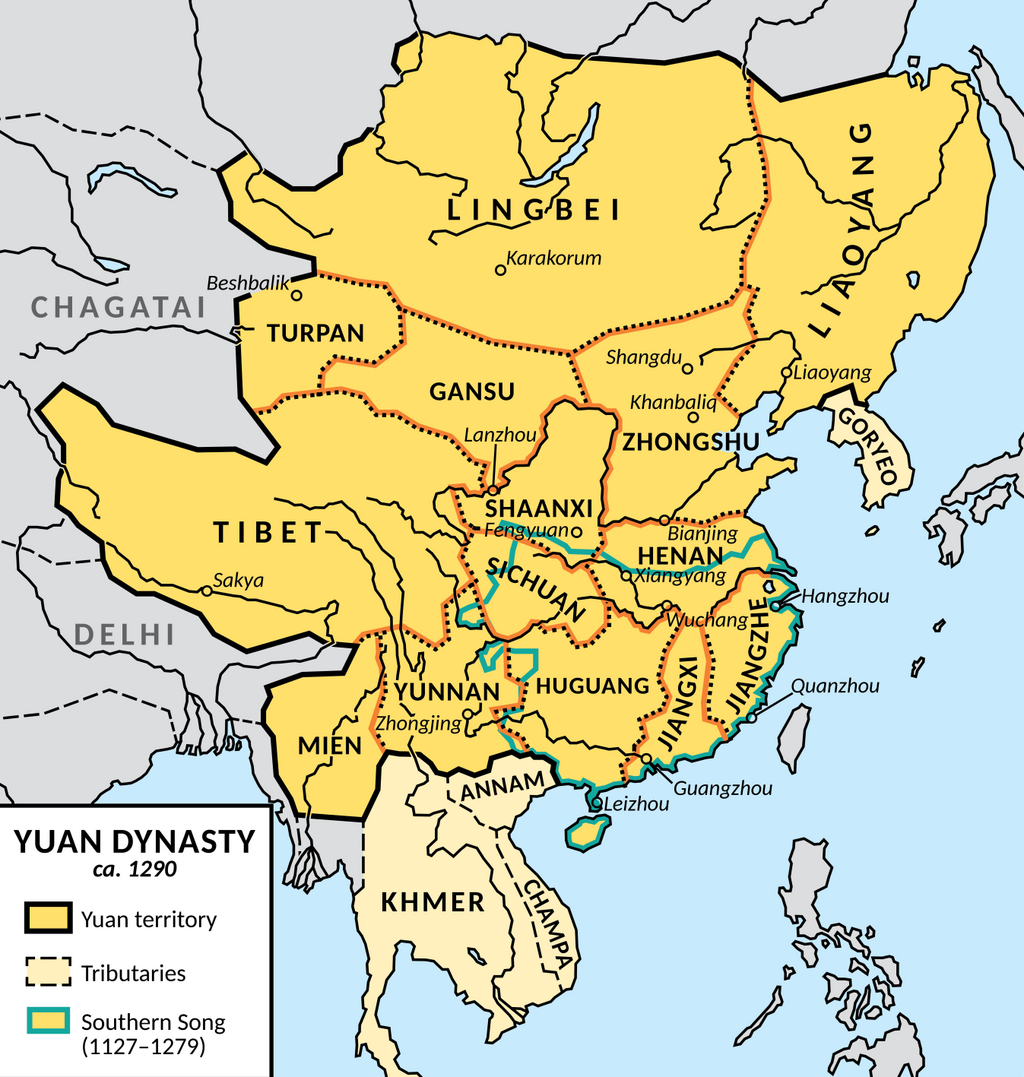
In the 13th century, a new power emerged from the steppes of Central Asia: the Mongols. Under the leadership of Genghis Khan and his successors, they built the largest contiguous land empire in world history. By 1279, his grandson, Kublai Khan, had completed the conquest of the Southern Song and established the Yuan Dynasty (1279–1368 CE), with its capital at Dadu (modern-day Beijing).
For the first time, all of China was ruled by a non-Han people. The Mongols maintained their own customs and placed Mongols in the highest government positions. However, they also adopted many features of the Chinese administrative system to govern their vast territory. The Yuan period was one of unprecedented contact between China and the rest of the world. The Mongol-controlled Silk Road was safe for travel, facilitating the exchange of goods, ideas, and technologies between East and West. It was during this time that the Venetian merchant Marco Polo famously visited China and served in Kublai Khan's court.
These four dynasties represent a dynamic period of reunification, cultural flourishing, economic revolution, and foreign interaction that profoundly shaped the course of Chinese history.