Subverting Ideology in Hamlet
Subverting the Chain
A Crack in the Chain
Elizabethan society saw the universe as a vast, divinely ordered hierarchy. This was the Great Chain of Being, an unbroken sequence from God down to the lowest grain of sand. Every person and thing had a fixed place, and societal stability depended on everyone playing their assigned part. A prince was a prince, a peasant was a peasant, and the lines were not meant to be crossed. But in the court of Denmark, something is rotten, and it's not just the political intrigue. The character of Prince Hamlet himself acts as a profound disruption to this rigid order.
Where the world demands external action based on his royal status, Hamlet turns inward, creating a universe of thought that challenges the very foundations of his reality.
His father, a king, is murdered. His uncle, the killer, has taken the throne and married his mother. According to the rules of the chain, Hamlet's duty as a prince is clear: avenge the rightful king and restore order. But he doesn't. Instead of decisive action, he retreats into contemplation. This hesitation is not merely a sign of a melancholy nature; it is a structural rebellion. By prioritising his internal, psychological conflict over his public duty, Hamlet refuses to be a simple link in the divine chain. He becomes a 'stain' on the meticulously ordered fabric of his universe, a man whose complex inner life cannot be contained by his prescribed social role.
The World Within
Hamlet's soliloquies are the primary stage for this rebellion. In an era where a person's identity was largely defined by their external relationships and social rank, Hamlet constructs a rich, tortured inner self that is fundamentally at odds with his public persona. These are not just speeches of indecision; they are radical acts of interiority. He puts the entire universe on trial inside his own mind, questioning everything from the honesty of ghosts to the meaning of existence itself.
Hamlet especially enters the reckoning as supreme exploration of Being, the gyres and contraries of how human consciousness works and becomes aware of itself.
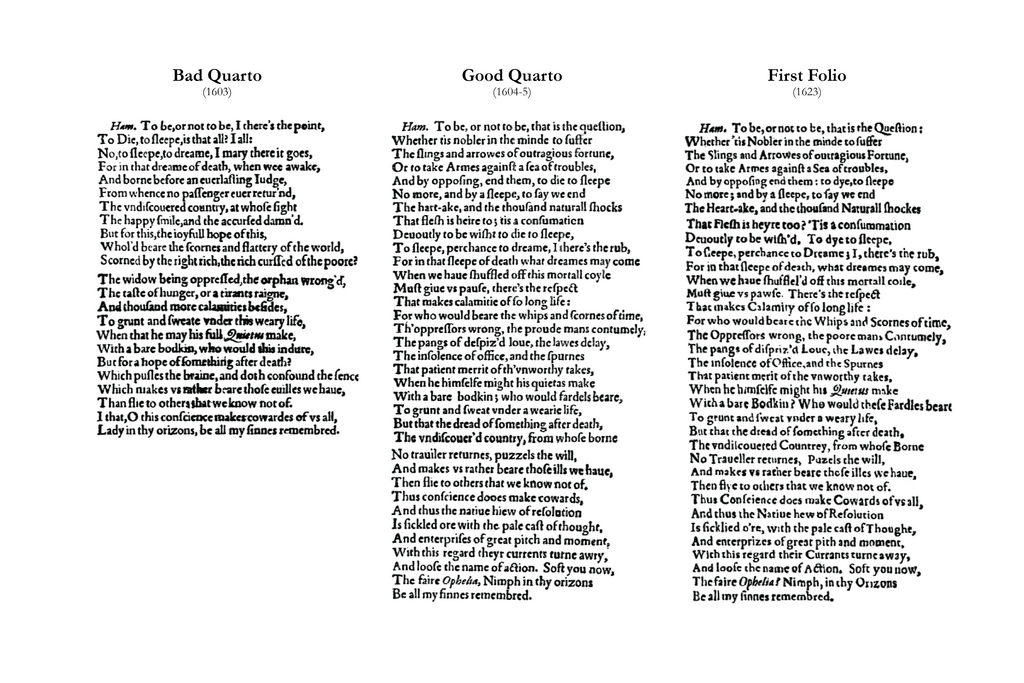
Consider his most famous soliloquy, "To be, or not to be." A prince's role is to be—to act, to rule, to ensure the continuation of the dynasty. Yet Hamlet contemplates non-existence as a valid alternative to a world he finds corrupt and unbearable. He weighs the 'slings and arrows of outrageous fortune' against the fear of the unknown afterlife. This internal debate elevates his personal suffering above his political duty, effectively telling the cosmos that its grand design might not be worth participating in. His intellect and self-awareness become a form of resistance against the simplistic, action-oriented role he is expected to fulfill.
A Metaphysical Rebel
By internalising the play's central conflict, Hamlet subverts the very idea of a world governed by a clear, external moral order. The question is no longer simply about avenging a king, which would reinforce the system of , but about whether such a system even deserves to be restored. His famous line, "The time is out of joint," is more than a complaint. It's a diagnosis. The problem isn't just a single murder; the entire framework of reality has come undone.
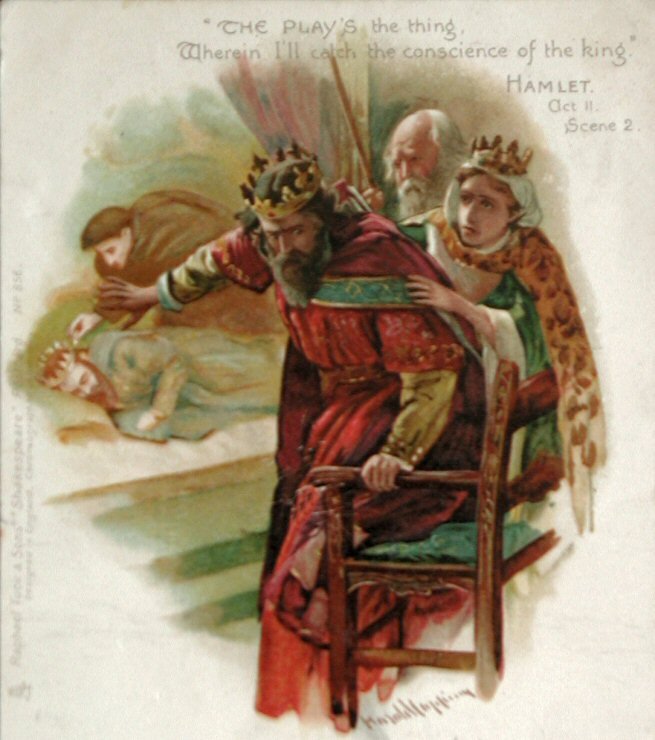
Hamlet is not an atheist, but he is a profound skeptic. He is trapped between the medieval world of ghosts and divine retribution and the emerging Renaissance world of humanism and doubt. He cannot simply act on the Ghost's word because his modern, analytical mind demands proof. He stages the 'Mousetrap' play to "catch the conscience of the King," a move that replaces blind faith with empirical investigation. In doing so, he puts the king, and by extension the entire concept of God-given authority, on trial before an audience.
This makes Hamlet more than a tragic hero. He is a metaphysical rebel. His tragedy is not that he cannot act, but that he is a man of deep contemplation and moral nuance forced into a world that demands brutal, simplistic action. His inaction becomes a powerful critique of that world, a silent refusal to validate a corrupt order by participating in its violent games. By questioning his role, he questions the role of every link in the Great Chain, leaving the audience to wonder if the order it upholds is truly divine after all.
What is the 'Great Chain of Being' as understood in Elizabethan society?
According to the text, how does Hamlet's famous 'To be, or not to be' soliloquy represent a rebellion against his prescribed role?