Subacute Stroke MRI Identification
Stroke Basics
What Is a Stroke?
A stroke is often called a “brain attack.” It happens when the blood supply to part of the brain is suddenly interrupted or reduced. This deprives brain tissue of essential oxygen and nutrients, causing brain cells to begin to die within minutes.
There are two main types of stroke, categorized by their cause.
- Ischemic stroke: This is the most common type, caused by a blockage in an artery that supplies blood to the brain. The blockage is usually a blood clot.
- Hemorrhagic stroke: This type is less common and is caused by a ruptured blood vessel in the brain, which leads to bleeding into the surrounding brain tissue.
About 87% of all strokes are ischemic strokes. This article will focus on the fundamentals of this specific type.
How an Ischemic Stroke Happens
An ischemic stroke occurs when a cerebral artery is obstructed. Think of it like a clog in a pipe that stops water from flowing. This obstruction can happen in one of two main ways: a thrombotic event or an embolic event.
thrombosis
noun
The formation of a blood clot (a thrombus) inside a blood vessel, obstructing the flow of blood through the circulatory system.
A thrombotic stroke happens when a blood clot forms directly within one of the arteries supplying blood to the brain. This is often the result of atherosclerosis, a condition where fatty deposits called plaques build up on the artery walls, narrowing them over time. A clot can form on top of this plaque, eventually growing large enough to block blood flow completely.
embolism
noun
The lodging of an embolus, which can be a blood clot, fat globule, gas bubble, or other foreign material, in a blood vessel, causing a blockage.
An embolic stroke occurs when a blood clot or other debris forms somewhere else in the body, travels through the bloodstream, and gets lodged in one of the brain's narrower arteries. A common source for these emboli is the heart, particularly in people with certain heart rhythm disorders like atrial fibrillation.
From Blockage to Brain Damage
When an artery is blocked, the brain tissue it supplies is starved of oxygen and glucose. The area of tissue that dies as a result of this severe blood flow disruption is called the infarct core.
Surrounding this core is an area of tissue called the penumbra. Here, blood flow is reduced but not completely cut off, often thanks to smaller, alternative blood vessels called collaterals. The cells in the penumbra are at risk of dying but are still potentially salvageable if blood flow can be restored quickly. This is the primary target for acute stroke treatments.
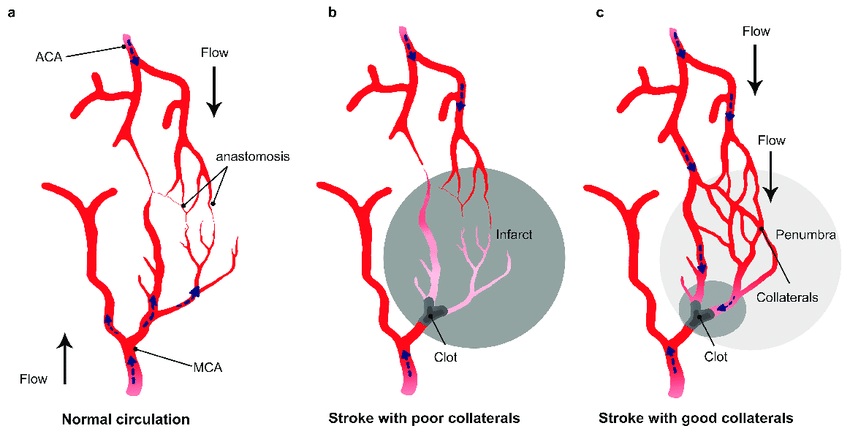
At a cellular level, the lack of oxygen and energy triggers a destructive cascade called excitotoxicity. Deprived brain cells release excessive amounts of a neurotransmitter called glutamate. This glutamate overstimulates neighboring cells, allowing a flood of calcium to enter them. This influx of calcium activates enzymes that damage the cell structure, ultimately leading to cell death and expanding the area of the infarct.
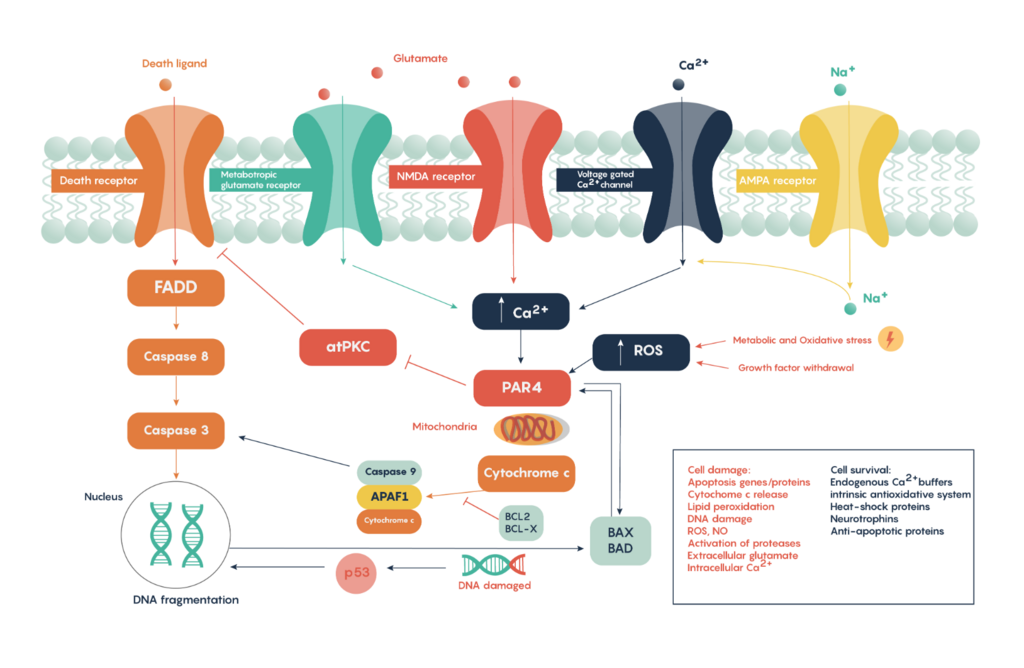
Understanding this basic pathophysiology, from the initial clot to the resulting cellular damage, is the foundation for interpreting the changes we see on brain scans following an ischemic stroke.