Sub-Prime Auto ABS Structuring and Pricing
Introduction to Asset-Backed Securities
Turning Loans into Investments
Banks and other lenders make money by issuing loans. They lend money for cars, homes, college tuition, and credit card purchases. But once a bank makes a loan, its cash is tied up until the loan is repaid, which can take years. This limits the number of new loans it can offer.
To solve this, financial institutions created Asset-Backed Securities, or ABS. An ABS is an investment created by bundling together thousands of individual, illiquid loans into a single package that can be sold to investors. Think of it like a fruit basket. Selling a single apple might be difficult, but a curated basket containing many different fruits is a more appealing product.
As many of the loans cannot be sold separately, they can be pooled together and converted into marketable asset-backed securities through a process known as ‘securitization’ (see explanation below).
This process of bundling and repackaging is called securitization. It transforms a collection of private debts into a security, similar to a stock or bond, that can be bought and sold on the open market. This allows the original lender to get its cash back quickly, freeing it up to make more loans. It also transfers the risk of the loans from the lender to the investors who buy the ABS.
The Securitization Process
So how are these securities actually made? The process starts with the original lender, known as the originator. The originator identifies a large pool of similar loans on its books, like 10,000 auto loans.
Special Purpose Entity
noun
A separate legal entity created by a company to isolate financial risk. Its legal status as a separate company makes its obligations secure even if the parent company goes bankrupt.
Instead of selling the securities directly, the originator sells the entire pool of loans to a newly created, legally distinct company called a Special Purpose Entity (SPE). This is a crucial step. By moving the assets to an SPE, the loans are separated from the originator's financial health. If the originator were to go bankrupt, the loans inside the SPE are protected and their cash flows continue to go to the investors.
Once the SPE owns the pool of loans, it issues and sells securities to investors. The cash raised from investors is used to pay the originator for the loans. Now, the investors effectively own a claim on the future payments from the original borrowers. When those borrowers make their monthly car or mortgage payments, the money flows through the SPE and is passed on to the investors as principal and interest.
Different Slices for Different Appetites
To appeal to a wider range of investors, the securities issued by the SPE are often sliced into different categories called tranches. Each tranche has a different level of risk and a different potential return.
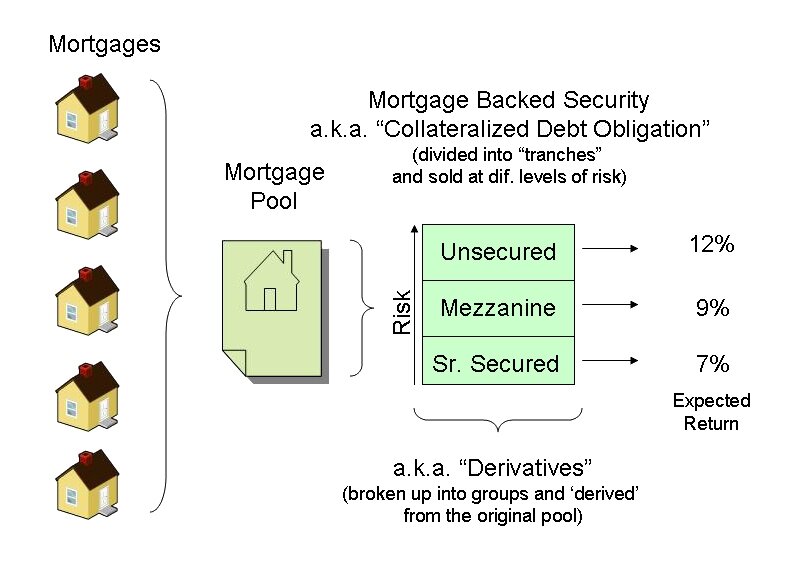
The safest tranches, called senior tranches, are the first in line to receive payments from the loan pool. They have the lowest risk of default but also offer the lowest returns. The riskiest tranches, often called junior or equity tranches, are the last to get paid. If some borrowers default on their loans, these tranches are the first to absorb the losses. To compensate for this higher risk, they offer the highest potential returns.
This structure allows investors to choose the level of risk they are comfortable with, from very safe to highly speculative.
Common Types of Assets
While mortgage-backed securities are the most famous type of ABS, almost any predictable stream of income can be securitized. Common assets bundled into these securities include:
- Auto Loans: Payments on car loans.
- Credit Card Receivables: Payments on credit card balances.
- Student Loans: Payments on public and private student loans.
- Home Equity Loans: Loans taken out against the value of a home.
By pooling these debts, securitization creates a liquid market for otherwise illiquid assets, playing a significant role in the global financial system.
What is the primary reason for a bank to engage in securitization?
In the context of an ABS, what is the main function of a Special Purpose Entity (SPE)?