Stuart McGill's Big Three Core Program
Core Anatomy
Your Body's Natural Brace
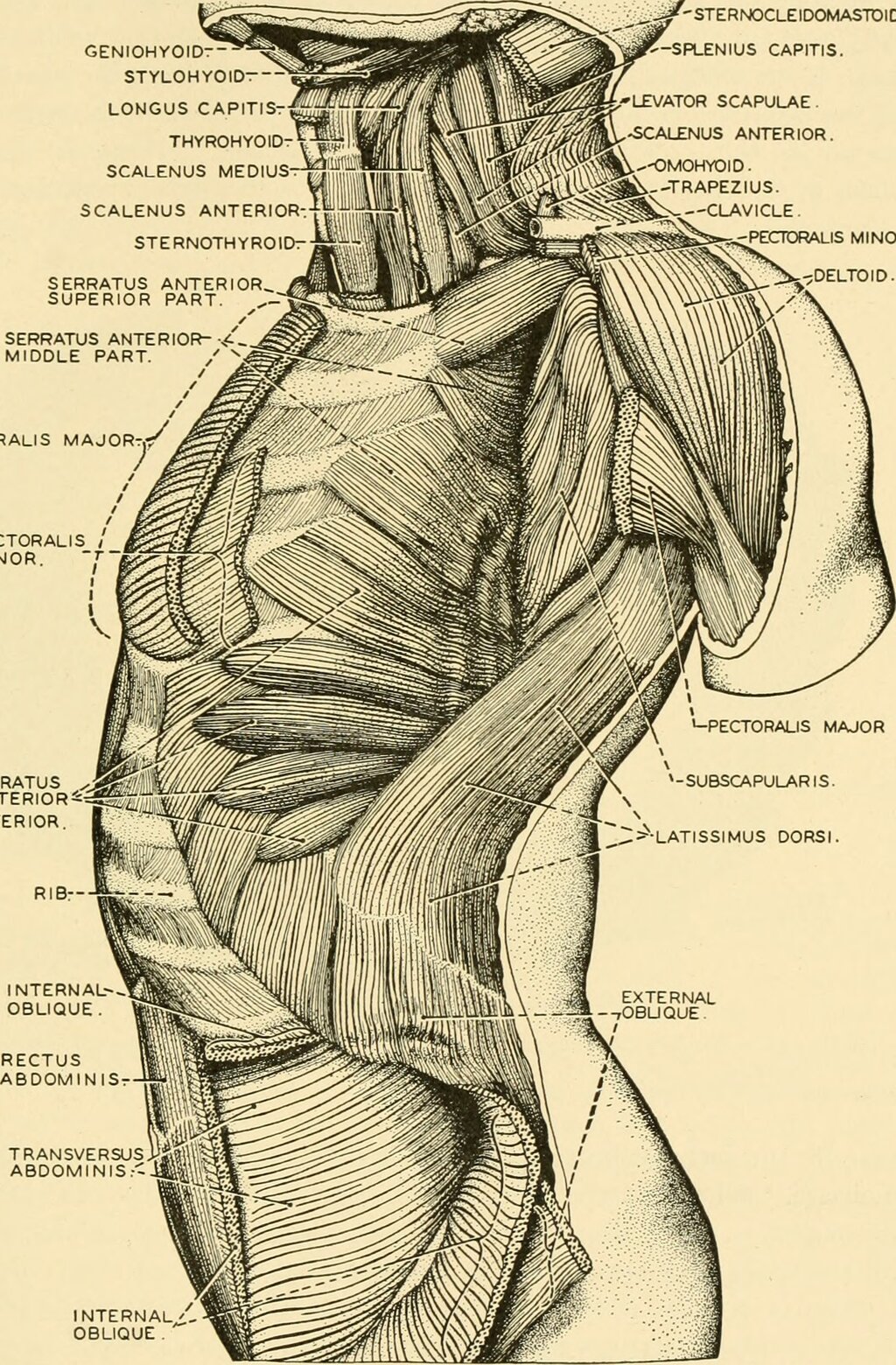
When most people think of the “core,” they picture the six-pack muscles, or rectus abdominis. But that’s just one part of a much more complex and important system. Your core is a three-dimensional group of muscles that wraps around your entire torso, from your pelvis up to your ribcage. It's less like a wall of muscle on your stomach and more like a muscular corset or a strong, supportive box that encases and protects your spine.
Your body’s “core” contains muscles that provide support to the pelvis and spinal segments.
This muscular box has a top, a bottom, and sides that work together. The top is your diaphragm, the primary muscle for breathing. The bottom is the pelvic floor, a hammock of muscles supporting your organs. The sides are wrapped by the deep transverse abdominis and the internal and external obliques. Finally, the front and back are supported by the rectus abdominis and the deep spinal muscles like the erector spinae and multifidus.
Stabilizing the Spine
The main job of your core is to provide stability, not just to create movement. Think of the mast of a sailboat. It’s held upright and steady by rigging—a network of ropes pulling with tension from all sides. Your spine is like that mast, and your core muscles are the rigging. They create tension from the front, back, and sides to hold your spine in a safe, neutral position.
When you lift a heavy box or twist to grab something, these muscles fire together to create intra-abdominal pressure. This pressure acts like an inflated balloon inside your abdomen, bracing your lower back and preventing it from buckling under the load. A strong core distributes the force, protecting the individual vertebrae and discs from excessive strain.
Without this coordinated bracing, simple movements could put your spine at risk. The small muscles deep in your back, like the multifidus, are particularly important. They span just a few vertebrae at a time, acting like fine-tuning stabilizers to control each segment of your spine.
Foundation for Movement
Your core is also the center of your body's kinetic chain. All powerful movements, whether it's throwing a ball, swinging a golf club, or simply getting up from a chair, originate from or transfer through the core.
A stable core provides a solid platform for your limbs to work from. Imagine trying to fire a cannon from a canoe. The canoe is unstable, so much of the cannon's power would be lost just rocking the boat. Now, imagine firing that same cannon from solid ground. All its power is directed forward. Your core is that solid ground.
A strong core allows for the efficient transfer of force from your lower body to your upper body, and vice versa. This makes your movements more powerful and less likely to cause injury.
When your core is weak, other muscles have to compensate. This often leads to strain in the lower back, hips, or hamstrings, as they take on a stabilizing role they weren't designed for. Building core strength isn't just about aesthetics; it’s about creating a resilient, efficient, and pain-free body.
Let's check your understanding of these foundational concepts.
Which statement best describes the 'core'?
What is the primary function of the core muscles?
Understanding this anatomy is the first step toward building a truly functional and protective core.