Structured Daily Exercise Programming
Functional Movement Mechanics
Movement, Not Just Muscles
Think about how you move through your day. You pick things up, sit down, push doors open, and carry groceries. Your body doesn't perform these actions by isolating single muscles. Instead, it coordinates entire systems of muscles and joints to work together. This is the essence of functional movement.
Rather than focusing on individual muscles, a smarter approach to training centres on mastering fundamental movement patterns. These are the building blocks for nearly every physical task, from simple daily activities to complex athletic feats. By training these patterns, you build strength that translates directly to real-world performance and resilience.
Work on movement patterns like pushing, pulling, hinging and squatting instead.
There are six primary patterns that form the foundation of a balanced routine:
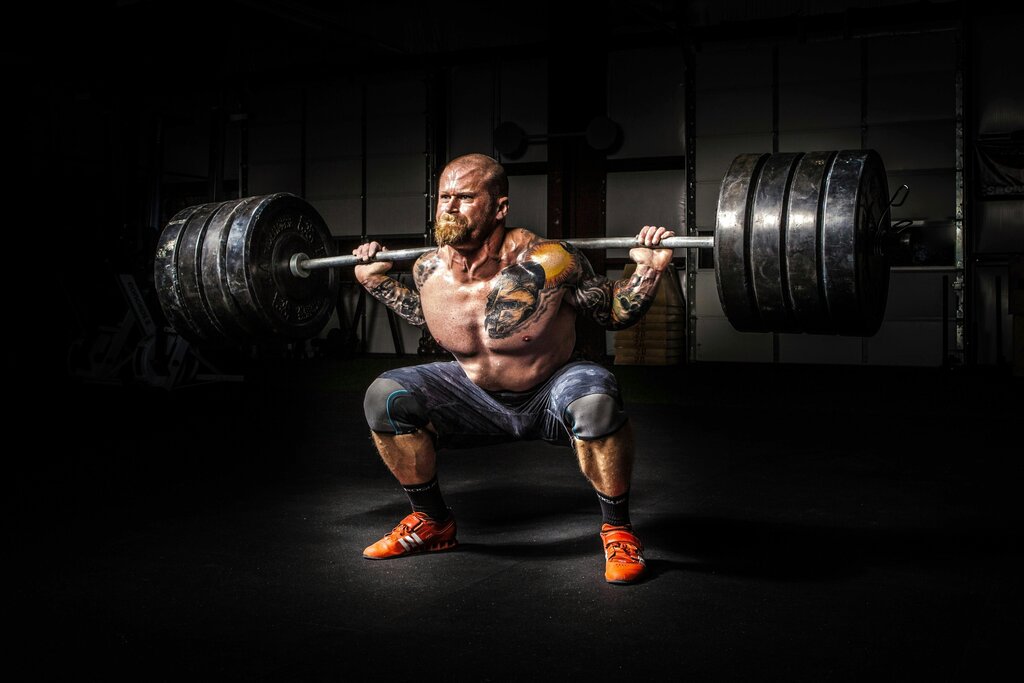
- Squat: Lowering your hips from a standing position. Think of sitting in a chair.
- Lunge: Stepping forward or backward with one leg and lowering your hips.
- Hinge: Bending at the hips with a relatively straight back, like in a deadlift or picking up a heavy box.
- Push: Pushing an object away from you, either horizontally (like a push-up) or vertically (like an overhead press).
- Pull: Pulling an object towards you, like with a pull-up or a row.
- Carry: Holding a weight while walking, such as carrying a suitcase or a child.
Mastering these patterns ensures you're developing well-rounded, practical strength.
The Body as a System
No joint or muscle works in isolation. Your body is an interconnected system, often described as a . Imagine a series of connected links; force applied to one link travels through the entire chain. When you perform a squat, for example, your ankles, knees, and hips all move in a coordinated sequence. The muscles crossing these joints activate to control the movement, and your core muscles brace to keep your spine stable. A weakness or stiffness in one link, like limited ankle mobility, can force other links, such as the knees or lower back, to compensate, increasing the risk of injury.
This integration is why compound lifts, which involve multiple joints and muscle groups, are so effective. They train the body to function as a cohesive unit, improving neuromuscular efficiency—the ability of your brain and muscles to communicate and produce smooth, powerful movements. This synergy is crucial for both athletic performance and preventing the strains and sprains that come from poor movement mechanics in daily life.
The Core of the Matter
At the centre of every functional movement is your core. It's much more than just the six-pack muscles. Think of it as a muscular corset that wraps around your entire trunk, including your abdominals, obliques, lower back muscles, and diaphragm. Its primary job is not to create movement, but to resist it. This is in action.
During a heavy lift or a sudden change in direction, your core contracts isometrically to keep your spine in a neutral, safe position. This creates a rigid platform that allows your limbs to generate maximum force efficiently. Without a stable core, energy is lost, performance suffers, and your spine is left vulnerable to potentially harmful shear forces. This is especially critical during high-intensity metabolic conditioning, where fatigue can easily lead to a breakdown in form.
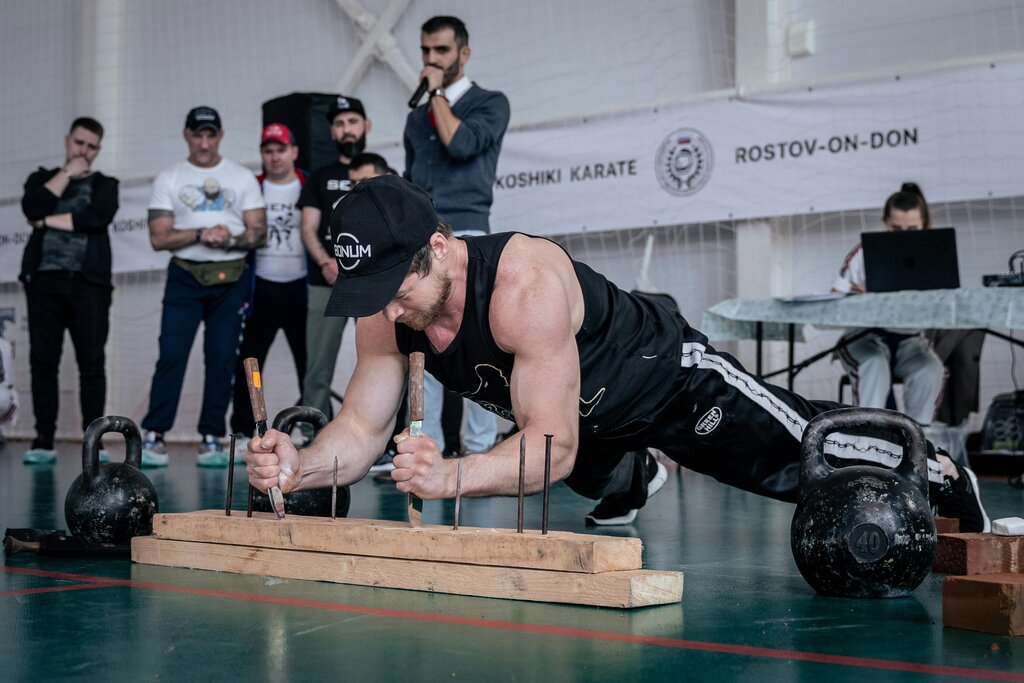
By understanding the role of the kinetic chain and prioritizing core stability, you can select exercises that offer the highest physiological return on your investment. Compound movements that mimic the six primary patterns build a body that is not just strong in the gym, but capable and resilient in everyday life.
What is the primary focus of functional movement training?
Picking up a heavy box from the floor with a relatively straight back is a real-world example of which movement pattern?
This approach to training ensures you are building a solid foundation, allowing for greater strength gains and reducing the likelihood of injury as you progress.