Structured Content Generation Mastery
Why Structured Output
Beyond Free Text
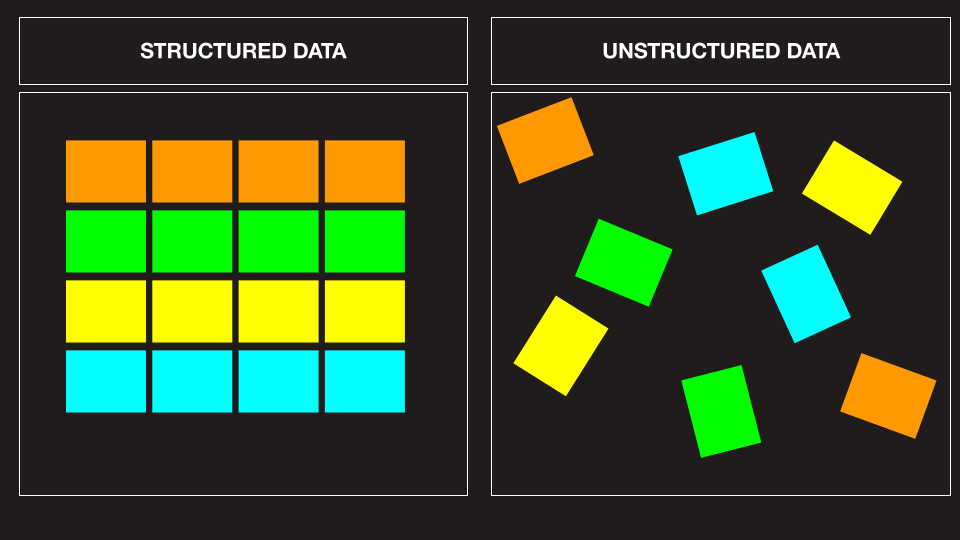
Computers are powerful, but they lack the intuition of a human. If you email a colleague asking for a user's details, you can understand their reply whether they write, "It's John Smith, his ID is 123," or "User 123 is John Smith." A computer, on the other hand, would struggle. It needs unambiguous instructions and predictable patterns to work reliably.
This is where structured output comes in. It's a way of formatting information according to a strict set of rules, creating a predictable blueprint that software can read and process without confusion. Instead of free-form text, we use formats like JSON, XML, or YAML to package data. Think of it as a universal language for systems, ensuring that when one computer sends data, the receiving computer knows exactly how to interpret it.
Structured output turns ambiguous data into a machine-readable contract.
The Core Benefits
Adopting a structured approach isn't just about neatness; it's about making systems more robust, efficient, and scalable. The primary benefits are interoperability, automation, and data integrity.
Interoperability
noun
The ability of different computer systems or software applications to communicate, share data, and use the information that has been exchanged.
First, interoperability. When two systems agree on a structured format, they can communicate flawlessly, even if they were built by different teams using different technologies. A Python backend can send a JSON object to a mobile app written in Swift, and both sides understand the data's structure perfectly. It's the digital equivalent of a diplomat using a common language to negotiate with a foreign counterpart.
Second, automation. Once data is predictable, you can build tools to act on it automatically. A script can parse a structured log file to find errors, an application can read a configuration file to set itself up, or a workflow can take customer data from a JSON payload to generate a monthly report. This eliminates manual work and reduces the chance of human error.
Finally, data integrity and consistency. Structure enforces rules. By defining that an 'address' must contain separate 'street', 'city', and 'postcode' fields, you prevent the inconsistencies of a single free-text box. This ensures the data is clean, reliable, and easy to query or analyse.
Where Structure is King
The need for structured output is everywhere in modern software. It's the silent engine behind countless daily operations.
| Use Case | Common Format(s) | Why it Matters |
|---|---|---|
| API Communication | JSON | Provides a lightweight, easy-to-parse standard for web and mobile clients to request and receive data from servers. |
| Configuration Files | YAML, JSON, XML | Allows applications to load settings dynamically without hardcoding them, making software more flexible and easier to manage. |
| Data Logging | JSON | Creates logs that are not just readable by humans but are also easily indexed, searched, and analysed by monitoring tools. |
| Data Exchange | XML, JSON | Enables different departments or even different companies to share complex datasets in a reliable and verifiable way. |
Whether it's a mobile app fetching weather data from a server, a developer tool reading project settings, or an analytics platform processing event logs, structured output is the fundamental principle that allows these systems to function reliably and communicate effectively. Without it, our digital world would be a lot more chaotic.
What is the primary reason computers require structured output, such as JSON or XML?
A Python backend service sends customer data to a mobile app built in Swift. Both systems can understand the data perfectly. Which key benefit of structured output does this scenario best illustrate?