Structural Trusses Explained
Introduction to Trusses
The Structure of Strength
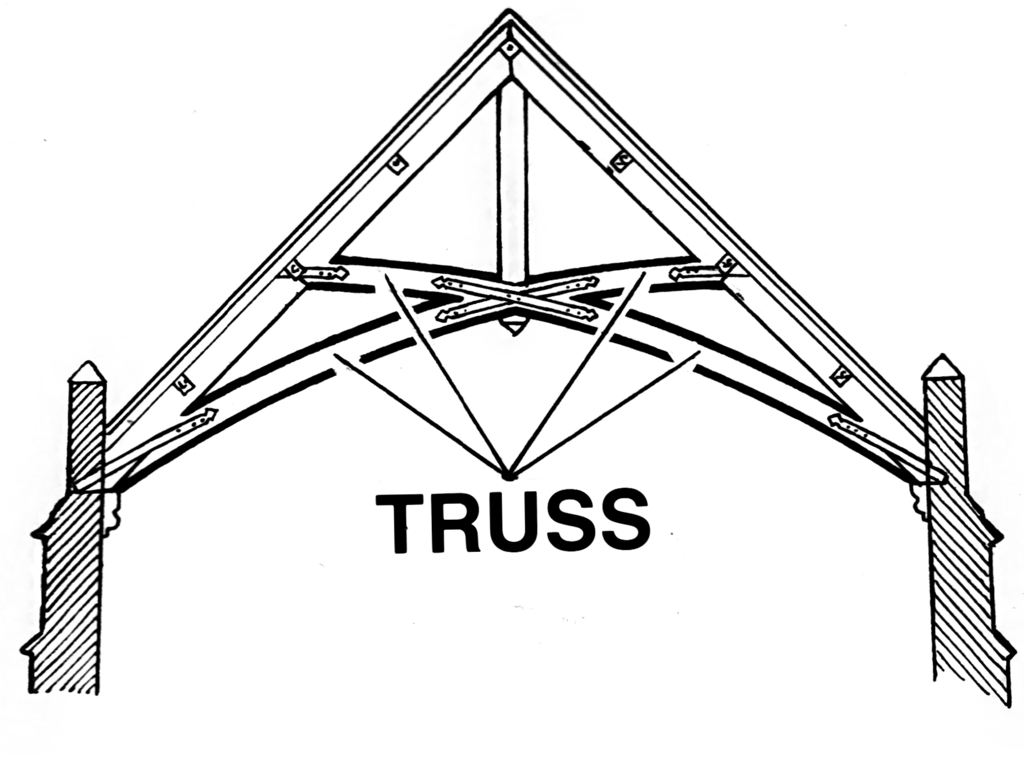
Look at a bridge, the roof of a large building, or even a construction crane, and you'll likely see a web of interconnected beams. This pattern isn't just for decoration; it's an engineering marvel called a truss. A truss is a structure made of straight members connected at their ends to form a rigid framework. Its main job is to support weight over a large distance using the least amount of material possible.
truss
noun
A framework, typically consisting of rafters, posts, and struts, supporting a roof, bridge, or other structure.
The individual beams are called members, and the points where they connect are called joints or nodes. Think of it like a skeleton. The bones are the members, and the joints are where they meet. By arranging these members in a specific way, engineers can create incredibly strong yet lightweight structures.
The Magic of Triangles
The secret to a truss's strength lies in its shape: the triangle. A triangle is the most stable and rigid polygon. If you build a square frame by pinning four sticks together, you can easily push it over and collapse it into a parallelogram. It has no inherent stability.
But if you try the same with a triangular frame, it won't budge. To change the shape of a triangle, you'd have to physically bend or break one of its members. This rigidity is what makes trusses so effective.
When a load is applied to a truss, the triangular arrangement distributes the force throughout the structure. Each member experiences either a pulling force (tension) or a pushing force (compression) along its length. Because the forces don't bend the members, the material is used very efficiently. This allows a truss to support enormous weights while remaining relatively light.
Trusses in the Wild
Once you know what to look for, you'll see trusses everywhere. They are a fundamental tool in civil engineering and architecture.
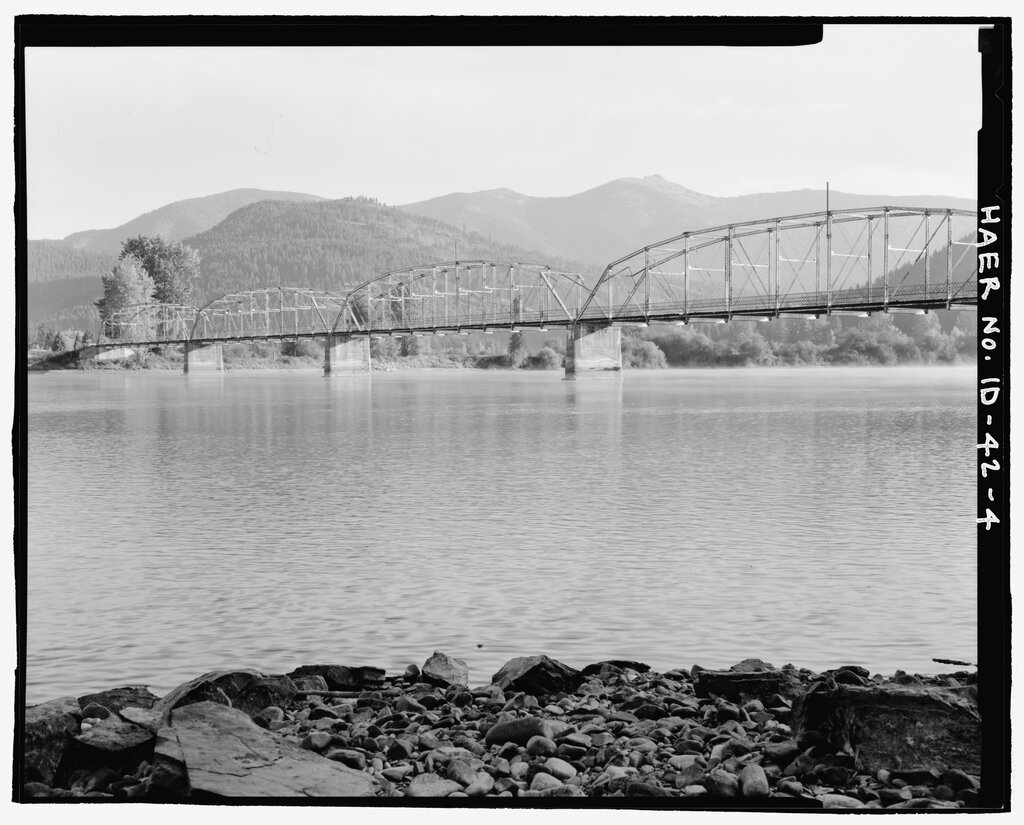
Bridges are one of the most common applications. Truss bridges can span long distances over rivers and valleys, from simple railway bridges to massive highway crossings.
Roofs on large buildings like warehouses, stadiums, and airport terminals often use trusses to create wide, open spaces without needing a forest of internal columns for support. Radio towers, electricity pylons, and roller coasters also rely on truss designs for their height and strength.
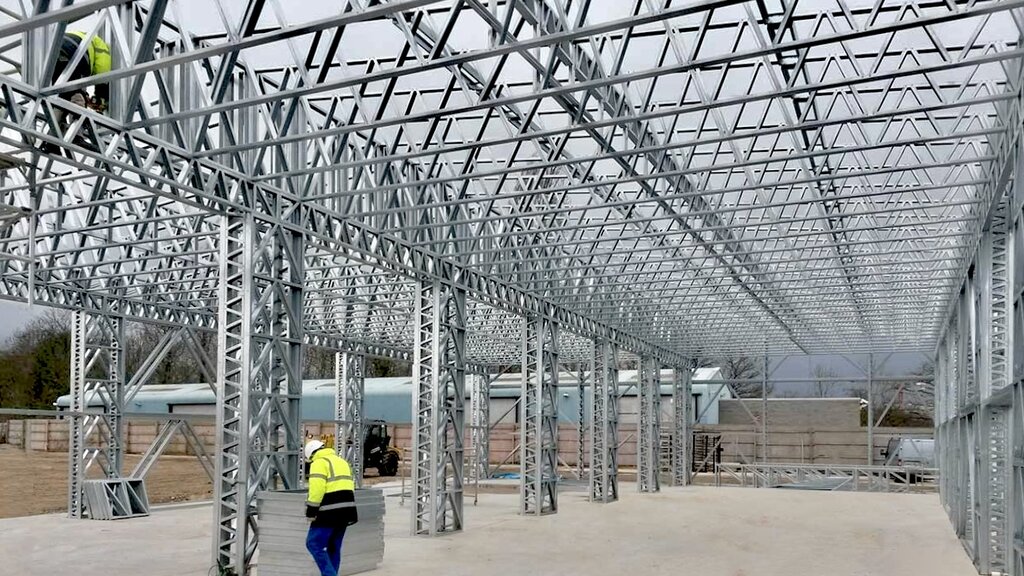
By breaking down large structures into a series of stable triangles, engineers can build strong, efficient, and often beautiful designs that shape our world.
Time to check your understanding of these foundational structures.
What is the fundamental geometric shape that gives a truss its characteristic strength and rigidity?
When a load is applied to a truss, the forces experienced by individual members are primarily of which two types?