Structural Analysis Fundamentals
Structural Analysis Fundamentals
The Balancing Act of Forces
Every structure you see, from a towering skyscraper to a simple bookshelf, is in a constant state of balance. It's not moving, swaying, or collapsing. This state is called equilibrium. In engineering, equilibrium means that all the forces acting on a structure are perfectly balanced. They cancel each other out.
Think of a tug-of-war where both teams are pulling with exactly the same strength. The rope doesn't move. The same principle applies to buildings. Gravity pulls the structure down, while the ground and internal supports push it up. Wind pushes from one side, but the structure's frame pushes back. For a structure to be stable, this balance must be perfect.
In two dimensions, this balance can be described by three simple rules. For a structure to be in equilibrium, the sum of all forces in any direction, and the sum of all rotational forces, must be zero.
The first two equations are straightforward. If you push a box to the right with 10 pounds of force, it needs an equal 10-pound push to the left to stay put. The third equation, involving moments, is about rotational balance. Imagine a seesaw. If a heavy person sits on one end, a lighter person needs to sit further from the center on the other end to balance it. The moment is the force (their weight) multiplied by their distance from the pivot point. For the seesaw to be level, the clockwise moment must equal the counter-clockwise moment.
Fitting It All Together
Knowing that forces are in balance is only the first step. We also need to consider how the parts of a structure deform and move together. This is the principle of compatibility.
Compatibility ensures that a structure behaves as a single, continuous object. When a beam bends, the points along it move to new positions. Compatibility dictates that the beam doesn't crack, tear, or have parts passing through each other. If two pieces are bolted together, they must move and deform together at that connection point. They share the same fate.
Think of it like a jigsaw puzzle. Each piece must fit perfectly with its neighbors. If you bend the assembled puzzle, every piece deforms slightly in a way that is consistent with the pieces around it. No gaps appear, and no pieces overlap. That's compatibility in action.
This concept is crucial for understanding how loads are distributed. A stiff part of a structure will resist deforming, so it will attract more of the load. A more flexible part will deform more easily and carry less of the load. By ensuring all these deformations are compatible, engineers can predict how the entire structure will respond to forces.
How Materials Respond
The final piece of the puzzle is understanding the material itself. A steel beam, a concrete column, and a wooden plank all respond differently to being pushed or pulled. This material behavior is described by the relationship between stress and strain.
stress
noun
The internal force acting within a material per unit of area. It's a measure of how intensely the material is being loaded.
strain
noun
The measure of deformation or change in shape of a material in response to stress. It's often expressed as a percentage of its original length.
Imagine stretching a rubber band. The force you apply creates stress inside the rubber. The amount it stretches is the strain. For many common materials like steel, there's a simple, direct relationship between the two: the more stress you apply, the more strain you get. If you double the stress, you double the strain. This is known as the material's elastic region.
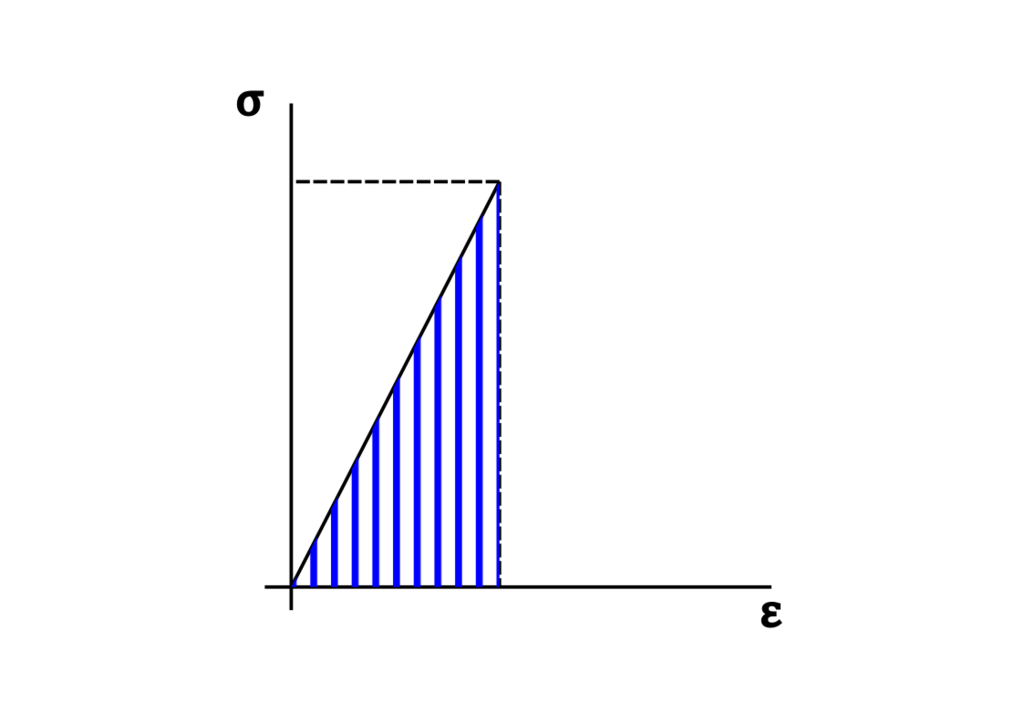
If you release the load while in this elastic region, the material snaps back to its original shape, just like the rubber band. However, if you apply too much stress, you push the material past its elastic limit. It enters the plastic region, where it deforms permanently. Bend a paperclip slightly, and it springs back (elastic). Bend it too far, and it stays bent (plastic).
By combining the principles of equilibrium, compatibility, and material behavior, engineers can analyze a structure. They can determine if it's strong enough to carry the loads it will face without breaking or deforming excessively.
Ready to check your understanding? Let's see how these core concepts fit together.
What does it mean for a structure to be in a state of equilibrium?
Imagine a seesaw. If a 40 kg person sits 3 meters from the center pivot, where must a 60 kg person sit on the other side to achieve rotational equilibrium?
These three principles form the bedrock of all structural analysis, ensuring our buildings, bridges, and vehicles are safe and reliable.