Strength Training Fundamentals
Strength Training Basics
What Is Strength Training?
Strength training, at its core, is any physical movement where you use your body to resist some force. That force could be your own body weight, dumbbells, resistance bands, or specialized machines. The goal is to make your muscles contract against this resistance, which over time makes them stronger.
The benefits go far beyond just building bigger muscles. When you consistently challenge your muscles, you're also strengthening your bones, which helps fight off conditions like osteoporosis. A body with more muscle mass burns more calories even when you're resting, giving your metabolism a nice boost. Everyday tasks, like carrying groceries or playing with your kids, become easier and safer.
Strength training is an often overlooked but essential component that can elevate performance, potentially prevent injuries, and counteract age-related physical changes.
Your Body's Team
You don't need a degree in anatomy to strength train effectively, but it helps to know the major players. Thinking about your body in terms of muscle groups ensures you create a balanced routine, where you're not just working your arms every day. A balanced approach prevents muscle imbalances, which can lead to injury.
Your body's major muscle groups can be split into three general areas:
| Area | Major Muscle Groups |
|---|---|
| Upper Body | Chest (Pectorals), Back (Latissimus Dorsi, Rhomboids), Shoulders (Deltoids), Arms (Biceps, Triceps) |
| Lower Body | Glutes, Quads (Quadriceps), Hamstrings, Calves |
| Core | Abdominals, Obliques, Lower Back |
Working all these groups leads to balanced, functional strength.
Picking Your Resistance
The “resistance” in resistance training is simply the force your muscles work against. There are many ways to create this challenge, and none of them are inherently better than the others. The best choice depends on your goals, experience, and what you have access to.
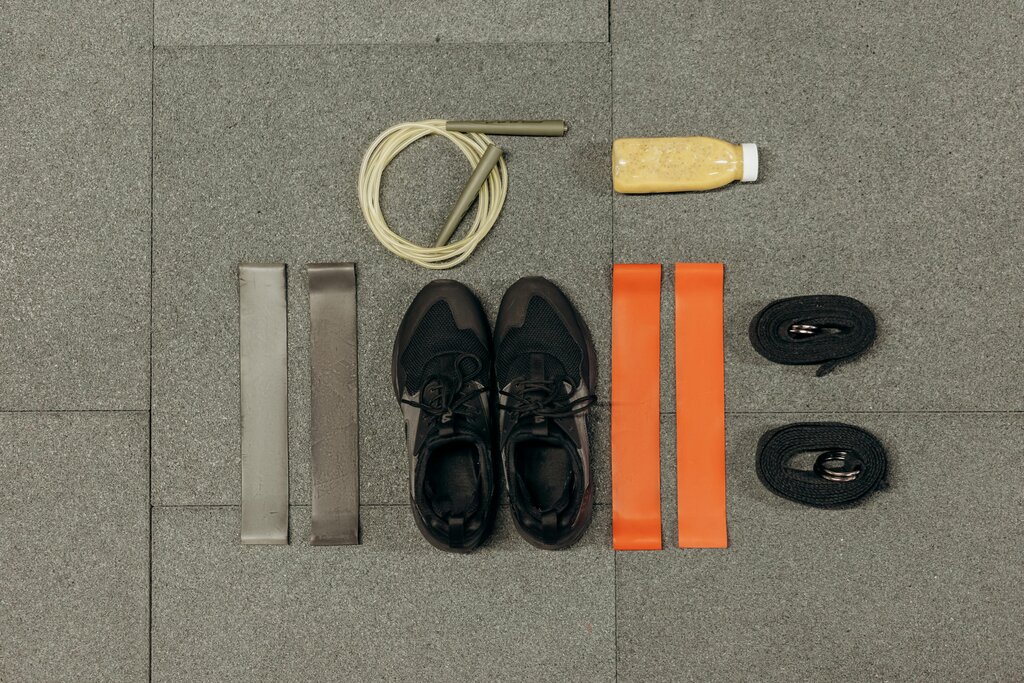
Bodyweight: This is the most accessible form of resistance because it's always with you. Exercises like push-ups, squats, lunges, and planks use your own body as the weight. It's a fantastic starting point for mastering movement patterns before adding external loads.
Free Weights: This category includes dumbbells, barbells, and kettlebells. Free weights are versatile and force your body to use smaller stabilizing muscles to control the movement, which is great for building functional strength and coordination.

Machines: Weight machines, like a leg press or chest press, guide your movement along a fixed path. This makes them great for beginners because they help you learn the feel of an exercise with a lower risk of incorrect form. They are also effective for isolating specific muscle groups.
How Your Body Adapts
When you lift a weight that's challenging for you, you're actually creating tiny, microscopic tears in your muscle fibers. This sounds bad, but it's a normal part of the process. After your workout, your body gets to work repairing these fibers. It doesn't just patch them up, it rebuilds them slightly thicker and stronger than before to better handle the stress next time.
This repair and growth cycle is how muscles get stronger and larger. But it's not just about muscle. Strength training also places stress on your bones, which signals your body to increase bone density, making them stronger and more resilient.
This is why rest is just as important as the workout itself. The magic happens during recovery, not during the lift.
Over time, your nervous system also gets more efficient at recruiting muscle fibers. Your brain and muscles learn to work together better, allowing you to lift heavier weights not just because your muscles are bigger, but because they're being activated more effectively.
Form Over Everything
If there's one golden rule in strength training, it's this: proper form is more important than the amount of weight you lift.
Proper technique in foundational movements builds a strong base and prevents injury.
Using good form ensures you're working the intended muscles and not putting unnecessary strain on your joints, ligaments, or tendons. Lifting with poor technique is a fast track to injury and will ultimately slow your progress.

When starting out, it's always better to use a lighter weight, or even no weight at all, to master the movement. Focus on slow, controlled motions. If you feel pain (not to be confused with the muscle burn of effort), stop. It's your body's way of telling you something isn't right.
Now that you understand the basic principles, it's a good time to check your knowledge.
What is the core principle of strength training?
Strength training offers many benefits. Which of the following is NOT a primary benefit of consistent strength training?
Understanding these fundamentals gives you a solid foundation for starting your strength training journey safely and effectively.