Strength Training Fundamentals
Understanding Strength Training
What is Strength Training?
Strength training is any physical activity that uses resistance to make your muscles contract. This contraction builds the strength, size, and endurance of your muscles. The resistance can come from your own body weight, free weights like dumbbells, or machines.
The benefits go far beyond bigger muscles. Consistent strength training increases bone density, which helps protect against osteoporosis later in life. It also improves your functional fitness, making everyday tasks like carrying groceries, climbing stairs, or playing with your kids feel easier. Essentially, it teaches your body to handle physical stress more effectively.
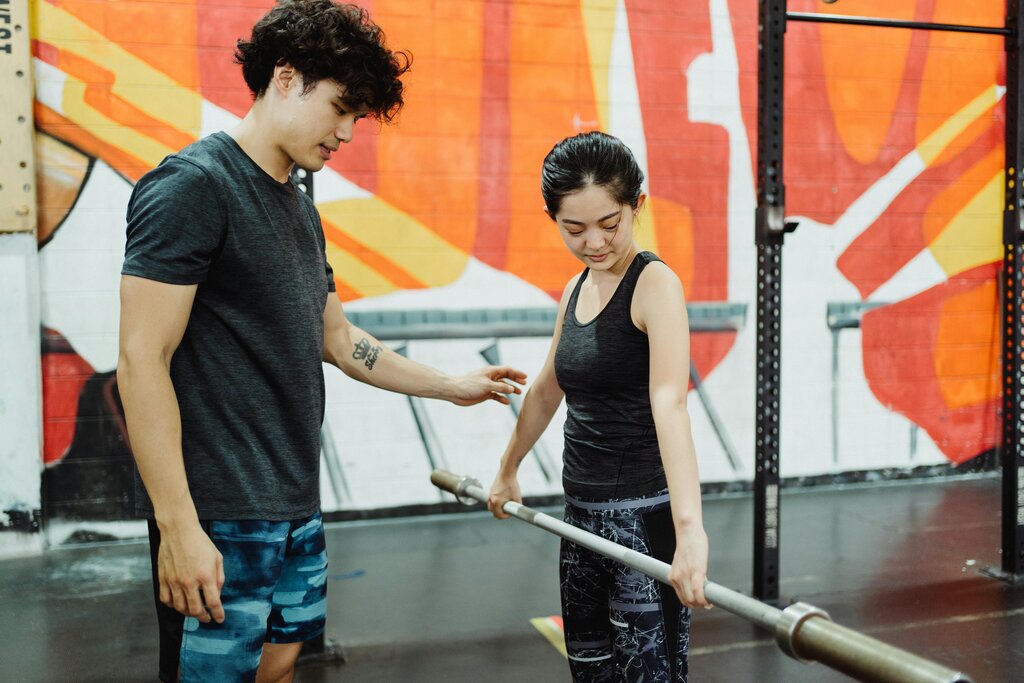
But how do you actually get stronger? It's not about randomly lifting things. There's a core principle that governs all progress.
The Secret to Getting Stronger
Your body is incredibly adaptive. When you challenge your muscles, they respond by becoming stronger to handle that challenge more easily next time. If you keep presenting the same challenge, your body has no reason to change. This is where the most important principle of strength training comes in: progressive overload.
Progressive overload is the cornerstone of strength training, dictating that in order to continually make gains in strength and muscle mass, you must gradually increase the demands placed on your muscles over time.
Simply put, to get stronger, your workouts need to get slightly harder over time. This doesn't always mean lifting heavier weights. There are several ways to gradually increase the demand on your muscles.
| Method | Description | Example |
|---|---|---|
| Increase Resistance | Add more weight to the exercise. | Lifting a 20 lb dumbbell instead of 15 lbs. |
| Increase Reps | Perform more repetitions per set. | Doing 12 squats in a set instead of 10. |
| Increase Sets | Add more sets of an exercise. | Performing 4 sets of push-ups instead of 3. |
| Decrease Rest | Shorten rest periods between sets. | Resting for 60 seconds instead of 90. |
The key is to make these increases small and gradual. Trying to do too much too soon is a fast track to injury, which brings us to another critical concept.
Form Over Everything
No matter how much weight you're lifting, proper form is non-negotiable. Good technique ensures that you're targeting the intended muscles and minimizes the risk of injury. Lifting a heavy weight with bad form doesn't just put your joints and ligaments at risk; it also means you're not getting the full benefit of the exercise.
Think of it like building a house. You need a solid foundation before you start adding floors. In strength training, proper form is your foundation.
When you're starting out, it's always better to use a lighter weight that you can control through the entire range of motion. Focus on mastering the movement pattern first. Once your form is consistent and feels solid, you can begin to apply progressive overload.
Always maintain proper form. Increasing weight too fast without control can lead to injuries that delay your progress.
Choosing Your Moves
Exercises are generally categorized into two main types: compound and isolation. Understanding the difference helps in building a balanced routine.
Compound exercises are multi-joint movements that work several muscle groups at once. Think of squats, deadlifts, and push-ups. They are highly efficient because they give you more bang for your buck in terms of muscles worked in a single exercise. These are often the foundation of a good strength program.
Isolation exercises are single-joint movements that target one specific muscle group. Examples include bicep curls, tricep extensions, and calf raises. These are great for focusing on a particular muscle that might be lagging in strength or for adding extra work to a muscle group after compound lifts.
A balanced routine typically includes a mix of both. Compound lifts build a strong, functional base, while isolation movements can help with specific goals and muscle development. By understanding these core principles—progressive overload, proper form, and exercise selection—you have the foundational knowledge to begin building strength safely and effectively.
What is the most important principle for ensuring continuous improvement in strength training?
A push-up, which works the chest, shoulders, and triceps simultaneously, is an example of what type of exercise?