Strength Building Fitness Routines
Understanding Strength Training
What Is Strength Training?
Strength training, at its core, is any physical activity where you use resistance to make your muscles work. This resistance forces your muscles to adapt and get stronger. It’s not just about building big muscles for show. It's a fundamental part of a healthy lifestyle that improves your ability to move, lift things, and live with energy.
Strength training is the most effective way to build and maintain muscle mass, crucial for metabolism, strength, and function.
The benefits go far beyond the mirror. When you regularly challenge your muscles, you kickstart a chain of positive changes throughout your body. You build lean muscle, which boosts your metabolic rate, meaning you burn more calories even when you're resting. Your bones also respond to the stress of lifting weights by becoming denser and stronger, which is crucial for preventing osteoporosis later in life.
Metabolism
noun
The chemical processes that occur within a living organism in order to maintain life. In fitness, it often refers to the rate at which the body burns calories for energy.
How Your Body Adapts
When you lift weights or push against resistance, you create tiny, microscopic tears in your muscle fibers. This might sound bad, but it’s actually a good thing. It signals your body to repair these fibers, building them back bigger and stronger than before. This process, known as hypertrophy, is how muscles grow.
But the changes aren't just in your muscles. Your nervous system also gets smarter. It learns to recruit muscle fibers more efficiently, allowing you to lift heavier weights or perform more repetitions over time. This is why you often see rapid strength gains when you first start training, even before your muscles look noticeably bigger.
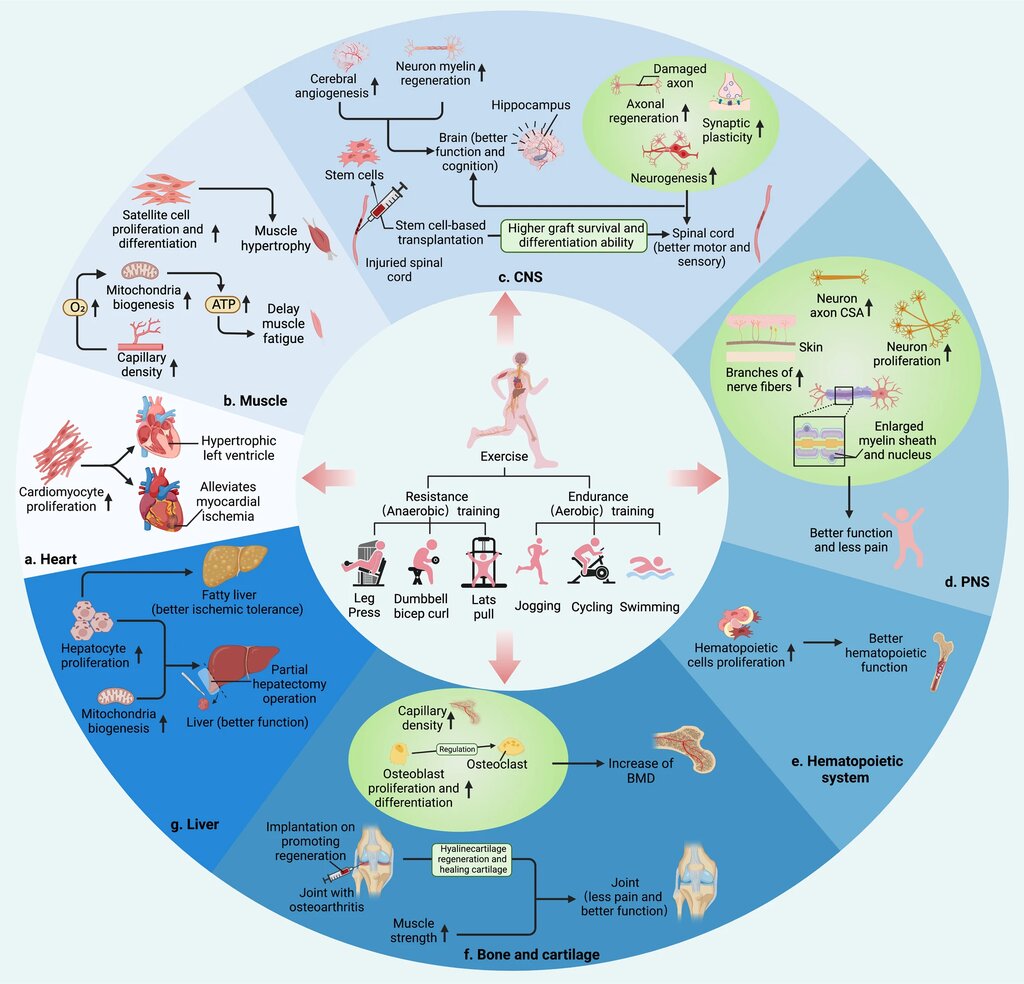
This powerful adaptation process also helps protect you from injury. Stronger muscles provide better support for your joints, like the knees and shoulders. A strong core stabilizes your spine, reducing the risk of back pain. By strengthening the muscles, tendons, and ligaments that hold your body together, you build a more resilient frame that's better equipped to handle the stresses of daily life and physical activity.
Ways to Get Stronger
There isn't one single "right" way to do strength training. Different tools, or modalities, can be used to create resistance. The best one for you depends on your goals, experience, and what you have access to. Common options include free weights, machines, and using your own bodyweight.
| Modality | Description | Best For... |
|---|---|---|
| Free Weights | Barbells, dumbbells, kettlebells. Not attached to a machine. | Building functional strength, as it requires you to stabilize the weight. |
| Machines | Weight machines that guide your movement along a fixed path. | Isolating specific muscle groups; good for beginners learning form. |
| Bodyweight | Using your own body's weight as resistance (e.g., push-ups, squats). | Convenience and building foundational strength. Can be done anywhere. |
| Resistance Bands | Elastic bands that provide resistance when stretched. | Rehabilitation, warm-ups, and adding a different type of challenge. |
Many people find success using a combination of these methods. For example, you might use a machine for a heavy leg press but use dumbbells for upper body exercises to improve stability.

Strength in Everyday Life
The strength you build in the gym directly translates to your daily activities, making life easier and more enjoyable. These are often called functional movements—the kind of actions you perform all the time without thinking about them.
Think about carrying groceries. That's a test of your grip, arm, and core strength. Getting up from a chair without using your hands? That requires leg and glute strength, similar to a squat. Lifting a heavy box off the floor safely uses the same muscles as a deadlift. By training these movements, you’re not just getting fitter; you're improving your capacity to navigate the physical demands of your world with confidence and ease.
Ultimately, strength training makes you more capable. It gives you the physical power to handle everyday tasks without strain or risk of injury.
Time to see what you've learned about the basics.
What is the fundamental principle of strength training?
How does the body's nervous system adapt to strength training?
Now that you understand what strength training is and why it's so beneficial, you're ready to learn how to put these principles into action.