Street Art as Social Commentary
Origins and Evolution
From Ancient Walls to Modern Cities
Leaving a mark on a public wall is not a new idea. It’s a practice as old as civilization itself. In the ruins of ancient cities like Pompeii and Ephesus, archaeologists have found inscriptions, drawings, and personal messages scratched into stone walls. These early forms of graffiti were a way for ordinary people to express themselves, declare their love, or complain about politics. It was a raw, public diary.

These ancient markings show a fundamental human impulse: the desire to communicate and be seen. Whether it was a Roman soldier carving his name or a merchant advertising his goods, public spaces have always been a canvas for expression. This long history sets the stage for the explosion of graffiti in the 20th century.
The Birth of Modern Graffiti
Modern graffiti as we know it ignited in the late 1960s, not as art, but as a signature. It started in Philadelphia with a writer known as CORNBREAD, who began writing his name all over the city to get the attention of a girl. His fame spread, and soon others began to "tag" their own names.
By the early 1970s, the phenomenon had moved to New York City. A teenager from Washington Heights named Demetrius started writing his nickname and street number, TAKI 183, on walls and subway cars. Because his job as a messenger took him all over the five boroughs, his tag was everywhere. A New York Times article about him in 1971 turned this underground activity into a citywide craze. For many young people in struggling neighborhoods, it was a way to claim space and build a reputation.
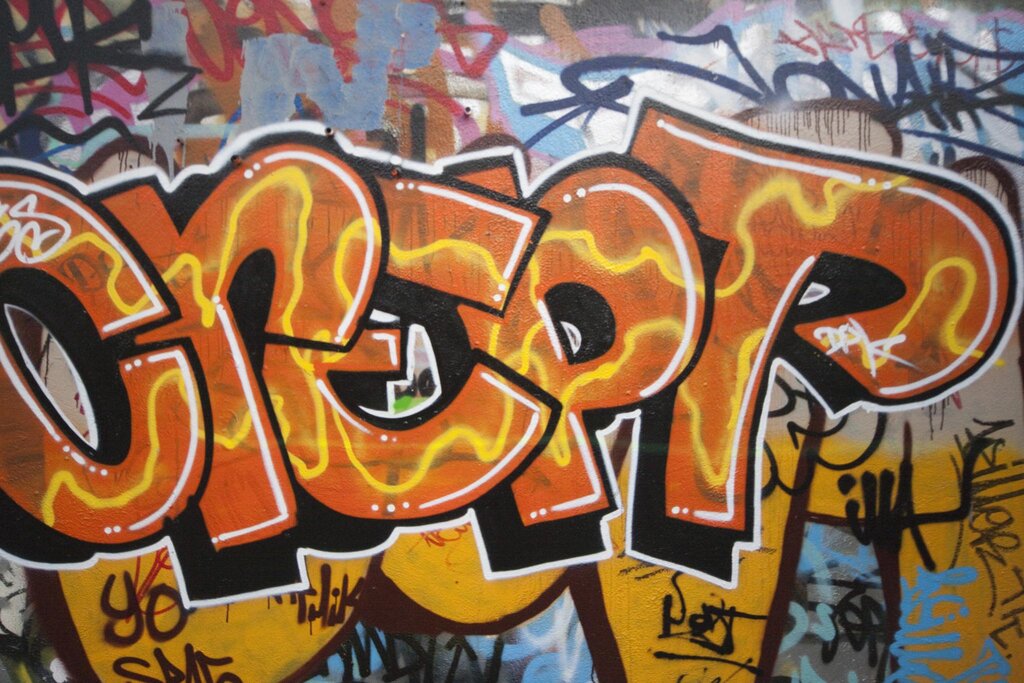
Tag
noun
A stylized signature, usually done in one color. It is the simplest and most common form of graffiti.
The Influence of Hip-Hop
In the late 1970s and 1980s, graffiti became one of the four core elements of the emerging hip-hop culture, alongside DJing, MCing (rapping), and B-boying (breakdancing). This connection was a turning point. Graffiti transformed from simple tags into elaborate, colorful, and highly stylized artworks known as "pieces" (short for masterpieces).
The subway system became the ultimate gallery. Writers would paint entire train cars, which then traveled across the city, carrying their art and their name from the Bronx to Brooklyn. This created a competitive but vibrant scene, where artists battled for fame through style, skill, and audacity. The goal was to create pieces that were bigger, more complex, and more visually inventive than anyone else's.
This era pushed graffiti writing from a form of personal branding into a full-fledged artistic movement, with its own rules, vocabulary, and masters.
Art Beyond the Tag
The 1980s also brought a major crackdown. New York City launched a
Street art has evolved from simple tags to complex visual narratives, challenging traditional art norms and reclaiming public spaces.
The strict anti-graffiti campaigns, particularly on the subways, forced artists to adapt. Some moved to freight trains or abandoned buildings, while others began to experiment with new forms that were quicker to execute. Stencils, posters, and stickers became popular, allowing artists to put up more image-based work in less time.
This shift marked the gradual transition from traditional, letter-based graffiti to the broader category of "street art." At the same time, major political events provided a new canvas and purpose. The fall of the Berlin Wall in 1989 is a prime example. Artists from all over the world flocked to paint on its remnants, turning a symbol of oppression into a monument of freedom and protest.
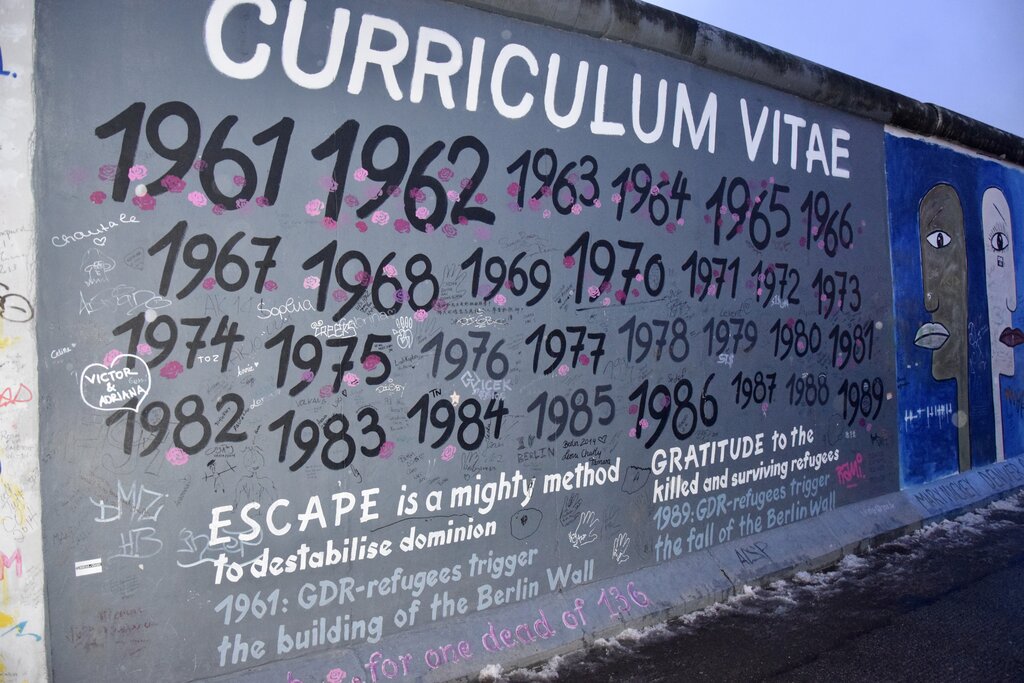
This evolution from personal tags to complex murals and political statements laid the foundation for street art's powerful role as a form of social commentary.
Now, let's test your knowledge of graffiti's journey from ancient walls to a global movement.
What does the text suggest was the primary purpose of graffiti found in ancient cities like Pompeii and Ephesus?
Who is identified as the individual who popularized graffiti tagging in New York City in the early 1970s, leading to a citywide craze?
From simple signatures to elaborate murals, the history of street art is a story of adaptation and expression. It's a visual record of how people have always sought to make their mark on the world around them.