Street Art as Social Commentary
Introduction to Street Art and Graffiti
Art on the Street
Walk down the street in almost any city, and you'll see it. On brick walls, train cars, and storefront gates, you'll find splashes of color, intricate lettering, and striking images. This is the world of graffiti and street art, a vibrant and often misunderstood form of expression.
graffiti
noun
Writing or drawings scribbled, scratched, or sprayed illicitly on a wall or other surface in a public place. It often focuses on stylized lettering, or 'tags'.
While people often use the terms 'graffiti' and 'street art' interchangeably, they have distinct origins and intentions. Graffiti is rooted in lettering and the culture of tagging, where writers mark their presence with a unique signature. It's often about style, skill, and getting your name known.
Street art is a broader category. It grew out of graffiti culture but is more image-focused. Street artists use various techniques, including stencils, posters, and stickers, to create pictures and scenes. Their goal is often less about personal fame and more about communicating a specific message to the public.
Think of it this way: graffiti is often a conversation among other graffiti writers, while street art is a conversation with the general public.
From Ancient Walls to Modern Cities
Marking public walls is nothing new. Humans have been doing it for thousands of years. We've found ancient graffiti in the ruins of Pompeii, with citizens carving complaints, poems, and political slogans into walls. These early markings show a timeless human desire to leave a mark and be heard.
Modern graffiti culture exploded in the 1960s and '70s, particularly in Philadelphia and New York City. Young people, feeling overlooked by society, started writing their names, or tags, on public surfaces. It was a way to claim space and create an identity. This movement was deeply connected to the birth of hip-hop, sharing its rebellious energy and creative spirit.
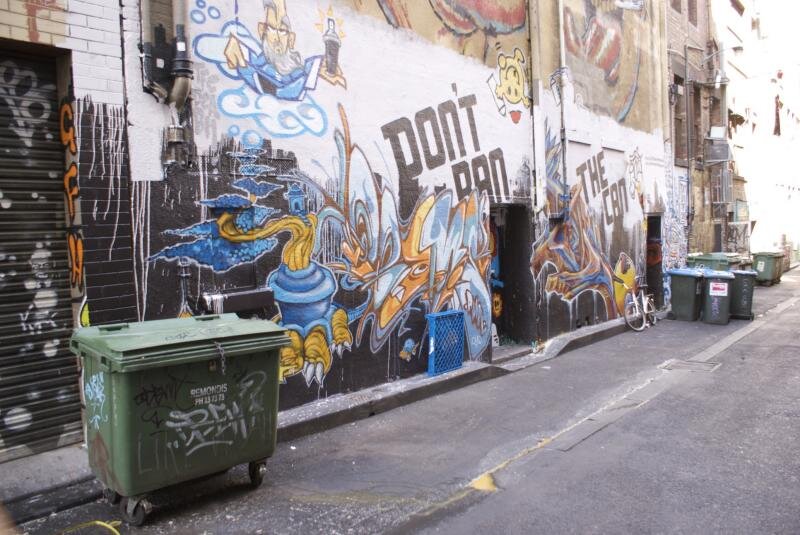
As tagging evolved, artists began creating more elaborate pieces with complex lettering, vibrant colors, and characters. This was the birth of the graffiti art movement. By the 1980s, some of these artists, like Jean-Michel Basquiat and Keith Haring, transitioned from street walls to gallery walls, blurring the lines between graffiti and fine art.
A Canvas for Commentary
From its earliest days, street art has been a powerful tool for social and political commentary. Because it exists in public spaces, it's an accessible platform for artists to speak directly to the people, bypassing traditional galleries and media. It's a way to reclaim public space and start a conversation.
Early political graffiti addressed issues of war, poverty, and inequality. Artists used simple stencils and spray paint to spread messages of protest and solidarity. This art wasn't just decorative; it had a purpose. It aimed to make people stop, think, and question the world around them.
Graffiti is often used as a form of social commentary, addressing issues such as inequality, racism, and political corruption.
By transforming a plain wall into a piece of commentary, street artists challenge our ideas about who is allowed to create art and where it belongs. They turn the city itself into a gallery, open to everyone.
Now, let's test your understanding of these foundational concepts.
What is the primary distinction between graffiti and street art, according to the text?
Modern graffiti culture is described as having exploded in the 1960s and '70s, deeply connected to the birth of hip-hop, in which two cities?